🔄 Updated 21 Jun 2026
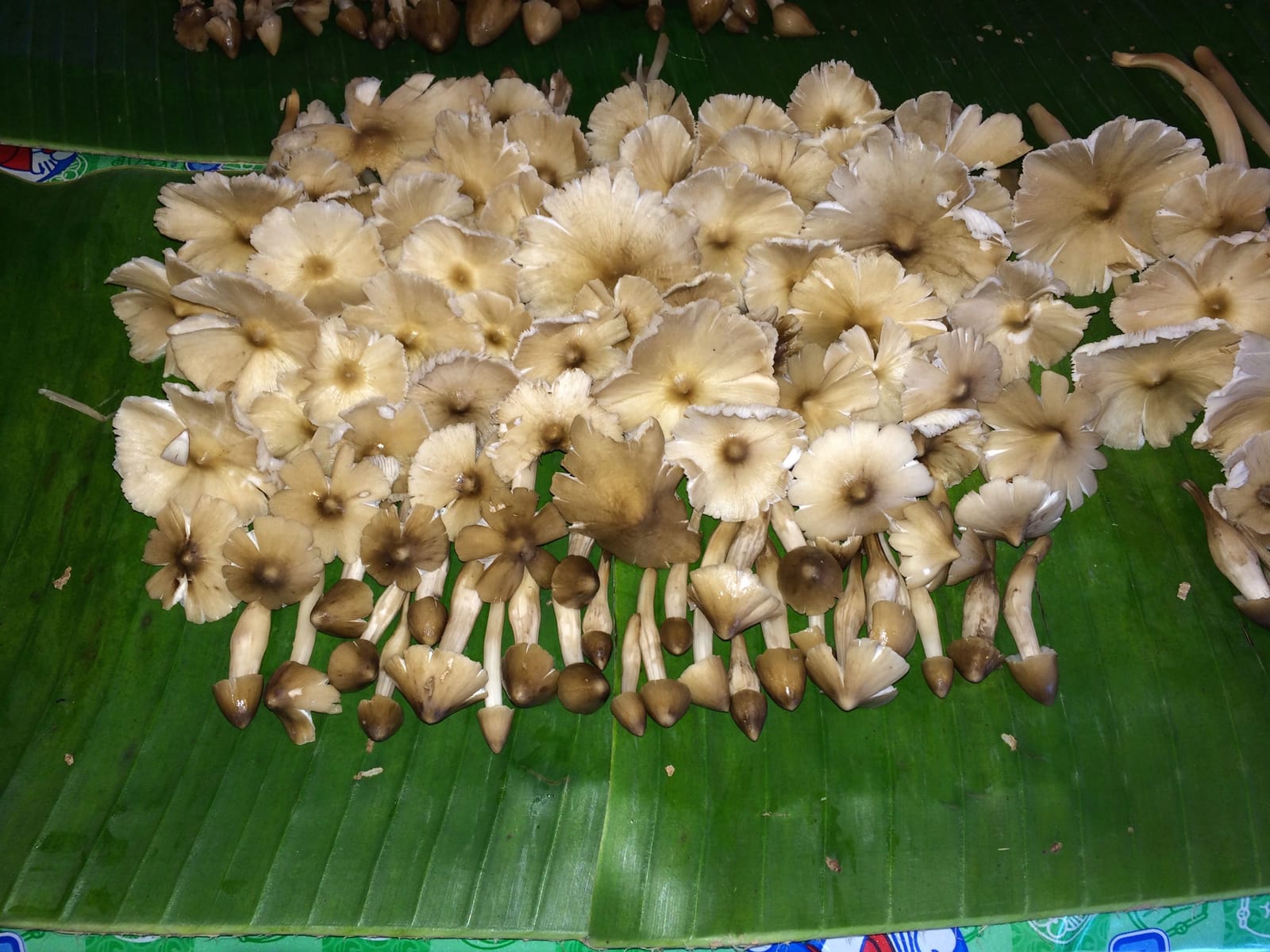
Amnat Charoen is a small province still ringed by dry dipterocarp forest and rice fields in almost every district. When the rains arrive around May to September, the humidity and the layer of fallen leaves push wild mushrooms up out of the ground. For many villages this is extra income while they wait for the rice to grow. People forage early and can sell a few hundred to over a thousand baht worth in a morning. So the produce is genuinely fresh — picked at dawn, sold at dawn, nothing held overnight.
If you pass through Amnat Charoen during the rains and walk the morning market between 6 and 8am, the difference from a big-city market is obvious right away. This forest produce doesn't come from a farm — it comes from the scrub behind people's houses. Some sellers carry in one basket, set out a pile or two, and that's it for the day.
The rainy-season mushrooms you'll see most often
Isan wild mushrooms come in many types, and they don't all appear at the same time — some show up early in the rains, others mid-season. Prices rise and fall depending on whether it's a good rain year and how much is coming into the market. The prices below are ranges seen in local news and at markets. Use them as a guide, but expect the real day to shift.
Hed Rakok (egg mushroom)
Rounded white–yellow–red buds with soft, slippery flesh — the star of the Isan rainy season. The most popular of the lot, because curried with hairy basil or young tamarind shoots it turns sweet and silky. Early in the rains, when supply is thin, the price climbs.
Hed Phueng (bolete)
Dark brown on top, firm and chewy inside. Amnat Charoen locals love it — early in the rains when it's scarce it has sold for a lot per 100g. Curried or in clear soup it carries a deep, savory flavor.
Hed Khon (termite mushroom)
Grows on termite mounds in the dry forest, with sweet, crisp flesh. Many people pay a premium for it because of its distinctive aroma. Lovely in a clear soup or curry. Hard to find, so the price holds.
Hed Phaw (earthball)
Small round buds buried underground — you have to dig them out. Springy and crunchy in the mouth. Very pricey at the start of the season, then it eases off. Works in tom yum or curried with greens.
Hed Din (ground mushroom)
Small caps that come up on the forest floor — cheaper than the rest. A humble, everyday mushroom that villagers gather to curry at home and mix into the piles at market.
The safety bit you need to know
Wild mushrooms include both edible kinds and poisonous ones that look almost identical. If you're buying to eat, buy from a seller who forages and sells regularly at the market — don't gather your own unless you're sure, and don't buy from a pile with odd-looking strays mixed in. The white rakok has a toxic lookalike called the death-cap egg mushroom; inexperienced foragers have gotten it wrong before. Mushrooms from a regular market stall are safer than a random forage.
Want to taste deeper? Try a Amnat Charoen food tour or cooking class
Half a day with a local who knows the lanes — or cooking a dish yourself — teaches you more than just eating. Book ahead on Klook or GetYourGuide.
Forest greens that come out alongside
Rainy-season forest produce isn't only mushrooms — the wild greens from the dry forest and paddy edges come out at the same time. Isan people gather them to eat with chili dips, or drop them into the mushroom pot to round out the flavors. At Amnat Charoen's morning market these greens start at just a few baht a bunch; some are five baht and you've got a side dish.
- Pak wan forest greens — young yellow-green shoots, sweet and tender. Curried with mushrooms or added to a red-ant-egg curry, it's the classic forest partner to the Isan rains.
- Hairy basil (bai maeng lak) — its distinctive scent is non-negotiable in a mushroom curry. Add it at the very end before serving so the aroma blooms.
- Young tamarind shoots / som mong leaves — stirred into a mushroom curry for a gentle sourness that cuts the richness. Proper Isan style.
- Bamboo shoots — plentiful in the rains; boil them into the mushroom curry or make a bamboo-shoot soup on the side.
- Wild holy basil (pak i-tu) / pak tiw / krachiao flowers — punchy local greens villagers gather as a raw side and to drop in the pot.
Which markets are actually worth a walk
Amnat Charoen is a small town, so the rainy-season forest produce is spread across the in-town morning markets and roadside stalls in the outlying villages — there's no single big mushroom market like in some provinces. If you want the freshest pick and the widest choice, go early. The good stuff sells out fast.
Amnat Charoen Municipal Fresh Market
The central morning market in Bung subdistrict. In the rains you'll find wild mushrooms and forest greens laid out among the fresh produce, with greens starting at just a few baht a bunch. Get there before 8:30am for the freshest pick.
Roadside stalls in outlying villages
Around villages bordering the dry forest — the Na Pa Saeng subdistrict area and communities ringing town — locals often carry in baskets of mushrooms and set up roadside in the morning. This stuff genuinely comes from the scrub behind their houses.
What time to go
Wild mushrooms are picked at dawn and sold at dawn — they reach the market around 6 to 8am, and any later the good ones are usually gone. The peak of the season is the stretch right after a few straight days of rain, when mushrooms push up in numbers and the price drops below the early-season rate when supply is still thin.
So you bought mushrooms — now what?
The charm of wild mushrooms is that even the simplest cooking tastes good, because the mushrooms are naturally sweet. The two dishes Isan people make most are a curry and a clear soup, seasoned mainly with fermented-fish sauce (nam pla ra) — no need for seasoning powder.
- Mushroom curry with hairy basil — pound a paste of chili, lemongrass and shallot, bring water to a boil, add rakok or bolete mushrooms, season with nam pla ra, drop in young tamarind shoots or som mong leaves for a light sourness, and scatter hairy basil right before serving.
- Mixed-mushroom curry with pak wan greens — throw all the different mushrooms you bought into one pot, add pak wan forest shoots and bamboo shoots, and you get a rounded, sweet curry layered with several greens.
- Clear mushroom soup / termite-mushroom soup — termite mushrooms are fragrant on their own; simmer in a clear broth with bruised lemongrass and shallot, season lightly, and let the mushroom aroma fill your mouth.
- Earthball tom yum — the crunchy hed phaw made into a tom yum with chili, lime and kaffir lime leaf, for a tangy kick that cuts the richness.
Cleaning wild mushrooms properly
Wild mushrooms usually come with soil and leaves attached. Rinse them gently through several changes of water — don't scrub hard, the flesh bruises easily. Earthballs should be cut open to check the inside is still white; if it's dark inside, they're too old. And every kind of wild mushroom should always be cooked through before eating — never raw.
Can you take them home as a gift?
Fresh wild mushrooms don't keep long. If you want to carry some home a long way, choose ones still in tight buds, bag them in something breathable, and don't seal them in airtight plastic — they'll get stuffy and turn to mush fast. The smart move is to buy on your last day as you leave and cook them quickly. If you want forest produce that lasts longer, pak wan greens and bamboo shoots hold up better than mushrooms.
Hungry for more good Isan food in Amnat Charoen? See the full eat-and-explore guide for the town.
See the Amnat Charoen travel guide →