🔄 Updated 21 Jun 2026
Amnat Charoen is a lower-Isan province where the main economy is still rice farming. Outside the town, most of the land is paddy — mainly jasmine rice and sticky rice grown on rainfall alone, one crop a year. So if you want to see green fields, you have to come in the right season; it isn't green whenever you turn up. That's why this article leads with timing, then covers the spots where you can actually stop and shoot without getting in the way of people working the land.
When the Amnat Charoen paddies look best
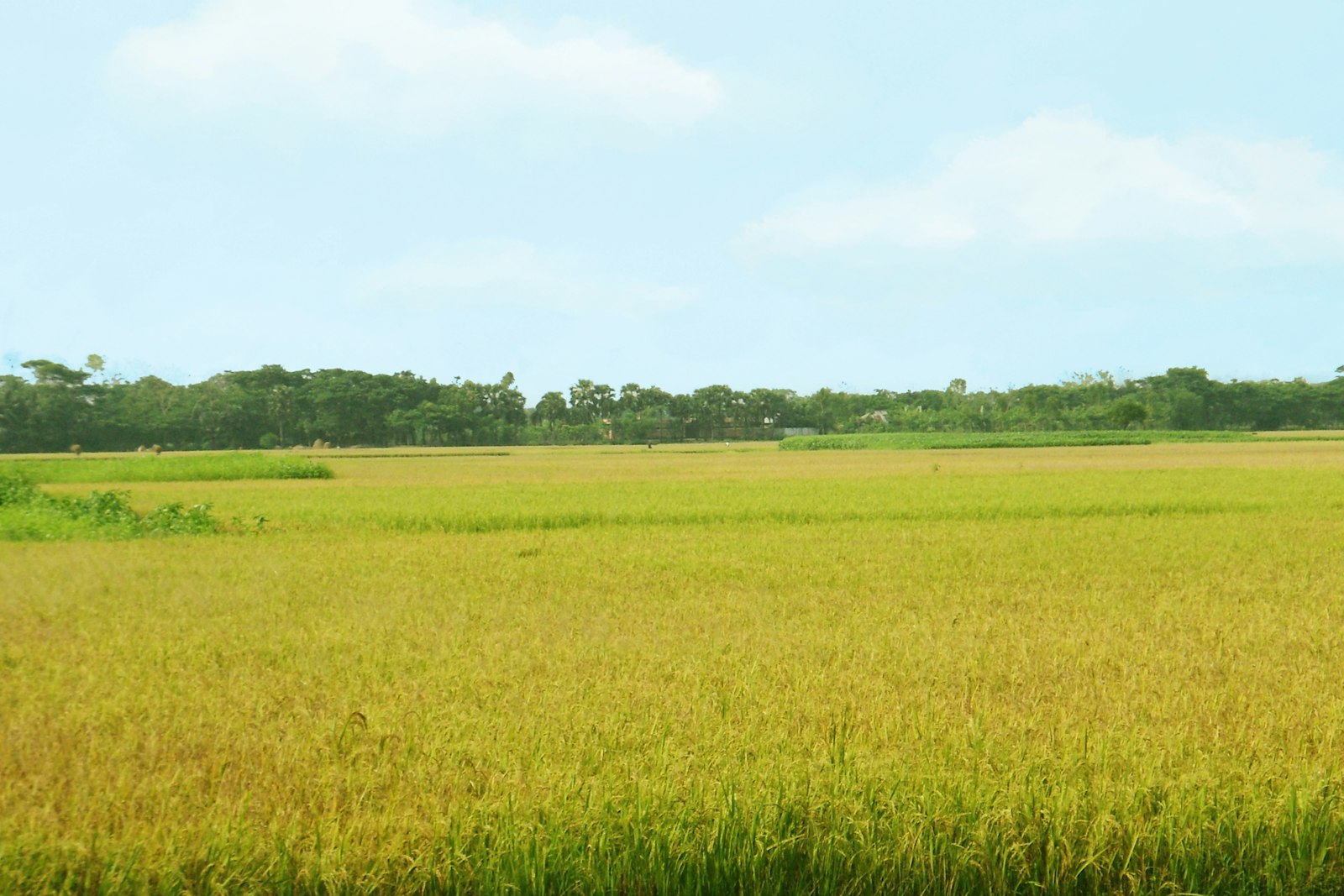
The whole thing comes down to season. Isan's rain-fed rice follows the rainfall: planting (transplanting the seedlings) starts in early rains (June–July), the rice slowly greens up through August–September, then hits its deepest green across the whole field in late rainy season into early winter, roughly September–November, before the grain turns golden and the harvest sets in over November–December. Come in late rainy season for lush green paddies; come in early winter for golden fields and the harvest atmosphere.
- Jun–Jul — Planting season. Flooded plots with pale-green seedlings, villagers out working the fields.
- Sep–Nov — Deep green across the whole field, the prettiest stretch if you love the green.
- Nov–Dec — Grain turns golden and the harvest begins; you'll see farmers cutting and drying straw.
- Jan–May — After harvest the fields are dry brown stubble, hot and dry weather — not a season for paddy-watching.
Time of day
Paddies shoot best at early morning (6–8am), when a thin mist sits over the fields on winter mornings, and in the soft evening light (4–6pm), when the warm sun lights up the rice. Midday glare is both hot and flat — not worth it.
Want more out of Amnat Charoen? Book tours & activities
Booking online ahead on Klook or GetYourGuide is usually cheaper than the gate and skips the queue. Pick only the experiences you actually want — prices and availability are shown live on each site.
Klang Na Cafe — coffee right in the middle of the field
If you want to enjoy the paddies in comfort instead of standing by the road, the place built exactly for this is Klang Na Cafe (Suan Por Sanan Butpakdee), at 226 Moo 6, Pa Ko subdistrict, Chanuman district. It's a cafe planted right in the middle of a real rice field, with paddies around you almost 360 degrees. The highlight is a three-storey wooden tower called the "Seven Stars Viewpoint" plus a long wooden walkway out across the field for photos. They serve coffee, bakery, and savoury and sweet dishes. Open 10:00–21:00, closed Wednesdays, drinks around 40–70 THB. The view from the tower is at its best when the paddies are green (late rainy season).
Before you go
Klang Na Cafe is out in Chanuman district, a fair way from Amnat Charoen town — about an hour and a bit by car. It works better folded into a Mekong-side / Chanuman day (paired with Phu Sing or Kaeng Khan Sung) than as a one-stop drive. The cafe closes Wednesdays — check before you set off.
Other field cafes and viewpoints
Beyond Klang Na Cafe, Amnat Charoen has more small cafes opening up along the paddies year by year. Most are new local spots, not large, but the selling point is the same: the field view. We've picked the ones people actually mention and that are still open — but with small places like these, opening hours can change, so check the cafe's page before you head out.
Thiang Na Cafe
A field-view cafe styled like a thiang na (a paddy hut) — rustic feel, photo corners out in the field, drinks and snacks.
Klang Na Cafe (Chanuman)
The Seven Stars viewing tower and a wooden walkway out into the paddy, with a 360-degree field view — the main photo spot on the Chanuman side.
Roadside paddies around town
You don't need a cafe at all — take the bypass roads toward Hua Taphan or Lue Amnat and you'll find open fields to pull over and shoot from the roadside.
Jasmine rice and the Isan way of farming
Most paddies in Amnat Charoen grow jasmine rice (Khao Dawk Mali 105) and sticky rice — rain-fed fields with one crop a year, like the rest of Isan. To be straight with you, Amnat Charoen is not part of the Thung Kula Ronghai plain (that covers Roi Et, Yasothon, Surin, Sisaket and Maha Sarakham), but the jasmine rice here is good quality in its own right. Farming is still done the traditional way — you'll see transplanting, communal harvesting (long khaek) in some villages, and straw drying after the cut. If that interests you, harvest time (Nov–Dec) is when the fields are most alive.
- Transplanting — Early rains; villagers pushing seedlings into the flooded plots, the classic image of Isan farm life.
- Green rice — Mid-season; tall rice rippling in the wind, the prettiest stretch for photos.
- Harvest & long khaek — Late in the year; some villages still gather to cut by hand, the old way of pitching in together.
- Straw drying & milling — After the cut; straw stacked across the field, a winter photo scene you'll find all over the paddies.
How to get good rice-field photos
Rice fields are an easy photo spot but also an easy one to get wrong — come at the wrong time and you get flat shots. The points below help a lot. And more important than a pretty shot is courtesy toward the field's owner, because the paddies you're looking at are people's livelihoods, not a public park.
Come early or late, skip midday
Morning and evening light give the rice depth and good colour, and on winter mornings a thin mist over the field is a bonus. Midday glare makes shots flat and the heat makes shooting no fun.
Find a frame with a lead-in
A paddy bund, a lone tree in the field, a hut, or a road cutting through the paddy gives the shot a focal point instead of just a flat green plane.
Shoot from height if you can
The tower at Klang Na Cafe or a wooden walkway over the paddy gives you a wide view of the field — a high angle tells the story of the paddy better than standing at eye level.
Walk the bunds, don't step into the plot
The rice is the farmer's income. Walk only on the paddy bunds or the paths they've made — don't tramp into the plot for a photo, because a broken rice plant is rice that's genuinely gone.
Ask first if you're entering someone's field
If you see the field's owner, say hello and ask permission first. Isan folk are friendly and most are happy to let you — sometimes you get a chat about the rice thrown in.
Mind where you park
The bypass roads have narrow lanes — pull right over to the verge and don't block a villager's field access. Put your hazard lights on too; it's safer.
What to bring
A sun hat, mosquito and insect repellent (there's plenty out in the fields), shoes you don't mind getting dirty, and drinking water — most paddies have no shade and no shops nearby, apart from the cafes.
Planning a rice-field trip that works
The rice fields are an add-on, not a single destination worth a long drive on their own. The way that works is to slot the paddies and a field cafe into a temple-visiting or nature trip around Amnat Charoen. Here are two routes you can actually follow — pick one depending on whether you want to stay around town or head over to the Chanuman side.
Morning paddies around town — half day
Chanuman side — Klang Na Cafe + nature
Getting around
Amnat Charoen has no airport and little public transport in town. The paddies and field cafes are spread out beyond the centre, so the easiest way to get around is your own car or a rented car/motorbike. If you arrive by coach into town, sort out a vehicle for the day.
Want a full Amnat Charoen trip plan covering the whole province?
See the Amnat Charoen travel guide →