🔄 Updated 21 Jun 2026
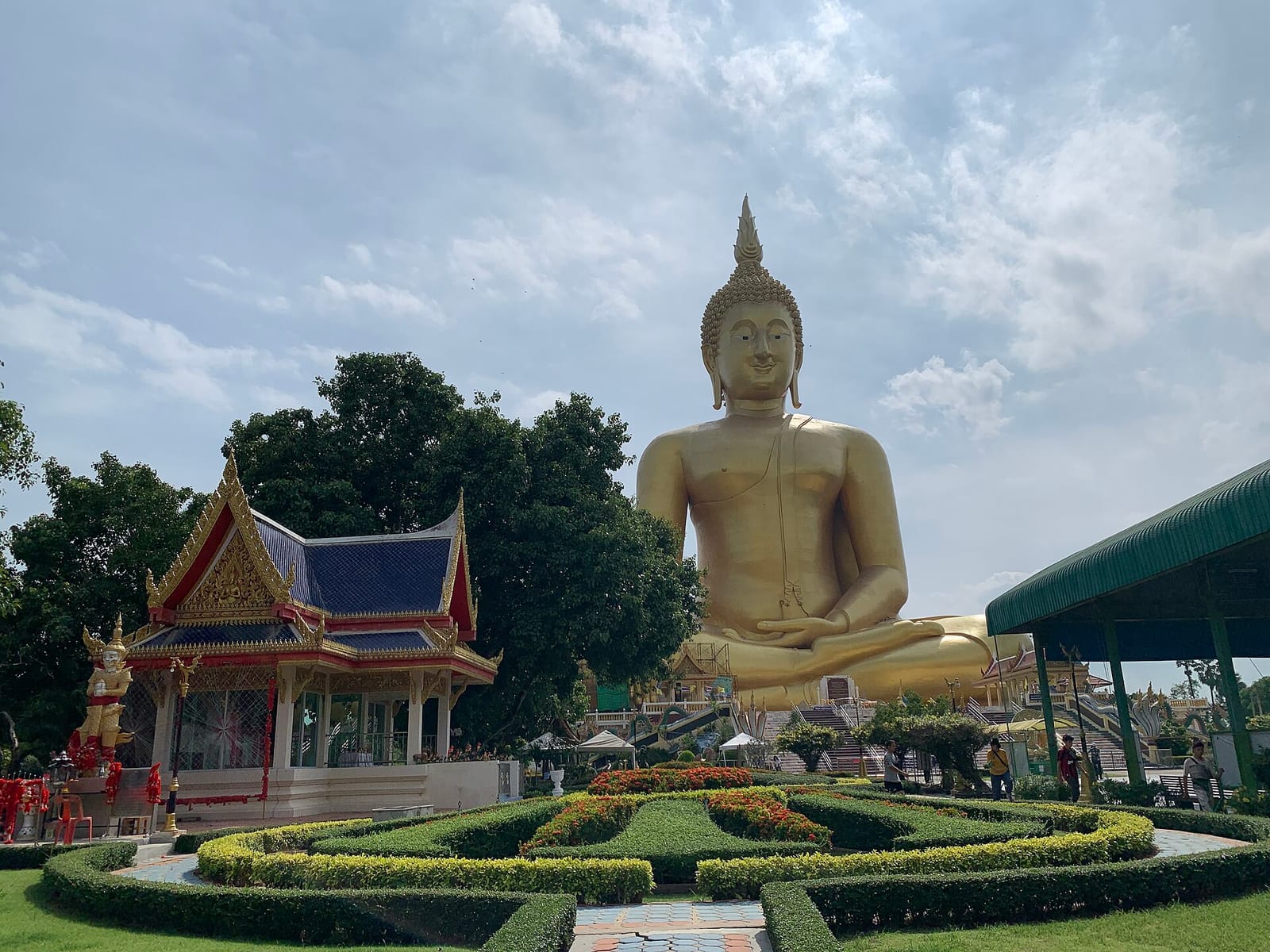
Most people know Ang Thong from photos of the Great Buddha at Wat Muang — a golden figure as tall as a 30-something-storey building. But once you arrive, you'll find the whole province is easy to cover in 1–2 days, because the distances between sights are short. The famous temples, the old market, and the craft villages are all clustered within a radius of a few dozen kilometres, which makes it ideal for anyone who wants to escape Bangkok without drawing up a long, complicated plan.
Where Is Ang Thong and How to Get There
Ang Thong sits in central Thailand, about 100 km from Bangkok — drive up past Ayutthaya a little further and you're there, roughly an hour and a half if traffic is clear. It's a route you can easily pair with Ayutthaya or Sing Buri in the same trip.
- Self-drive — the most convenient option for Ang Thong, since the sights are spread out and public transport within the province is limited. Take Highway 32 (the Asia Highway), then turn off into the province.
- Van / coach — services leave from Mo Chit or the Rangsit bus terminal and run into Ang Thong town and Pa Mok daily. Fares start at around 310–320 THB and the trip takes about 1.5 hours.
- No train — Ang Thong has no railway station. If you want to travel by train, get off at Ayutthaya and continue by road.
- Getting around the province — renting a car or having your own vehicle is best. Without one, use local songthaews/taxis point to point, or hire one for the whole day, which works out cheaper.
Travel tip
If you're not driving yourself, pairing Ang Thong with Ayutthaya in one trip pays off, because Ayutthaya has far more public transport. Then just hire a car from Ayutthaya and spend half a day in Ang Thong.
Book the activities in your Ang Thong trip ahead
Booking online ahead on Klook or GetYourGuide is usually cheaper than the gate and skips the queue. Pick only the experiences you actually want — prices and availability are shown live on each site.
When to Go and What the Weather's Like
Ang Thong is fine to visit year-round, but the most comfortable stretch is November to February, when the cool weather makes walking around open-air temples bearable. March to May gets very hot — if you're paying respects at Wat Muang or wandering the market in the middle of the day, bring a hat and water. During the rainy season (June to October) rain comes in spells rather than all day, and the temples and markets are still perfectly visitable.
- Early morning — the best time to photograph Wat Muang, before the sun gets harsh and the crowds arrive.
- Weekends — Sala Chao Rong Thong market is livelier than on weekdays, with all the old-fashioned sweet stalls open.
- Buddhist holy days / festivals — the famous temples get especially crowded, so avoid these if you don't like the crush.
Main Sights First-Timers Shouldn't Miss
Wat Muang (The Great Buddha)
The province's headline sight — the largest Buddha statue in Thailand, around 95 metres tall with a lap over 60 metres wide, visible from far off. Visitors come to touch the Buddha's hand and make a wish, and the temple grounds also have a walk-through model of heaven and hell.
Wat Chaiyo Worawihan (Luang Pho To)
An old temple beside the Noi River, home to the large Luang Pho To Buddha image. Inside the viharn are murals painted by Rama V-era artisans, and the temple is tied to the history of Somdet Phra Phutthachan (To Phromrangsi).
Wat Khun Inthapramun
Home to one of the country's largest reclining Buddha images, set out in the open. Dating back to the Sukhothai–Ayutthaya periods, the grounds are wide, open and shaded.
Ekkarat Drum-Making Village
A drum-making village with a long tradition in Tambon Ekkarat, Pa Mok district. Walk through the whole process — turning the wood, stretching the hide, hammering in the tacks — and buy small or large drums to take home as souvenirs.
Sala Chao Rong Thong Market
An old market over 100 years old with a Thai-Chinese feel, known for traditional Thai sweets — dok lamjiak, foi thong, ba-bin, khanom krok topped with shrimp — plus old-school coffee shops.
Wat Pa Mok Worawihan
A temple on the Chao Phraya River with a beautiful reclining Buddha, tied to the legend of moving the image to save it from a collapsing riverbank. It's not far from the drum-making village, so you can visit both in one go.
How to order your stops without wearing yourself out
Wat Muang and Sala Chao Rong Thong market are on the Wiset Chai Chan side, while the drum-making village and Wat Pa Mok are on the Pa Mok side. Try planning your visits zone by zone to cut down on back-and-forth driving.
2-Day, 1-Night Plan for First-Timers
This plan is built for self-drivers and keeps the pace relaxed — you get temples, traditional sweets and craft demos. If you only have one day, drop Day 2 and keep just Wat Muang and the market.
Temple run + traditional sweets market
Riverside temples + drum-making village
Mistakes First-Timers Often Make
- Thinking there's only Wat Muang — plenty of people touch the Buddha's hand and leave, even though Sala Chao Rong Thong market and the drum-making village are close by and well worth a stop.
- Coming in the midday heat — Wat Muang and the reclining Buddha at Wat Khun Inthapramun are out in the open, and the noon sun is brutal. Come in the morning or late afternoon.
- Having no private vehicle — public transport within the province is limited. If you're not driving, plan to hire a car or pair the trip with Ayutthaya.
- Dressing inappropriately for temples — several of the famous temples are important ones, so dress modestly and skip spaghetti-strap tops and very short shorts.
- Forgetting cash — many of the traditional sweet stalls and craft villages mainly take cash, so it helps to carry small bills.
Rough Budget Per Person
- Travel — fuel / fares to and from Bangkok, about 600–900 THB (self-drive) or 620–640 THB (round-trip coach)
- 1 night's stay — hotels/resorts in town start at around 500–1,200 THB per night
- Food — 50–150 THB per meal at wallet-friendly local shops
- Temple entry — mostly free; set aside some money to make merit as you wish
- Souvenirs — traditional sweets / mini drums; a budget of 200–500 THB gets you plenty to take home
Quick summary
Ang Thong suits a short trip — paying respects at temples, sampling traditional sweets, watching crafts, all without spending much. For a first visit, 2 days and 1 night is about right, but if you only have a single day you can still cover the main highlights.
Plan a full Ang Thong trip — where to stay, eat and go, all in one place
See the Ang Thong travel guide →