🔄 Updated 21 Jun 2026
Mention what Ang Thong is famous for and a lot of people think of the giant Buddha at Wat Muang first. But the other thing this province is really known for is drums. Ekkarat sub-district in Pa Mok district has been making and selling drums across the whole village for generations, to the point that it's well known to Thai musicians and temple festivals all over the country. This isn't a museum staged for visitors — it's a village that genuinely makes drums to sell every single day, so you get to see both the drums and the people who make them in one place.
How long have they been making drums here
Locals say drum-making in Ekkarat goes back more than a hundred years, starting with earlier generations who tried making drums for their own use and to sell at temple fairs, then passed the craft down from father to son, son to grandchild, right up to today. These days there are around 20 houses making and selling drums out front, plus another dozen or so that produce for shops — together that's nearly the whole sub-district earning a living from drums one way or another.
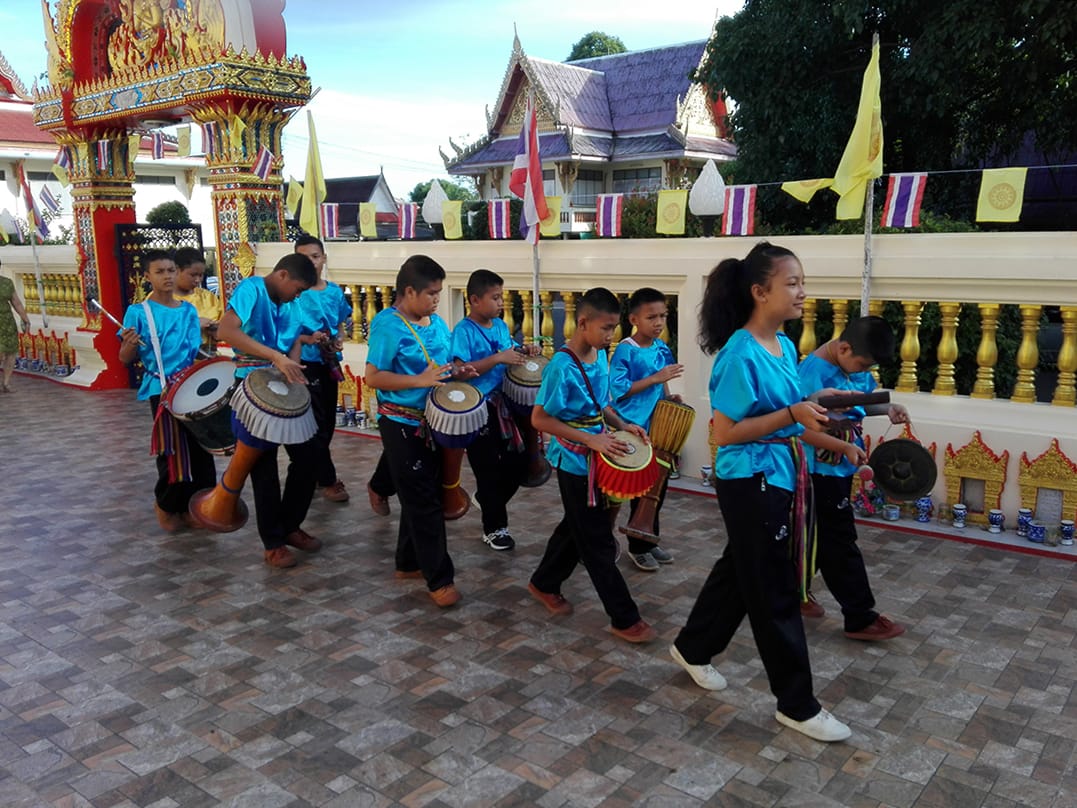
Generations of accumulated skill mean the craftsmen here can make almost any kind of drum — not just Thai ones like the klong yao (long drum), taphon, rammana, klong phen and temple drums, but also foreign drums like the Japanese taiko, the Korean janggu, and the African djembe. A Japanese company once came to commission drums on-site because they liked the workmanship, which is where the nickname "international drum village" comes from.
Want more out of Ang Thong? Book tours & activities
Booking online ahead on Klook or GetYourGuide is usually cheaper than the gate and skips the queue. Pick only the experiences you actually want — prices and availability are shown live on each site.
How a drum is made — you can watch every step
The charm of this place is that whichever shop you walk into, you'll usually find a craftsman at work — no appointment needed. Here's roughly what you'll see:
- Choosing and turning the wood — the drum body uses hardwoods like mango, jackfruit, or teak, while the really big drums are made from whole sections of rain tree (chamchuri). The craftsman turns it into shape and hollows out the inside.
- Stretching the hide — most drum heads use cowhide sourced from other provinces such as Samut Prakan, Phetchaburi, and Lampang, stretched to just the right tension to get the sound.
- Hammering in the pegs — the hide is fixed to the body with wooden pegs. This step sets the tension and tone, and the craftsman taps and listens, adjusting as he goes.
- Finishing and painting — sanding, painting, or applying lacquer and gold leaf to the customer's order. Some drums get such beautiful Thai patterns that they end up as display pieces.
Want to see the craftsmen actually working
Morning through early afternoon is when the craftsmen are busiest at work. Come late in the day, close to evening, and some shops may have wrapped up for the day with only finished drums left out for sale. Ask the shop owners politely — most are friendly and happy to let you watch and tell you about it.
Roadside drums — from palm-sized to giant
What makes this village fun to photograph is the drums of every size lined up in front of the shops along the road — small ones the size of your palm for kids or as souvenirs, all the way up to long drums and big temple drums it takes two people to lift. A spot a lot of people stop for is the drum said to be the biggest and longest of them all — the head is about 36 inches across and it's over 7 metres long, made from several sections of rain tree joined together. It's a landmark that visitors often pose next to for a photo.
Small drums / souvenirs
Small and easy to carry, good as a souvenir or a kid's toy. Prices start in the low hundreds of THB.
Long drum / rammana
Working sizes for real use in Thai music ensembles and processions, with a range of tones and patterns to choose from.
Temple drum / klong phen
Large sizes for temples and merit-making events. Made to order by size, with prices depending on the type of wood and the paintwork.
On price, we'll be straight with you: it ranges from a few hundred to tens of thousands of THB depending on size, type of wood, and decoration. Tiny souvenir drums start around 100–300 THB, while working drums or custom Thai-pattern drums go up from there with the level of work. We'd suggest walking around and comparing a few shops first, since each house's prices and patterns differ.
How to get there and opening hours
The village is in Ekkarat sub-district, Pa Mok district, in the south of the province, about 12–15 km from Ang Thong town. The main route is the road that runs along the Chao Phraya River on the Pa Mok side. If you're coming from Bangkok or Ayutthaya via the Asia Highway, then turning into Pa Mok, it's easy to reach. Once you enter the village area, the drums lined up along the road are a sign in themselves.
- Car — the most convenient option. There's parking in front of the roadside shops, and you can drive and browse one shop at a time.
- Opening hours — most shops open around 08:00–18:00, but these are people's homes, not a mall, so hours are flexible and vary by shop.
- Pair it up — it's close to Wat Pa Mok Worawihan (with its large reclining Buddha), so you can easily add a temple visit to the same trip.
The big annual festival
Every year Ekkarat sub-district holds an international drum festival and a drum teacher-honouring ceremony. In 2026 it's the 15th edition, running 19–27 April, with international drum performances and a street closed off for browsing. Come during this time if you want the liveliest atmosphere — but expect bigger crowds than usual.
Who it's good for
This place suits people who love local craftsmanship and want to see the real thing, not just look at items behind glass. Families with kids will enjoy getting to try beating a drum and posing with the giant one. If you play Thai music or are after a drum for real use, you can buy straight from the source at source prices. Allow around 30–45 minutes to walk and take it in, and it pairs nicely with Wat Pa Mok and the giant Buddha at Wat Muang for a solid day trip.
Plan a full day in Ang Thong with temples, craft villages, and good food
See the Ang Thong travel guide →