🔄 Updated 21 Jun 2026
Ban Mai Market sits on the west bank of the Bang Pakong River, on Supphakit Road in Ban Mai sub-district, Mueang Chachoengsao district, about an hour from Bangkok. It started as a Chinese community that settled here to trade by boat. The market went quiet for nearly fifty years once commerce shifted to the roads, before being revived as a place to wander in more recent times. What sets it apart from most old markets is that the two-storey wooden shophouse structure is still fully intact, and people in the community still open their homes to sell real food — it isn't a set built to look the part.
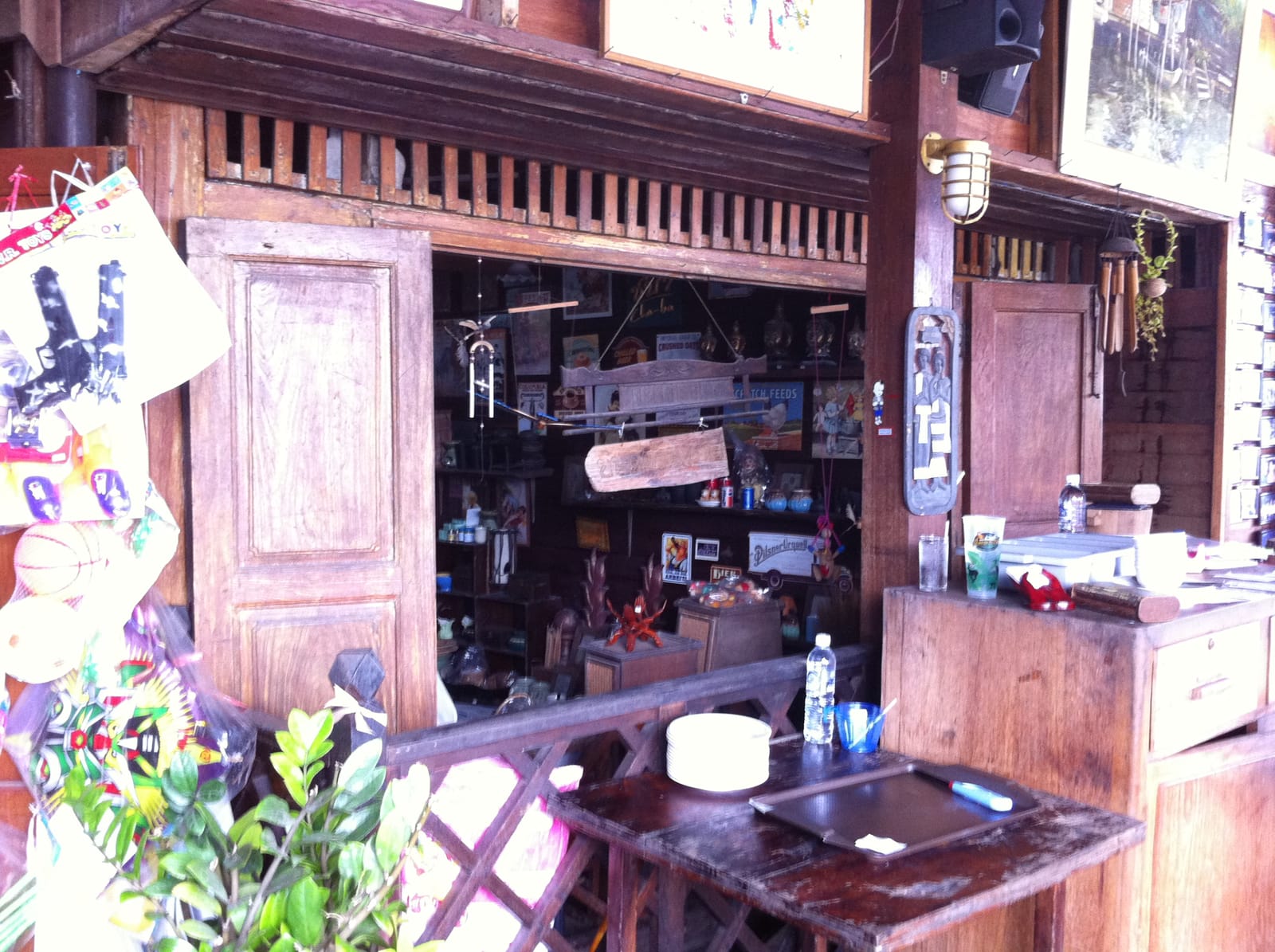
The charm of Ban Mai Market is in walking slowly through the narrow wooden lanes, looking at old shop signs, antique scales, and tin toys you rarely see anymore. Several corners have been used as filming locations for Thai dramas like Jao Sua Siam and Nang Nak, thanks to the well-preserved period atmosphere. Walking from one end of the market to the other doesn't take long, but there's plenty to look at and taste. Come mid-morning on a Saturday or Sunday, when all the shops are open.
Old-school eats you have to try — ranked by the longest queues
The food at Ban Mai Market is all about old family recipes at gentle prices — you can graze your way through both savoury and sweet. We've ranked it from the shops and dishes people talk about and queue for the most, on down.
Pae Oey Old Coffee Shop
A traditional coffee shop that's been part of the market for decades, still brewing oliang (Thai iced black coffee), milk tea and Ovaltine the old way through a coffee sock. The interior has barely changed in 30–40 years — wooden tables, old ceramic cups — and many people consider it the heart of Ban Mai Market.
Kuay Teow Pak Mor (steamed rice noodle rolls)
A signature dish of Paet Riu — thin, soft rice flour sheets wrapped around minced pork, topped with fragrant fried garlic and a well-balanced dipping sauce. Eat it hot as a light bite before you carry on through the market. You'll find several stalls along the wooden shophouse row.
Thin-skin kuchai (Chinese chive cakes)
Fried or steamed chive cakes with thin skins and a generous filling — chive, bamboo shoot and taro versions, eaten with a sweet-salty black soy dipping sauce. A favourite walk-and-eat snack here; tastiest straight off the griddle.
Pad Thai & oyster omelette
Pad thai and oyster omelette stalls cooking fresh to order at the griddle — crispy-edged oyster omelette with plump oysters, and chewy, boldly seasoned pad thai. A proper filling meal mid-walk.
Old-style lod chong
Lod chong (pandan rice noodles) in fragrant pandan coconut milk over ice — a refreshing dessert that's perfect for the Paet Riu heat. After all that walking, a single bowl in the shade does wonders.
Banana-leaf Thai sweets + old-fashioned treats
Fragrant Thai sweets wrapped in banana leaf — khao tom mat, khanom sai sai, and hard-to-find palace-style desserts — plus khanom thung thong and old-fashioned snacks that many shops still make at home. Great to take home as a gift.
Pickled & candied fruit, straight from the orchard
Paet Riu is mango and orchard country, and the market has fresh fruit straight from the groves, along with old-recipe pickled and candied fruit — mango, madan, mayom — sweet-sour and moreish.
A tip on days and times
Ban Mai Market is open every day, but on weekdays only some shops open and it's fairly quiet. The real buzz — including shops like Pae Oey coffee — only happens on Saturday, Sunday and public holidays, roughly 8:00–17:00. If you're set on tasting your way through it all, come on a holiday in the mid-morning, before the late afternoon when many dessert stalls start to sell out.
Want more out of Chachoengsao? Book tours & activities
Booking online ahead on Klook or GetYourGuide is usually cheaper than the gate and skips the queue. Pick only the experiences you actually want — prices and availability are shown live on each site.
Wooden shophouses and vintage photo spots
The heart of Ban Mai Market is its wooden shophouse architecture, kept almost entirely intact and free to wander the full length of. These are the corners people stop to photograph most.
- The row of two-storey wooden shophouses — wooden houses built wall to wall in a long row from the Rama V era, with louvred windows and Chinese-lettered shop signs, a vintage photo backdrop you won't find easily elsewhere.
- The Bang Pakong riverside terrace — riverside seating to catch the cool breeze and watch boats pass by, the most comfortable spot in the market to rest your legs.
- Toy and antique shops — shops selling tin toys, dolls and collectibles from a bygone era, many of them childhood things you'll barely see anywhere else now.
- Old drama film locations — many corners of the market have served as locations for Thai dramas like Jao Sua Siam and Nang Nak, thanks to the naturally weathered old wood.
Photo etiquette
Many of the shophouses are still homes where people actually live and run shops. Walk gently, don't wander into the private parts of homes that aren't open to visitors, and if you want a shopkeeper in your photo, ask first. The market stays lovely precisely because the community still goes about its everyday life.
Ban Mai canal boat ride and the riverside
Besides walking the market, there are boat rides along Ban Mai canal and the riverside community life on the Bang Pakong. It's an easy add-on that shows you the waterfront houses from another angle — good for anyone who wants a break from walking and a bit of river breeze.
Ban Mai canal boat ride
A boat that takes you to see riverside life and old houses along Ban Mai canal. It doesn't take long and shows you the community from angles you can't reach on foot. Ask about fares at the pier in the market, as it runs on a per-trip basis.
Shrines around the market
The neighbourhood has an old Chinese shrine where the community still comes to pay respects, reflecting the Chinese roots of those who settled to trade along the river long ago. Stop in to make a wish as you walk through.
Bang Pakong riverside terrace
A breezy riverside spot — grab food from the market and sit down to relax, watching the boats and the flowing water. A nice way to end the visit before you head off.
How to see it all — plans for the time you have
Ban Mai Market takes around 1–2 hours to actually walk, and it pairs well with other Paet Riu sights to fill a day. We've split it into two plans depending on the time you have.
A half-day morning — market + old-school eats
A full day in Paet Riu — market + temples + gifts
Getting there and parking
From Bangkok, drive via the motorway or the Bang Na–Trat road for about an hour to reach Chachoengsao town, or take the Eastern Line train to Chachoengsao station and continue by local transport to the market. Parking inside the market is limited and fairly tight, and weekends are busy — it's more comfortable to park at a nearby paid lot. If you're with elderly travellers, drop them at the front of the market first and then go find parking.
Want to stay overnight in Paet Riu and take the market and temples at an easy pace
See the Top 10 Hotels in Chachoengsao →