🔄 Updated 21 Jun 2026
Among the attractions around Maha Sarakham, Ban Mo is easy to overlook because it isn't a big temple or a dramatic natural spot. But if you love craft and want to see real daily life, it's well worth the stop. The village has around 239 households and roughly 800-plus residents, and many families still make pottery for a living — this isn't a staged village built for tourists, which is exactly why the atmosphere feels so relaxed. Walk in to take a look and people will smile and start telling you about it themselves.
Where is Ban Mo, and why the name?
Ban Mo is in Khwao subdistrict, Mueang Maha Sarakham district, about a 10–15 minute drive from the town centre (roughly 5 kilometres) — close enough to swing by on the way to somewhere else. The village's own story says its ancestors were Thai Khorat people who migrated from the Nakhon Ratchasima area over a hundred years ago. They found land with good-quality clay perfect for pottery and settled down to make and sell pots, and that became the village's name. The word 'Ban Mo' literally means 'pot village,' after the pottery trade the community was built on.
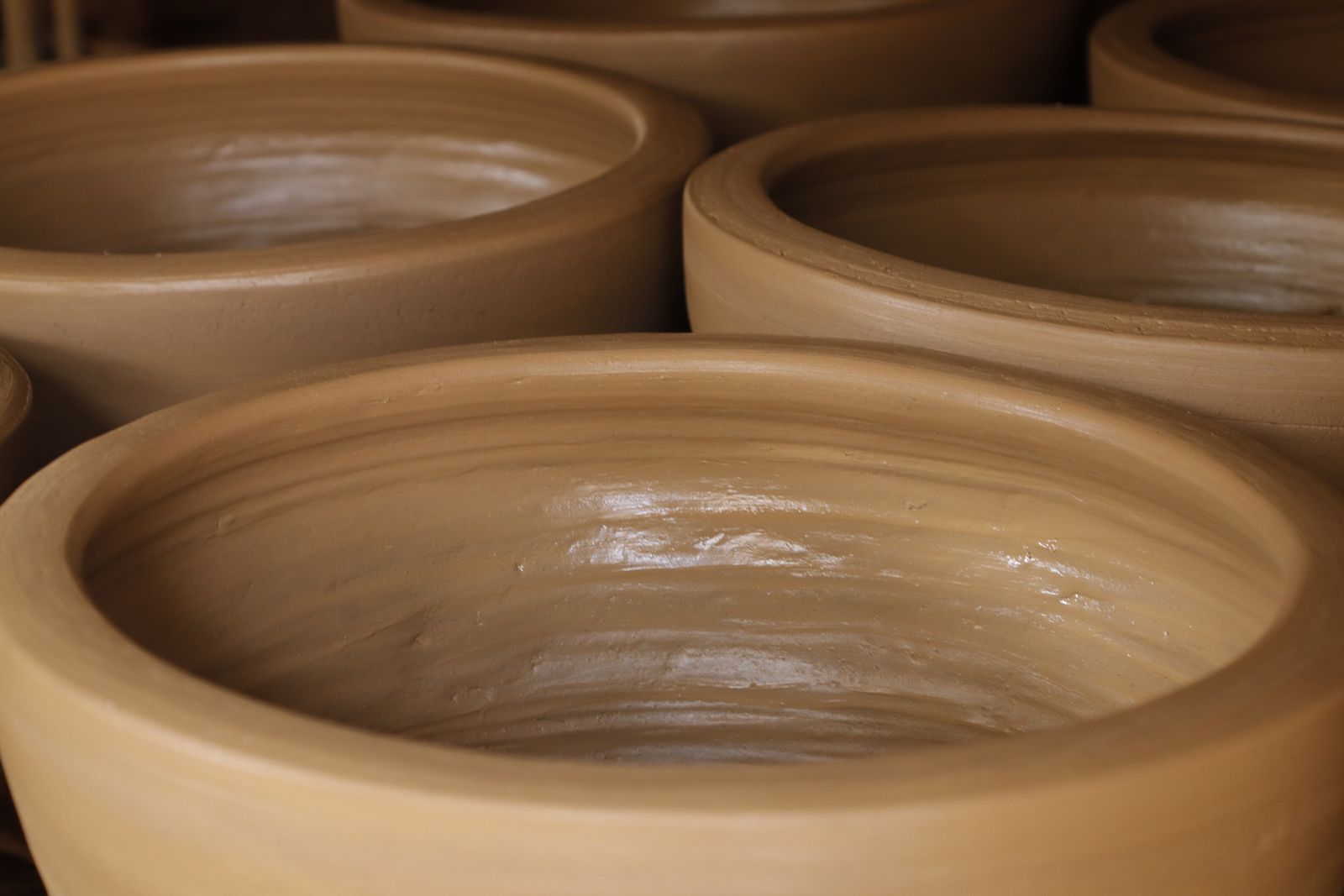
What sets Ban Mo pots apart from those made elsewhere is their distinctive shape and the warm reddish-yellow colour they take on after firing, which comes from the local clay. Anyone with a trained eye can tell which pots came from Ban Mo.
Want more out of Maha Sarakham? Book tours & activities
Booking online ahead on Klook or GetYourGuide is usually cheaper than the gate and skips the queue. Pick only the experiences you actually want — prices and availability are shown live on each site.
What you'll see — making a pot from clay to kiln
The real highlight of visiting Ban Mo is getting to watch every step with your own eyes, because the villagers work right there under their houses — there's no separate factory. Walk past a house or two and you'll catch different stages of the work: one family kneading clay, another shaping pots, another sun-drying them out front.
- Preparing and kneading the clay — it starts with curing the clay, then kneading it until smooth and even, working out the air bubbles. This step takes strength and skill; if the clay isn't right, the pot will crack during firing.
- Throwing on the wheel — the potter sits and spins the wheel, pulling the clay up into the shape of a pot by hand. The rhythm between hands and wheel has to be in sync, and it's mesmerising to watch. This step is the heart of the craft.
- Paddling into shape — after the rough form is thrown, the potter uses a wooden paddle to tap the outside while backing it from the inside with an anvil stone, slowly beating the pot out into the desired shape. It's a particular bit of know-how that gives the pots their handsome form.
- Sun-drying — once shaped, the pots have to dry completely before they go into the kiln. On a good sunny day you'll see pots lined up drying across the yard out front.
- Kiln-firing — the final step is firing the pots. The heat hardens the clay and brings out the reddish-yellow colour that's unique to Ban Mo.
How many can a potter make in a day?
A skilled villager can throw around 30 pots a day per person, but getting them ready to sell still means drying and firing, which takes several days. That's when you really understand why hand-thrown work is worth more than factory-made pots.
What can you take home, and how much?
Ban Mo makes all sorts of things, from traditional clay pots for cooking rice and simmering curries to small jars, plant pots, and little decorative pieces. Prices run from a few tens of baht up to around 200 THB depending on the size and shape. Small pieces are easy to carry as souvenirs or for planting a cactus, while the bigger ones suit people who actually want to cook with them or use them as home decor.
Traditional clay pot
The classic Ban Mo pot for cooking rice and simmering curries, in that reddish-yellow colour. You can really cook with it — rice or curry made in a clay pot tastes different from one cooked in an ordinary pot.
Small planters & decor
Small pieces run from a few tens of baht to just over a hundred, easy to carry and perfect as a souvenir or for planting. Hand-thrown decor has more character than the factory kind.
Buying in bulk or ordering ahead
If you plan to buy a lot or want the potters to make something to your design, you can call ahead to the Ban Mo Pottery Group at 094-958-6529 or ask through the Khwao subdistrict administrative office (SAO). At times the pots can't be dried fast enough to keep up with demand, so a quick call ahead makes sure they have stock.
When to go, and etiquette for visiting a working village
Ban Mo isn't a tourist site with fixed opening hours — it's where people actually live and work. The best time to clearly see the pottery being made is midday on a weekday, when the potters are at work where you can watch. If you go too late in the afternoon, some families may have already packed up. Aim for morning to early afternoon, when it's not too hot yet and the potters are working.
- Go on a weekday, midday — your best chance of catching potters at work. On weekends some families rest or run errands.
- Ask before taking photos — many of these are homes where people actually live, so a greeting and asking permission is more polite. Most are kind and happy to let you watch.
- Buy a piece to support them — coming to watch and then buying something is a small gesture that helps keep this hand-thrown craft alive. It's not expensive, and you go home with something that has a story.
- Work slows in the rainy season — because drying and firing depend on the sun, some families make fewer pots during the rainy months. Keep in mind that stock may be lighter than in the dry season.
Where to combine Ban Mo with
The advantage of Ban Mo is that it's in Mueang district, close to the town centre, so it pairs smoothly with other in-town spots. You don't actually need long here — about an hour is enough to see it all and grab a souvenir — which makes it a great stop to slot into a day trip.
Craft + riverside + local eats
Getting there
Ban Mo is easiest to reach by private car or motorbike, since it's a little outside the town centre and public transport into the village is limited. If you don't have a vehicle, rent a motorbike in town and ride out toward Khwao — it's not hard to find. Or tack it onto a day exploring Maha Sarakham town.
Plan a full Maha Sarakham trip — food, sights, and places to stay
See the Maha Sarakham travel guide →