🔄 Updated 21 Jun 2026
Mention Surin and most people picture elephants before anything else — and the source of that image is Ban Ta Klang, a small village in Krapho subdistrict, Tha Tum district. Most residents here are Kuy (sometimes spelled Kuay), an ethnic group with a long heritage of capturing and raising elephants passed down through the generations. Wild-elephant capturing ended long ago, but the bond between people and elephants is still here, so the elephants aren't kept as a commodity — they're raised like members of the family.
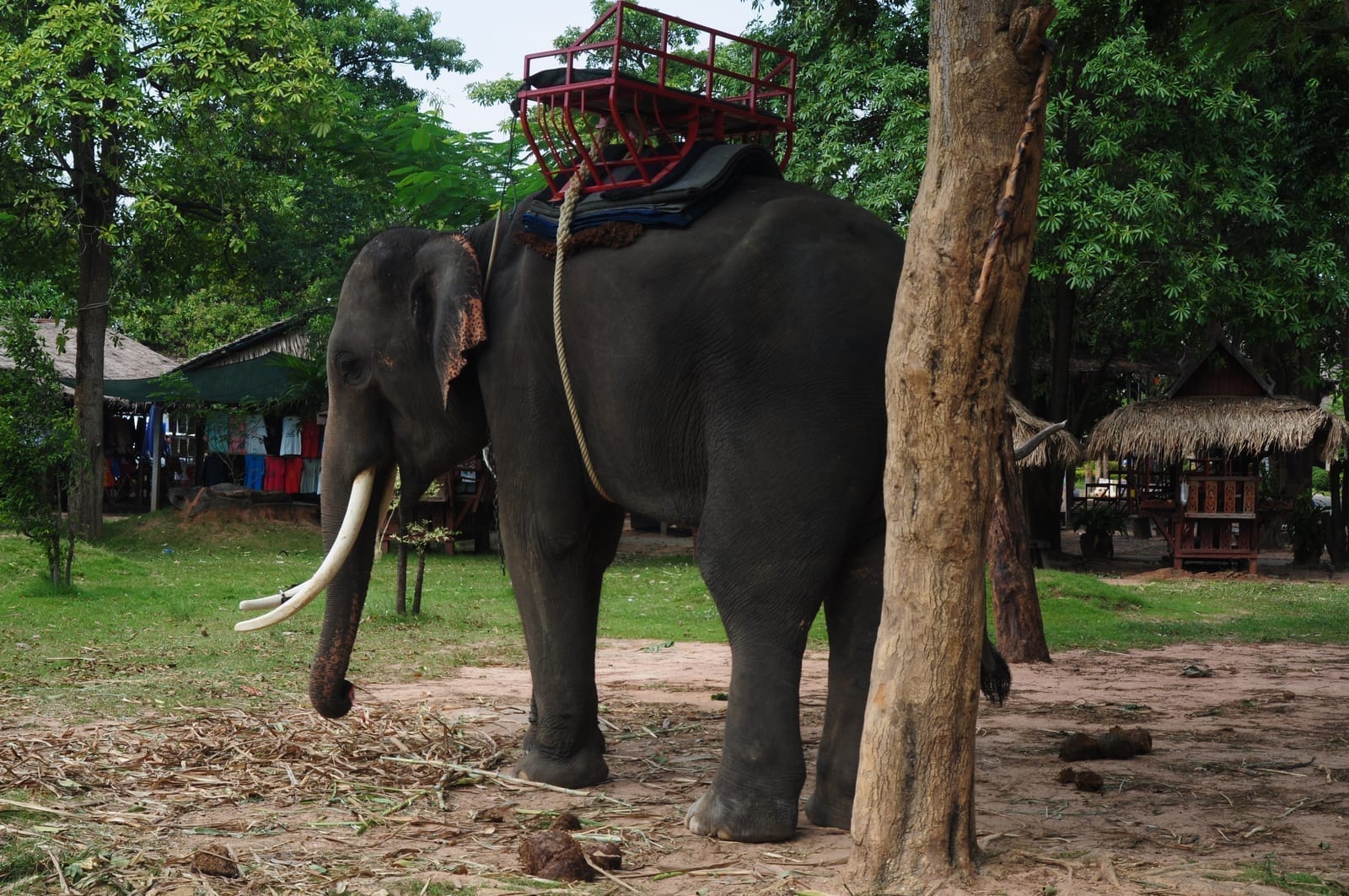
What sets Ta Klang apart from a typical elephant camp is the feel of a real working village. Walk along the community roads and you'll see elephants tethered beside homes, some resting in the shade of a tree, people and elephants passing each other as a matter of course. The Elephant Study Centre is the main area set up to welcome visitors, with a show arena, a museum, and a feeding spot all in one place.
How to get to Ban Ta Klang and how far it is from town
Ban Ta Klang is about 60 km from Surin town, out toward Tha Tum district, roughly an hour-plus drive. The main route is to head out of town along the Surin–Roi Et road, then turn off into Krapho subdistrict, with signs along the way. Driving yourself is the easiest option, since the sights around here are fairly spread out.
- Private car / rental — the most convenient. About an hour-plus from town, with easy parking at the Elephant Study Centre, and you can carry on to Wang Thalu and other nearby spots.
- Chartered car / songthaew — if you don't have a car, you can charter one from town or connect from Tha Tum district into the village. Arrange a clear pickup time, since regular service into the village isn't frequent.
- Half-day to full-day tours — some in-town and community lodgings run programs to the elephant village with a local guide, good if you want to hear the Kuy story in more depth.
Plan your timing around the show
The Elephant Study Centre's show runs twice a day — a mid-morning round around 10am and an afternoon round around 2pm. Since it's an hour-plus drive from town, leaving early to catch the morning show lets you see the show, feed the elephants, and walk the museum in one trip without rushing. Call ahead to confirm the show times, as they can shift with the season and around festival periods.
Want more out of Surin? Book tours & activities
Booking online ahead on Klook or GetYourGuide is usually cheaper than the gate and skips the queue. Pick only the experiences you actually want — prices and availability are shown live on each site.
Entry fees and what you'll see at the Elephant Study Centre
The Elephant Study Centre is open daily and entry is inexpensive, priced separately for adults and children. The elephant show takes place in an open-air arena, with both a display of the elephants' skills and a stretch where visitors get close to hand-feed them. Outside show times you can still walk around and see the elephants at various spots.
- Entry fee — roughly 50 THB for adults, around 20 THB for older children, around 10 THB for young children, and about 100 THB for foreign visitors (subject to change, so confirm on-site).
- Elephant show — twice daily, morning and afternoon, showing off the elephants' cleverness along with the charm between the elephants and their mahouts.
- Sugarcane / bananas to feed the elephants — sold on-site, with sugarcane around 20 THB a bundle; buy some and feed the elephants at your own pace.
- Contact — call ahead to check show times and details at the Elephant Study Centre on 044-517461.
Feeding the elephants — the part most people love best
The highlight people talk about most here is getting to hand-feed the elephants yourself. Near the entrance and around the show arena, vendors sell bundles of sugarcane and bananas at gentle prices — buy some and walk straight up to offer them to an elephant. The elephant curls its trunk around the food gently, and kids usually get a thrill from the moment the trunk touches their hand. It's far more up-close than a typical zoo.
To be honest, elephants are big animals with moods, so always follow what the mahout tells you — offer food slowly, don't tease them or walk behind them, and keep young children close. If you want a photo with an elephant or a special activity like having it lift you with its trunk, there's usually a donation box where you can chip in voluntarily toward the elephants' care. It helps cover their feed, since these animals eat a huge amount every day.
Kuy mahout life — what makes this place special
The Kuy at Ta Klang have raised elephants generation after generation. In the old days they were elephant catchers with their own rituals and a special language known as Pha Pakam. When they set out to capture wild elephants, a mahout elder would lead, carrying the pakam rope held sacred to each family. Even though wild-elephant capturing is long gone, the beliefs and the respect for elephants still pass down through the community.
That bond runs so deep that when an elephant dies, the villagers hold a funeral rite, inviting monks to chant for it as if it were a family member, then keep its bones at the elephant graveyard — a spot visitors can walk through that shows how this community sees elephants as more than livestock. Hearing these stories from people in the village gives the trip more weight than just coming to look at elephants.
The elephant museum and sights in the same area
Inside the Elephant Study Centre, the elephant museum tells the story of people and elephants — from the history of elephant capturing and tools like the pakam rope through to the beliefs and rituals of the Kuy. It's an easy, informative walk before or after the show. Once you've covered the centre, there are still a few worthwhile stops nearby to extend the trip.
Elephant Museum
Inside the Elephant Study Centre, displaying the story of people and elephants, elephant capturing, the pakam rope, and Kuy traditions. A good walk-through for context before seeing the real elephants.
Elephant Graveyard
Where the remains of departed elephants are kept, reflecting the bond the Kuy have with elephants as family. A spot that helps you understand the village more deeply.
Wang Thalu
Where the Mun River meets the Chi River, about 3 km from the village. A nice place to sit by the water and relax; at times you can ride an e-taek farm tractor out to it.
Riverside restaurants
Around the village there are riverside garden restaurants for lunch after seeing the elephants. An easy-going spot to break before driving back to town.
Doing Ban Ta Klang at an easy pace — how to schedule your time
Since Ban Ta Klang is a fair distance from town, going early and returning in the evening on the same day makes the most sense. We've laid out two pacing options — a half day focused purely on the elephants, and a full day that adds the nearby spots.
Morning half-day — elephants only
Full day — elephants + Wang Thalu + riverside
Prep before you go
The sun at the show arena gets fierce from late morning into the afternoon, so bring a hat, sunglasses, and drinking water. Wear comfortable walking shoes, since you'll be on dirt grounds and around the village. Carry small cash for sugarcane, entry, and the donation box, as many spots in the village still take cash only.
Plan the rest of your Surin trip — where to go, eat, and stay
See the Surin travel guide →