🔄 Updated 21 Jun 2026
Sakon Nakhon is Thailand's indigo-cloth province, with dyeing communities scattered across the whole area — from far-out model villages like Ban Don Koi to designer brands around the Phu Phan hills. But if you're short on time and want to see the real process without driving way out, Ban Tha Wat hits the sweet spot. It's the closest village to town, just 15 minutes away, and it has a lakeside setting on Nong Han that the other communities don't.
Ban Tha Wat is an old community on Nong Han lake, in Lao Po Daeng sub-district of Mueang district. The people here come from several ethnic groups mixed together — Thai Yo, Thai Kaleung, Phu Thai and So — and they've always lived with the water: fishing on Nong Han, curing it into pickled fish (pla som), fermented fish (pla ra) and sun-dried fish, and weaving indigo cloth for the household. Today the women's group has turned indigo into a craft and opened the village up as a place to come, watch, and buy on the spot.
Why Ban Tha Wat, when Sakon Nakhon has so many indigo villages
Sakon Nakhon has plenty of indigo communities to choose from, each with its own strengths. Ban Tha Wat wins on location and atmosphere — it's perfect if you want to see the real indigo process without planning a whole day around it.
- Closest to town — about 12–15 km from Sakon Nakhon city, a 15-minute drive, easy to slot into a half-day trip.
- On Nong Han lake — an old community on the largest lake in Isan, with wide-open water views the other indigo villages don't have.
- See it all in one place — from the fermenting vat to the dyeing to the weaving loom, then buy cloth straight from the maker.
- Easy to combine — take a raft out for a fish lunch on Nong Han, visit a temple, and see Dvaravati-era antiques at the lakeside temple, all in one trip.
Want more out of Sakon Nakhon? Book tours & activities
Booking online ahead on Klook or GetYourGuide is usually cheaper than the gate and skips the queue. Pick only the experiences you actually want — prices and availability are shown live on each site.
Watch the indigo ferment — what it takes to make one vat of dye
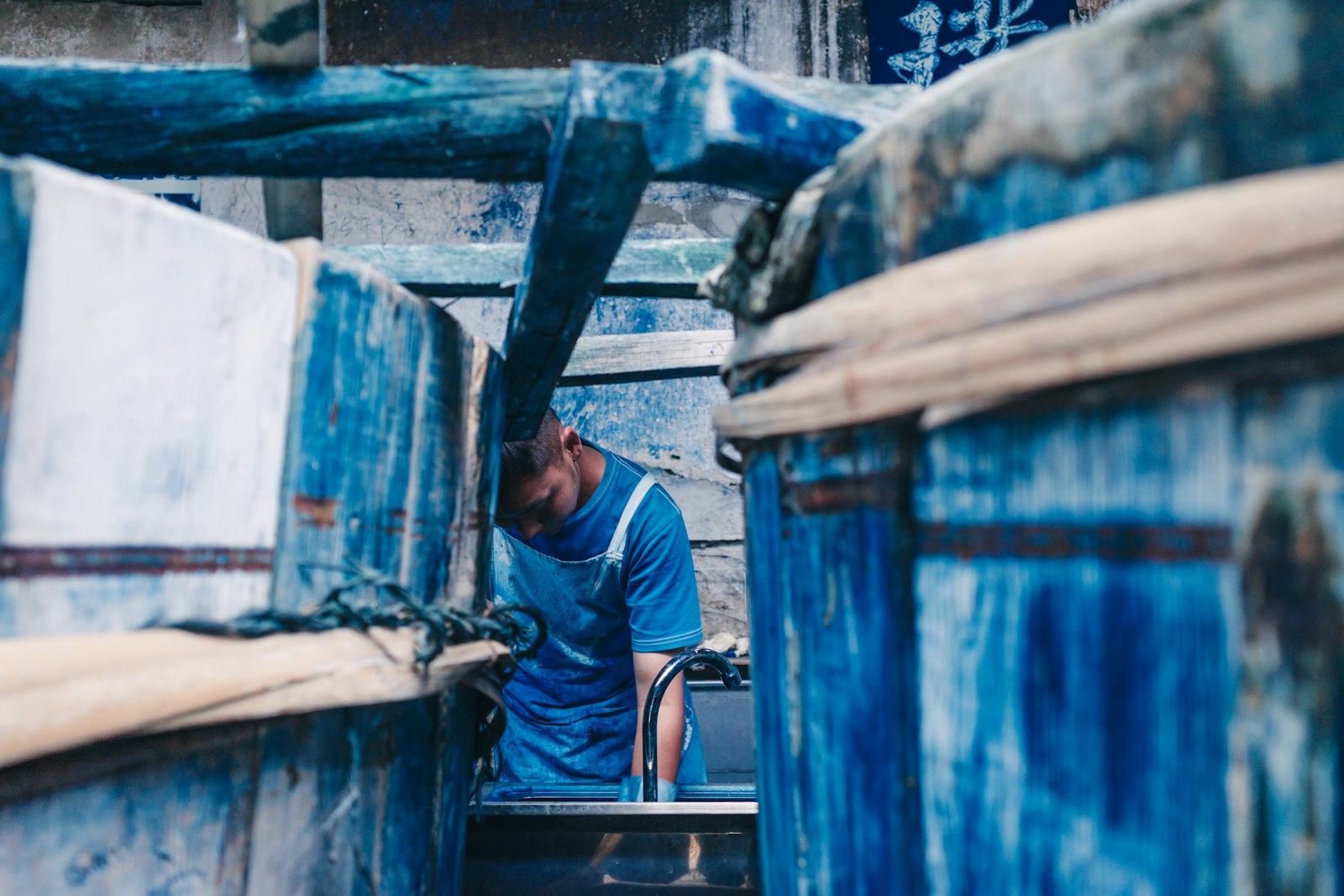
The heart of indigo cloth is the vat. Indigo dyers like to say the dye is a living thing — you have to feed and tend it every day so it doesn't die. At Ban Tha Wat the women's group still does the whole thing from scratch, and if you time it right you'll see these steps for real and understand exactly why genuine indigo costs more than chemically dyed cloth.
Soaking the indigo leaves
Fresh indigo leaves are soaked in water for about 18–24 hours until the water changes colour, then lime is added and the mixture is beaten until it foams. The deep blue sediment that settles at the bottom is the indigo paste (pieak khram), the starting raw material for the dye.
Building the indigo vat
The indigo paste is mixed with ash water and lime in the vat, then stirred (jok) every day for about 7–10 days so the indigo slowly revives until the dye turns a yellowish-green. This step takes the most skill — if the vat doesn't come alive, the indigo won't take to the cloth.
Keeping the indigo alive
Dyers say indigo is a living colour — you keep it going in the vat like tending a sourdough starter, feeding and stirring it every day so it doesn't die. The longer a vat has been kept alive, the more even and beautiful its colour, and it becomes a point of pride for each household.
Dyeing and airing to bring up the colour
Once the dye is ready, you dip the cloth or yarn into the vat, squeeze it through, then lift it out to air. Cloth just out of the vat is green, then slowly turns blue as it meets the oxygen — a reaction that's oddly satisfying to watch. You dip again and again to build up the depth of colour.
Why genuine indigo costs more
Once you see that building the vat takes a week, the indigo has to be tended every day, the cloth is dyed over and over, and then it still has to be hand-woven, you understand why real indigo costs several times more than chemically dyed fabric. What you're paying for is the time and skill of the maker, not just the cloth.
Watch the weaving — from tying patterns to finished cloth
After dyeing, the indigo yarn goes onto the hand looms. Most of the weavers at Ban Tha Wat are local women and elders who've been doing this since their mothers' generation. The cloth ranges from plain pieces in shades of indigo, from light to dark, to mat-mi (ikat) cloth where the yarn is tie-dyed before weaving to create the pattern. A single piece takes anywhere from several days to a week depending on how intricate the pattern is. Stand and watch a while and you'll see this work really does take patience and a steady hand.
- Plain indigo cloth — woven in shades of blue from light to dark, good for tailoring a shirt or for home decor.
- Mat-mi (ikat) cloth — the yarn is tie-dyed before weaving; the finer the pattern, the longer it takes and the higher the price.
- Small souvenir pieces — handkerchiefs, scarves and tote bags, easy on the wallet as gifts to take home.
- Meet the actual weavers — ask about the origin and the patterns directly; the people who made it can tell you which vat it was dyed in and how many days it took to weave.
Try dyeing your own — a workshop for visitors
The community group lets visitors try indigo dyeing for themselves if you want to take home a keepsake. Most people dye a handkerchief, a scarf or a tote bag, and watch the colour shift from green to blue with their own eyes. It's a fun activity to do with kids or as a group.
- What you'll do — tie the cloth in whatever pattern you like, dip and dye it in the indigo yourself, then air it to bring up the colour — and go home with a one-of-a-kind piece.
- How long it takes — about 1–2 hours per piece, depending on the pattern and how many times you dip it.
- Rough price — a workshop dyeing a small piece runs about 150–350 THB per piece, usually including the cloth.
- Book ahead — the community group runs this as a household craft, not a workshop that's open all the time, so messaging their page or calling to book 1–2 days ahead is the safer bet.
Leave time for the colour to set
Freshly dyed cloth needs to air-dry and set before you can take it home without it smudging, so leave a bit of buffer time at the end, and bag it separately for the trip home to keep the colour off everything else in your bag.
How to buy genuine indigo cloth
The upside of buying at Ban Tha Wat is that you buy straight from the maker — you can ask which vat it was dyed in and how many dips it took, and you usually get a better price than souvenir shops in town or roadside stalls on the highway. The market has both genuine indigo and chemically dyed imitations, which can differ in price by several times. Here's how to tell them apart.
- Smell — genuine indigo has a faint natural indigo scent, not the sharp chemical smell of synthetic dye.
- Colour — real indigo is a deep, slightly muted blue with depth and not perfectly even; chemical dye looks too bright and too uniformly flat.
- Colour bleed — genuine indigo bleeds a little in the first few washes, which is normal for a natural dye, not a defect.
- The fabric — hand-woven indigo cotton feels cool and breathes well to wear, unlike factory cloth.
- Ask the origin — buying from the maker, you can ask straight out whether they dyed it themselves and how many days the vat took; the real makers can answer all of it.
Rough prices to compare against
An indigo handkerchief or small piece starts around 80–150 THB. An indigo scarf runs about 250–500 THB depending on the fabric and pattern. An indigo-dyed shirt is around 500–1,500 THB depending on the cut. A hand-woven mat-mi piece with a fine pattern can run from a thousand to several thousand THB each. Buying straight from the community is usually cheaper than shops in town or along the highway.
Make the most of Ban Tha Wat — indigo plus Nong Han
What gives Ban Tha Wat its charm — and what the other indigo villages don't have — is Nong Han, the largest freshwater lake in Isan, right in front of the village. People here dye indigo alongside fishing and curing fish, so you can build a trip that sees the indigo, takes a raft out for a fish lunch, and visits a temple, all in one unhurried day.
See the indigo, dye your own, buy cloth
Raft fish lunch and a lakeside temple
Getting there and the best time to go
- Location — Ban Tha Wat, Lao Po Daeng sub-district, Mueang Sakon Nakhon, on Nong Han lake, about 12–15 km from the city.
- Driving — about a 15-minute drive from the Sakon Nakhon city area; having your own car is by far the easiest, as public transport barely reaches here.
- Best time — come from morning to late morning for the atmosphere and gentler sun; weekdays are quieter and easier for chatting with the makers.
- Rafting — the Nong Han rafts are busiest in the hot season and on holidays; on weekends go early to book a raft.
An honest heads-up
Ban Tha Wat is a community where people actually live, not a village staged for tourism. On some unannounced visits you might not catch anyone dyeing right then, or the indigo vat might not be alive yet. If you're set on seeing the full process or want to learn to dye, contact the group ahead of time. If you just want to buy cloth or take a raft out for a fish lunch, you can drop in whenever.
See the full picture of things to do and where to stay in Sakon Nakhon before you plan your indigo trip
See the Sakon Nakhon guide →