🔄 Updated 21 Jun 2026
Mor hom (northerners say mo hom) comes from the words mor (pot) and hom — the name of the plant that gives a blue colour. Raw cloth is dyed in the pot until it takes on a deep navy. Ban Thung Hong has been making this fabric for over a hundred years, a craft brought in by the Tai Phuan (Lao Phuan) people who migrated and settled around Phrae, carrying their indigo-dyeing know-how with them.
Today Thung Hong is the country's largest producer of mor hom cloth. There are long-standing shops still hand-dyeing the traditional way, and newer shops turning the fabric into modern, everyday clothing. You can browse all day and never see the same thing twice.
The Dyers' Street — How to Browse Without Getting Lost
The heart of Thung Hong is the local dyed-cloth street, running about 4 kilometres along Yantrakitkosol Road. From the turn into the village onward, both sides of the road are lined with dozens of mor hom shops — from tiny shophouses run by locals to big stores with proper showrooms. Park in front of any of them and just walk in.
- The first stretch (near Ban Thung Hong School) — traditional shops with classic mor hom shirts, Mandarin collars and cloth buttons, at gentle prices; good for wearing yourself or as a gift for older relatives
- The newer design shops — modern-cut cotton clothing, bags, hats, and scarves in pretty graded indigo shades; right for anyone who likes a minimal look
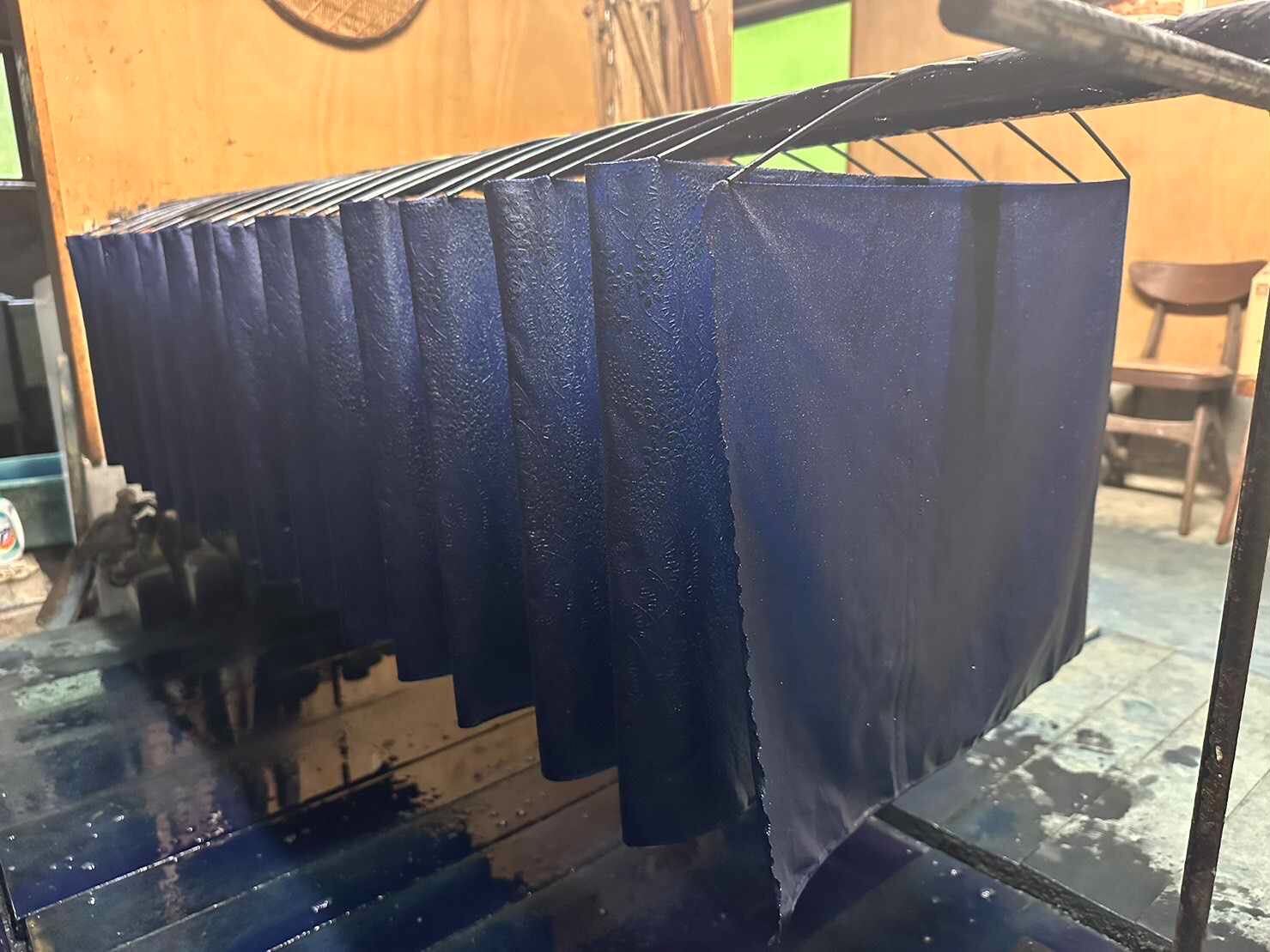
- Shops with a dyeing area you can watch — some keep their dye pots and drying racks out back; walk in to look, get good photos, and chat with the dyers themselves
How to spot the real thing
Real naturally indigo-dyed mor hom has a faint indigo smell, the colour isn't perfectly even across the whole piece, and it may bleed a little at first (wash it separately the first time). Chemically dyed cloth is flat and even in colour and much cheaper. If you want the genuine article, just ask the seller straight out whether it's natural indigo — the Thung Hong folks will tell you honestly.
Want more out of Phrae? Book tours & activities
Booking online ahead on Klook or GetYourGuide is usually cheaper than the gate and skips the queue. Pick only the experiences you actually want — prices and availability are shown live on each site.
Watching the Indigo-Dye Process — How That Blue Comes to Be
The charm of Thung Hong that a mall shop can't give you is seeing everything a piece of indigo cloth goes through before it's finished. Many locals still grow hom and indigo plants at the edges of their own fields and make the dye paste themselves. Roughly, the process goes like this.
- Pick the hom/indigo plant and soak it for 2 nights — to draw the colour out into the water
- Add lye and lime, then ‘suak’ — beat the water up and down with a whisk until it foams and the indigo pigment forms
- Let the foam settle, then strain the pigment — hang it in a cloth bag to drip until only a thick paste is left, called ‘wet indigo’
- Build the pot (feed the indigo) — mix the indigo with lye and tend it every day to keep the dye vat alive and ready
- Dye in repeated rounds — dip the cloth, wring it, air it so it meets the oxygen, then dip again; the more rounds, the deeper the colour
The amazing part is that when the cloth first comes up out of the pot it's a yellowish green, then slowly turns indigo blue as it hits the air — a natural reaction that's oddly satisfying to watch. Stand and watch a dyer do a round or two and you'll understand exactly why the real cloth costs more.
Try Tie-Dyeing Yourself — A Workshop for Visitors
Plenty of places in Thung Hong run tie-dye workshops where visitors get hands-on and take home their own handkerchief, tote bag, or tie-dyed T-shirt. One group people often mention is Pa Ngiam's — a third-generation Tai Phuan dyer who has opened her home as a learning centre, working with the Thung Hong subdistrict municipality to pass the old know-how on to younger generations.
- What you'll do — bind the cloth with rubber bands or string for the pattern you want, then dip-dye it in indigo yourself and watch the colour change before your eyes
- Time needed — about 1–2 hours depending on the piece; good for kids or coming as a group
- Price — depends on the piece and the place, but generally in the low hundreds per person, starting around 100–250 THB (cloth included)
- Book ahead — especially for big groups; call the shop first to be sure
Leave time for the colour to dry
A finished tie-dye piece needs to air-dry so the colour sets before you can take it without smudging. Leave a little time at the end, and bag it separately for the trip home so the dye doesn't rub off on other things in your bag.
What to Buy + Rough Prices
Classic Mor Hom Shirt
The traditional Mandarin-collar, cloth-button shirt — fine for the temple or a merit-making event, and a hit as a gift for older relatives. From around 150–300 THB.
Modern-Design Cotton Clothing
Contemporary cuts you can wear out or to work, in graded indigo shades. Newer shops run 150–300 THB, cheaper than ordering online.
Bags · Hats · Scarves
Small, light-on-the-wallet items — mor hom hats from around 80 THB, cloth bags and keyrings that work well as group gifts.
Cloth Lengths / Tie-Dye
Buy a length of fabric to sew yourself, or one-of-a-kind tie-dye pieces — right for anyone who loves a bit of craft.
For an easy-on-the-wallet souvenir budget, set aside about 300–800 THB and you'll come back loaded — shirts, small items, and gifts to hand out at work. Buy several pieces in one shop and you can ask for a small discount; the Thung Hong folks are friendly about it.
Getting There + Opening Hours
- Location — Thung Hong subdistrict, Mueang Phrae district, on Yantrakitkosol Road (Highway 101, the Phrae–Nan route), about 4 km from town
- By car/motorbike — roughly 10 minutes from the old-town area, clearly signposted, with easy parking out front of the shops
- Opening hours — most shops open around 8:00 a.m.–5:00 p.m.; late morning to early afternoon is the sweet spot, with shops in full swing and the sun not too harsh
- Pair it with — it sits on the Nan-side entrance to town, so stop in before or after the old town, then carry on to Khum Chao Luang or Baan Wongburi in the centre
Weekdays have more atmosphere
Weekends get busy and some dyeing spots pause their work. If you want to see the dyers actually working and have a relaxed chat, come on a weekday morning — you'll catch more of the process.
Plan a whole Phrae trip — the food, the hotels, and the old town
See the Phrae guide →