🔄 Updated 21 Jun 2026
When locals talk about nature in Chachoengsao, dolphins come to mind before anything else. The Bang Pakong river mouth, right where it meets the Gulf of Thailand, is home to the Irrawaddy dolphin — locals call it the snub-nosed dolphin. It's a brackish-water species with a rounded head and no pointed beak like the cartoon dolphins we picture. Around 50 of them have been recorded in this area, and on good-water days the pod can come together up to 60–80 strong.
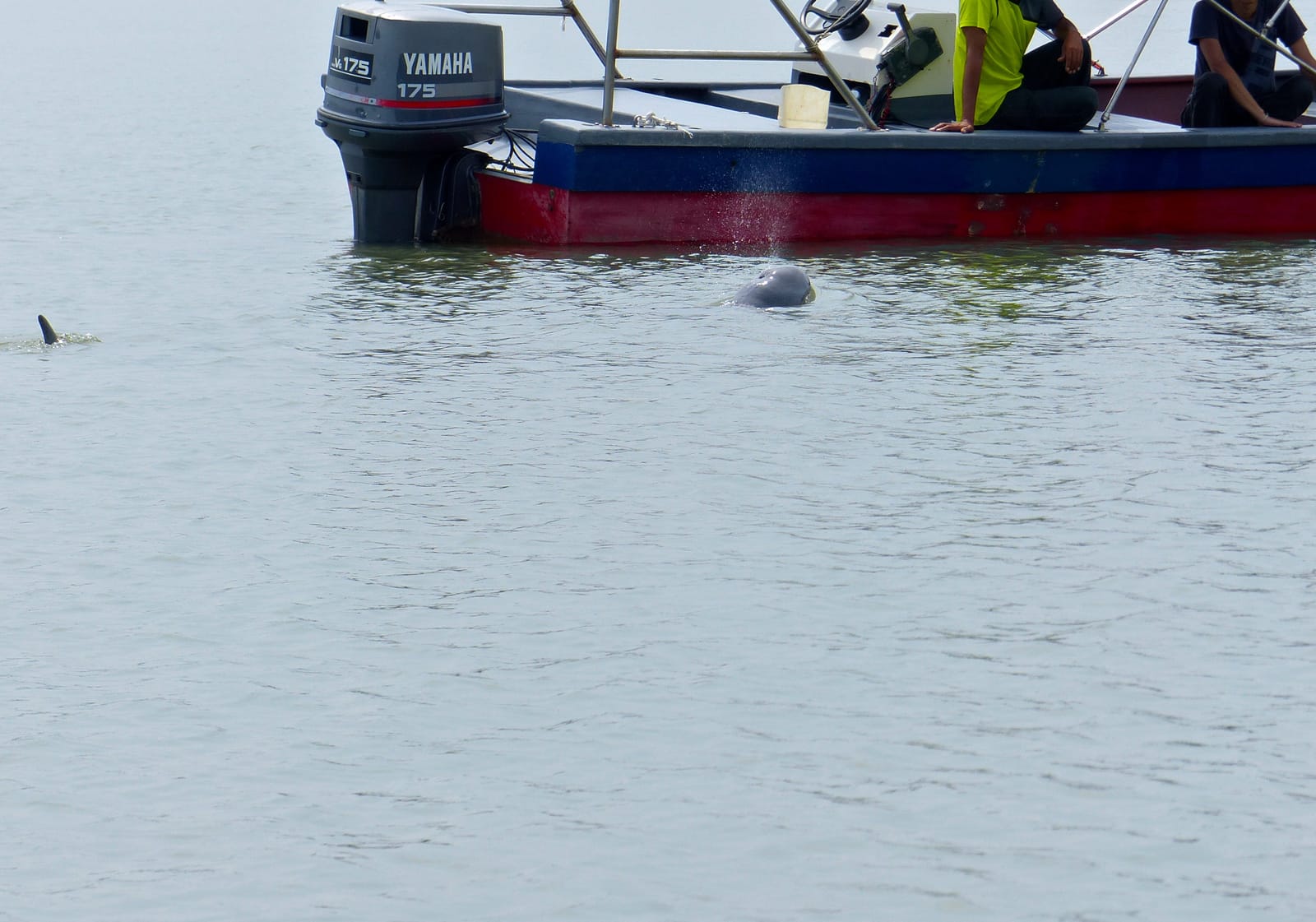
The nice thing is that this is dolphin watching in the wild, not a tank show. The boat takes you out to drift near the spots where the dolphins like to feed, then waits for the moment they surface to breathe. That's where the excitement is — nobody can promise 100 percent that you'll see them, but go at the right time and your odds are very high.
Dolphin season — when to go to actually see them
Irrawaddy dolphins move into the Bang Pakong river mouth following the food. The window when you can spot them is November through February every year, because that's when the river cools down and sea catfish and small baitfish pour in — the dolphins' favourite food. Once the cool season ends and the hot season arrives, the pod retreats back out to sea, so most dolphin cruises only run during this stretch.
- November–December — dolphins start filtering in, the weather is cool and pleasant, a good time to kick off the season.
- January–February — peak season, dolphins arrive in numbers and gather in big pods, the best odds of spotting them.
- March onward — sightings get rare and many operators stop running until late the following year.
When you'll spot them most easily
Dolphins feed most actively in the morning before noon and in the late afternoon into evening, and it's usually tied to the rise and fall of the tide. Before you book, ask the boat operator what time high tide hits that day — it can make a big difference to your chances.
Want more out of Chachoengsao? Book tours & activities
Booking online ahead on Klook or GetYourGuide is usually cheaper than the gate and skips the queue. Pick only the experiences you actually want — prices and availability are shown live on each site.
Where to board and prices
Dolphin cruises mostly leave from the Tha Kham sub-district side, in Bang Pakong district. There are several piers and operators to choose from, and the price depends on whether you join a shared boat or charter the whole thing, plus the boat size. Below are the options people commonly use. Prices are approximate — always call to check before you go, as they can shift with fuel costs and group size.
Tha Kham Sub-district Municipality Pier (Ban Khlong Tamru, Moo 8)
A busy community pier where plenty of people go. The cruise runs about 2 hours and takes you to see dolphins, the bird island and the sea bass fish pens. Good for small groups who are happy to join a shared boat.
Lom Resort
A riverside stay with its own dolphin cruise service, running boats from 20 up to 80 seats. Good for families or large groups who want to stay overnight and head out early on the morning boat.
Chao Mae Thapthim Shrine Pier (Moo 1, Tha Kham)
Another pier in Tha Kham, near the riverside Chao Mae Thapthim shrine. Easy to board, and good if you want to stop and pay respects at the shrine before getting on the boat — all in one trip.
Ban Khao Ok Community Boat Group
A local conservation-tourism group that arranges dolphin cruises and a look at the traditional fishing way of life. Good if you want to support the community directly — call ahead to arrange.
Straight talk
Prices and contact numbers for the community piers change often, and some operators only open during dolphin season. Before you set out, call to confirm there's a boat running that day, agree on a time, and check how they'll price it. That's a lot safer than driving out only to find the pier closed.
How to book and what to prepare
Booking a Bang Pakong dolphin cruise is still mostly done by calling the boat owner or community group directly — there's no real online booking system like a packaged tour yet. The process is simple: call the pier you've picked, give your group size and date, and ask whether the dolphins have arrived for the season.
- Call 1–2 days ahead, especially over long weekends, as boats fill up fast.
- Go as a group — chartering works out better value than a shared seat, and about 8–15 people is the sweet spot.
- Bring a hat, sunglasses and sunscreen — out in the middle of the river the sun is harsh and there's no shade.
- Wear the life jacket — proper boats provide them; if an operator doesn't, give it a miss.
- A zoom camera or a good phone camera — dolphins only break the surface for a second, so stay ready to shoot the whole time.
It's not just dolphins — the bird island and mangroves
During the cruise, most boats stop at Ko Nok (Bird Island), a small island in the middle of the river as locals call it. It's a healthy stretch of mangrove forest and one of eastern Thailand's better birdwatching spots. Some routes have a wooden boardwalk and a birdwatching tower you can climb for views over the river mouth, and you'll see plenty of birds settling in during the morning and evening.
Ko Nok (mid-river mangroves)
Walk the wooden boardwalk through the mangroves, climb the birdwatching tower and see the river-mouth ecosystem up close.
Sea bass fish pens
Pass the fishermen's white sea bass floating pens — some have riverside restaurants where you can stop.
Riverside temples and shrines
Stop to pay respects at the Chao Mae Thapthim shrine or a riverside temple before or after the boat, all in one trip.
Plenty more to fill a full day in Chachoengsao
The Bang Pakong river mouth is an easy drive from Chachoengsao town. Plenty of people do the dolphin cruise in the morning, then head into town to make merit and eat well, all in the same day. Below is an unhurried way to lay out the trip.
Dolphins in the morning, town in the afternoon
Plan a full day in Chachoengsao — dolphins, temples and food
See the Chachoengsao travel guide →