🔄 Updated 21 Jun 2026
The best thing about Nakhon Nayok is how close it is — so close that plenty of people sleep in and still make it in time. But if you want the falls before the crowds and the harsh midday sun, leaving Bangkok around 7am is about right. The main route is the Rangsit–Nakhon Nayok road (Highway 305), then Route 33 into town, before turning up the hill toward the waterfalls. In the rainy season (June–October) the water runs stronger and colder, while in the dry season some falls drop to a trickle, so it's worth checking the water level before you go.
How to get to Nakhon Nayok, and the best way to travel
A Nakhon Nayok day trip works best with your own car, because the waterfalls are spread out along the hillsides and no public transport runs right up to them. If you don't have a car, the option is a minivan or coach from Victory Monument or Mochit into Nakhon Nayok town, then a songthaew (shared pickup) or a rented motorbike or chartered car the rest of the way to the falls. It's fiddlier and ties you to tighter timing.
- Private car — the easiest. About 1.5–2 hours from Bangkok to town, then another 20–30 minutes up the hill to the falls, with parking at every waterfall.
- Minivan / coach — catch one at Victory Monument or Mochit and get off in Nakhon Nayok town. Fares run a couple hundred baht, then a songthaew on to the falls.
- Chartered car / taxi from town — good value if there's a group of you to split it. Tell the driver to loop you around 2–3 waterfalls in the day.
A timing tip
On weekends and long holidays the popular falls fill up from mid-morning. If you can, go on a weekday and you'll get a near-empty pool almost to yourself. Heading back on a Sunday evening, traffic tends to clog up around Rangsit — leaving Nakhon Nayok before 4pm avoids a lot of it.
Book the activities in your Nakhon Nayok trip ahead
Booking online ahead on Klook or GetYourGuide is usually cheaper than the gate and skips the queue. Pick only the experiences you actually want — prices and availability are shown live on each site.
The main waterfalls worth picking for a day trip
You don't need to hit every waterfall in one day. Picking 1–2 and really settling in for a swim is more fun than rushing to tick them all off. The three names people think of first are Nang Rong, Sarika and Wang Takrai, and each has its own character.
Nang Rong Waterfall
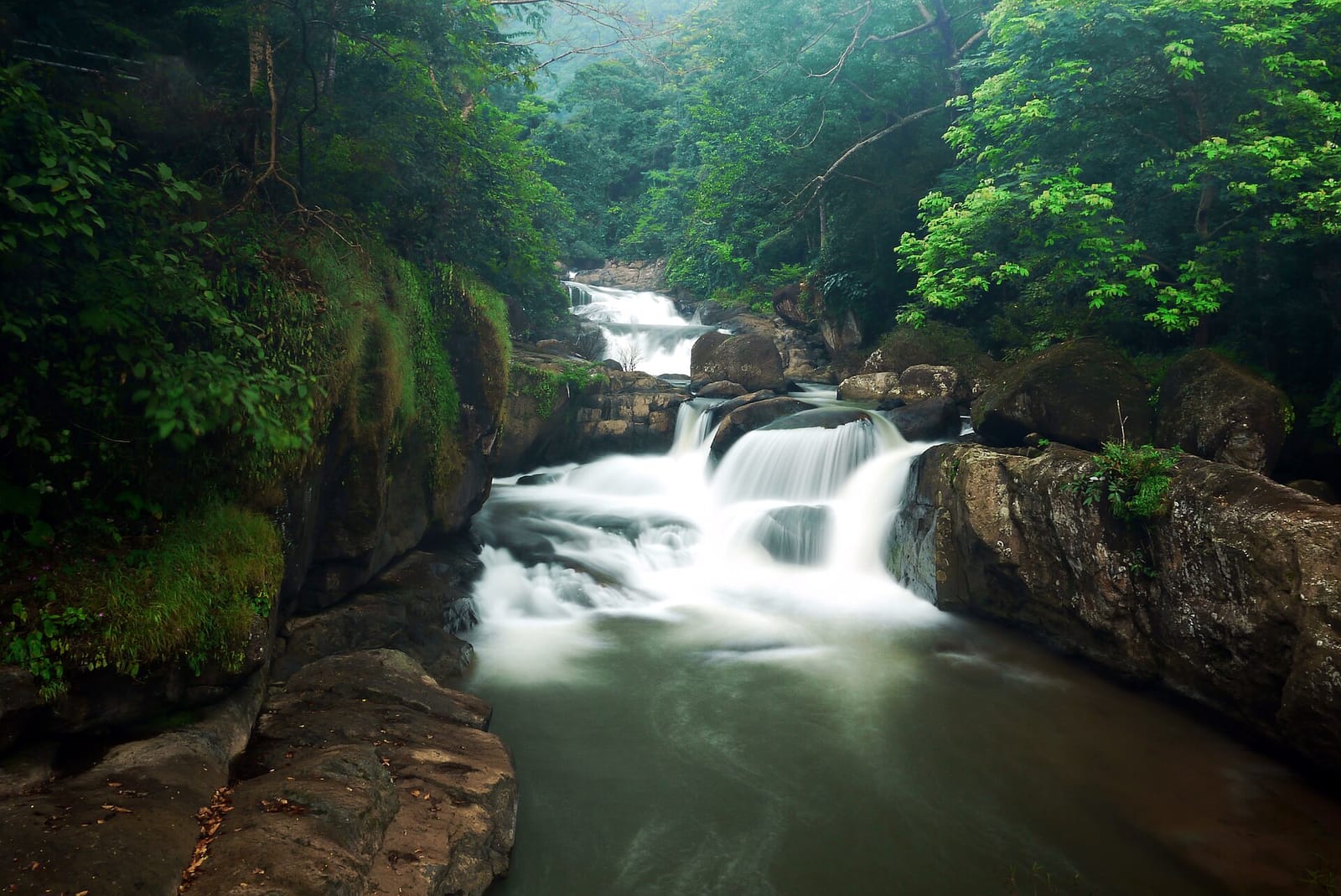
Inside Khao Yai National Park on the Nakhon Nayok side, about 20 km from town. The water steps down in low tiers with several pools to wade into, and the shaded grounds stay cool, so you can lay out a mat and hang around all day. It's an easygoing one for families bringing kids to play in the water.
Sarika Waterfall
The province's biggest fall, dropping from a tall cliff in several tiers — the top tier is nearly 200 metres high and looks dramatic when the water's running. The lower tiers have pools you can soak in, and if you like a climb there's a path up to the higher levels. This is the classic image of a Nakhon Nayok waterfall.
Wang Takrai Waterfall
Set in Wang Takrai Park, it feels like a shady forest garden along a stream — clear, slow-moving water that's great for a picnic, camping, dipping your feet, or an easy splash about. It's not flashy, but the setting is lovely, and it suits groups who'd rather chill than charge around.
Khun Dan Prakan Chon Dam
Not a waterfall but a viewpoint over the longest roller-compacted concrete dam in Thailand, ringed by greenery so lush it's earned the nickname 'Thailand's Greenland'. Drive up onto the crest for photos of the reservoir, and there are riverside restaurants for an afternoon meal. A good last stop before heading home.
How to pick a waterfall
Want a safe swim with the kids? Go for Nang Rong. After a tall, dramatic waterfall shot? Sarika. Just want to picnic and chill under the trees? Wang Takrai. And if you've got time to spare, finish at Khun Dan Dam.
A minute-by-minute day-trip plan
Here's a timeline you can actually follow, based on a private car leaving Bangkok in the morning, with the focus on getting the most swimming in and making it home before dark. Adjust the times to how slow your crew is to get moving.
Leave Bangkok → first waterfall
Lunch break + second waterfall
Stop at a viewpoint → back to Bangkok
What to eat along the way
Food around the Nakhon Nayok waterfalls leans into riverside menus — freshwater fish, som tam and punchy Isan dishes. There are plenty of well-known spots that locals and visitors stop at all along the road up to the falls.
Krua Rim Than
A streamside place near Wang Takrai — nice setting, fair prices. Standouts are the garlic-fried sheatfish, salt-grilled red tilapia and grilled prawns.
Krua Pa Makham
Near Khun Dan Dam, with tables where you can dip your feet in the water. Fish dishes, som tam and tom yum — good for a long, lazy afternoon.
Cho Chamuang
A Nakhon Nayok institution going back more than 40 years. Signatures are grilled snakehead fish with noni leaves, sour chamuang-leaf pork curry, and stir-fried stink beans with prawns — bold and satisfying.
Kai Yang Song Sao
On the road to Sarika Waterfall, serving zesty Isan food. Stars are the grilled chicken, salted-egg som tam, and yardlong-bean salad with crispy pork.
Straight talk
Some restaurants right by the falls charge tourist prices, especially fish sold by the kilo. Ask the per-kilo price before you order so the bill doesn't surprise you. If you want to save, eat in town before heading up the hill — it's cheaper there.
How to prep before a waterfall day
- Non-slip shoes — the waterfall rocks are very slippery, so heel-strap sandals or rubber shoes beat plain flip-flops.
- Swimwear + a change of clothes — most falls have changing rooms, and bring a bag for your wet things.
- Sunscreen and bug spray — the sun is harsh midday, and there are mosquitoes under the trees, so put some on to be safe.
- Cash — many entry gates and riverside restaurants take cash only, so bring small bills.
- Pack out your trash — several falls ask you to carry your rubbish back out; help keep them clean so they stay good to swim in for years.
On safety
In the rainy season flash floods can come fast and hard. If the water starts to turn murky or runs unusually strong, get out immediately. Don't swim above tiers where the current is fierce, and always heed the park's warning signs.
Want a full province-wide Nakhon Nayok travel plan?
See the Nakhon Nayok travel guide →