🔄 Updated 21 Jun 2026
If you've just driven the winding mountain road up to Betong, the first thing most people do is leave the car at the hotel and head out on foot. Nearly all of Betong's highlights are clustered around Sukhayang Road and the clock tower roundabout, all within a few hundred meters of each other. This is a Thai-Chinese community blending Hokkien, Hakka, Cantonese, and Teochew roots, living alongside Thai Muslim-Malay neighbors for generations — so it has the feel of a border town where several cultures overlap.
The Largest Mailbox in Thailand
The first stop for almost everyone who comes to Betong is the giant mailbox. It stands in the middle of town near the clock tower intersection, on Sukhayang Road close to the community pavilion, rising about 9 meters tall — the largest mailbox in Thailand. It traces back to an old postbox built in 1924 (before World War II), later rebuilt at a much larger scale as the town's landmark. It's still a working mailbox too, so plenty of visitors buy a Betong postcard, write a note, and drop it in to send home as a keepsake.
Photo Tip
The mailbox sits right beside a road with traffic. If you want a shot with fewer people, come in the morning before 9 a.m. — the light is soft and the crowds haven't arrived. By late afternoon there's usually a bit of a queue of tourists waiting to take photos.
Want more out of Yala? Book tours & activities
Booking online ahead on Klook or GetYourGuide is usually cheaper than the gate and skips the queue. Pick only the experiences you actually want — prices and availability are shown live on each site.
The Marble Clock Tower at the Town Roundabout
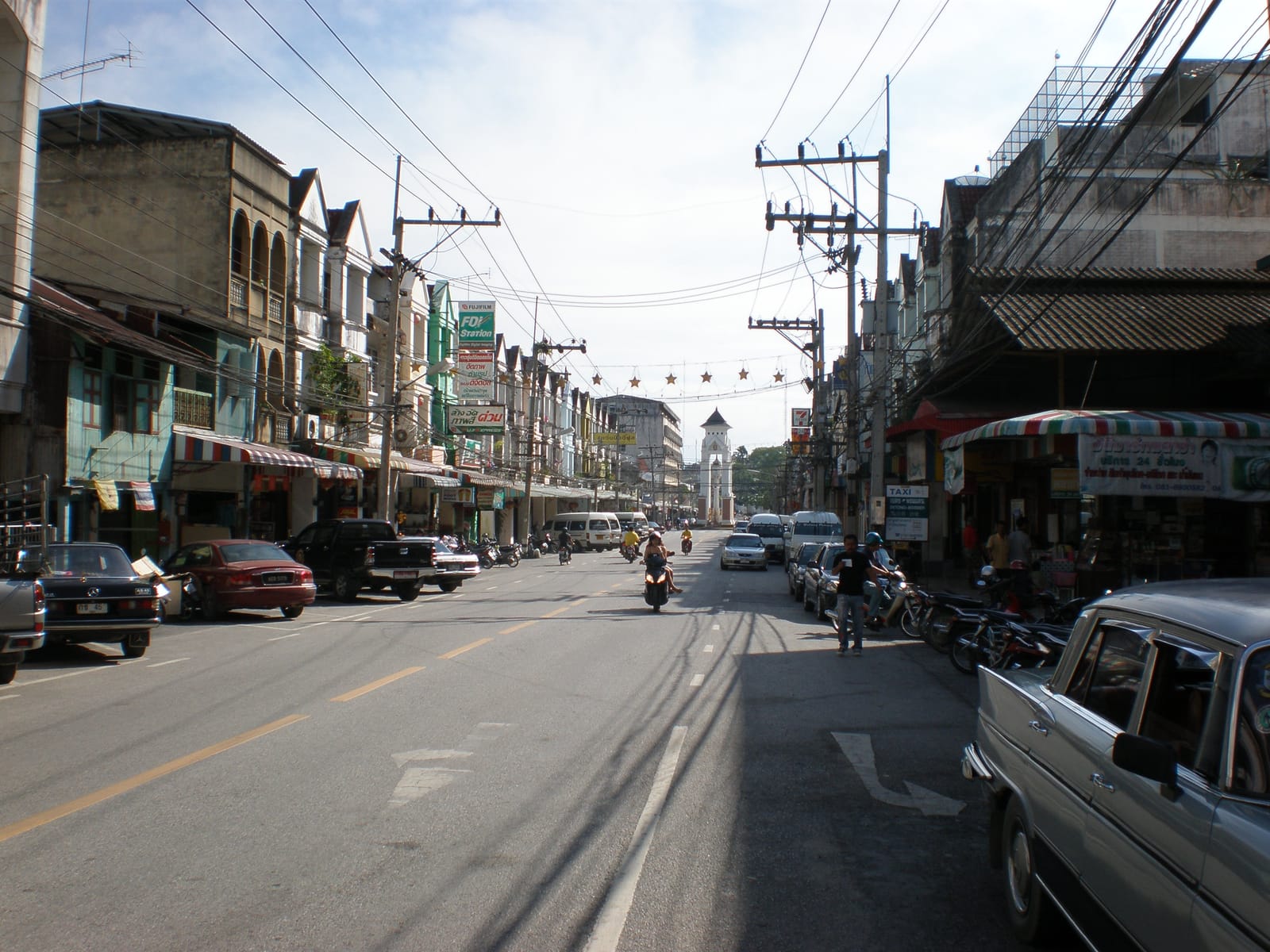
Just a few steps from the mailbox is the clock tower roundabout, where Sukhayang Road meets Rattanakit Road. Built of marble, the tower has stood with Betong for a long time and has become one of the first things people picture when they think of the town. One of its quirks is the flock of tens of thousands of swallows that escape the cold and migrate here from Siberia — roughly September through March. In the evenings the birds blanket the power lines around the clock tower, a sight locals know well and tourists often stop to watch.
A Note About the Birds
When the swallows are roosting in numbers, the sidewalk under the wires can catch the occasional bit of droppings. A hat or umbrella makes it more comfortable. The birds are seasonal, so if you visit outside this window you may not see the big flock.
Street Art Hidden Down Every Side Street
Wander out from the roundabout along the small side streets around town and you'll find street art scattered across walls, fences, under bridges, and on the sides of old buildings. Most of the murals tell the story of local Betong life, its cultural diversity, and the town's icons — Betong chicken, the running-water tilapia, swallows, and the misty mountain town atmosphere. Dozens of artists have added to the collection over the past several years, turning this small town into something like an open-air gallery.
- Walls telling the Betong way of life — murals of Betong chicken, tilapia, and rubber tappers, reflecting the trades and specialties the town is known for.
- Murals paired with old buildings — many are painted on the walls of old wooden shophouses, so you capture both the art and the architecture in one frame.
- Corners under bridges and down the lanes — half the fun is finding the spots yourself, since the murals are spread out rather than gathered in one place — like a little scavenger hunt.
Old Buildings and the Chinese Community Downtown
The Sukhayang Road area and the lanes around it still hold the old Chinese shophouses of a community that has lived here since the early 20th century. The first Chinese settlers arrived in this area around 1900, putting down roots and making a living through trade, rubber plantations, and mining, until a community of several ethnic backgrounds took shape — Hokkien, Hakka, Cantonese, Teochew. Old wooden and concrete shophouses, shop signs in Chinese characters, shrines, and traditional coffee shops are still visible around town, so a stroll here feels like more than just ticking off a photo stop — you sense the town's roots.
If you're interested in going deeper into the town's Chinese roots, the outskirts also have an old Hakka Chinese village said to have been around for more than 150 years — another side of Betong's history, different from the downtown shophouses. If you have time to spare it's worth a look, but if you're short on time, just walking the Sukhayang Road area is enough to catch the flavor of the old Chinese community.
Respect the Community's Space
Many of the old buildings are still homes and shops with people actually living in them. Photographing the exteriors is perfectly fine, but if you want to go inside a shrine or someone's home, it's more polite to ask the owner first. This area is also close to the Muslim-Malay community — dress and carry yourself in a way that fits a place where several cultures live side by side.
Betong Mongkhonrit Tunnel and Other In-Town Stops
Near the town center is the Betong Mongkhonrit Tunnel, Thailand's first road tunnel bored through a mountain — about 273 meters long, 9 meters wide, and 7 meters high, open since 1 January 2001. By day you can drive straight through as normal; by night it's lit up for nice walking photos. There's also the Betong Town Museum, where you can head up to the top floor for a view over the town, open roughly 9:00–16:30. And the OK Betong sign, along with several other go-to photo corners, all sit within walking distance.
Betong Mongkhonrit Tunnel
Thailand's first tunnel bored through a mountain; lit up at night and good for walking photos.
Betong Town Museum
Tells the town's history; head to the upper floor for a view over the valley town. Open roughly 9:00–16:30.
OK Betong Sign
The town's signature sign and a popular photo spot before you head off.
Walking Central Betong — How to Split Your Time
The in-town spots are very close together, so splitting them into a morning and an evening block covers everything comfortably. Here's a rough plan for anyone staying one night in central Betong.
Hit the Main Landmarks
Old Buildings and Town Atmosphere
Getting There and the Mountain-Valley Atmosphere
Betong sits at the far south of Yala province, right on the Malaysian border. Most people get here by driving or taking a car from Yala town, along dozens of kilometers of winding mountain road, with rubber plantations and green peaks on both sides. In the early morning hours, mist often drifts through the valley, giving the place a cool, comfortable feel like northern Thailand. If you're driving yourself, allow extra time and take the curves slowly — especially when the fog rolls in and visibility drops.
Check Conditions Before You Travel
Betong is a popular travel town with a friendly atmosphere, but Yala is in Thailand's southern border region. Before setting out, it's worth checking the latest news and any safety advisories for the areas you'll pass through. Planning your route and traveling during daylight hours will give you more peace of mind.
Plan a full Betong–Yala trip — see all the places to stay and things to do
See the Yala Travel Guide →