🔄 Updated 21 Jun 2026
Bueng Kan isn't a province where everything clusters in one town, the standout sights are mostly spread across the outer districts. Three Whale Rock is in Khok Kong subdistrict, Mueang Bueng Kan district, about 30 km from town. Seven-Color Waterfall is in Seka district, Phu Tok is in Si Wilai district, and Naga Cave sits inside Phu Langka National Park on the border with Nakhon Phanom. The Mekong views and Kaeng Ahong are in town. Getting around here means having a car and allowing decent driving time. We've split things into four groups to make it clearer: rock hills and caves, the Mekong riverside, waterfalls, and lake nature.
Rock Hills & Caves — the Heart of Bueng Kan
If it's your first time in Bueng Kan, these three are the main reason people make the trip: Three Whale Rock, Naga Cave, and Phu Tok. They're ancient sandstone formations in different forests and parks, and each takes a bit of different prep. Some need a ride from the park rangers, some need a booking in advance. Read the conditions before you go so you don't miss out.
Three Whale Rock — Phu Sing
Three sandstone boulders jutting out over a high cliff, around 75 million years old. From the side they look like a whale family — parent and calf — swimming in a line, and it's become the signature image of Bueng Kan. People love going up for sunrise because the sea of fog is gorgeous. You can't drive up yourself, you have to take a ranger vehicle from the Phu Sing forest reserve. The most popular photo spot is sitting with your legs dangling over the cliff edge, and there's a drone-photography service too.
Naga Cave — Phu Langka National Park
Rocks and cave walls with patterns and shapes resembling the coiled scales of a naga (serpent), which has turned it into a spiritual pilgrimage site that draws crowds all year. You hike a trail roughly 2 km uphill, fairly steep, and a ranger guide is required — one guide per group of up to 5 visitors. Book ahead through the QueQ app or walk in and take a number on site, but during long holidays the queue fills up very fast.
Phu Tok — Wat Chetiya Khiri Wihan
A lone rock hill rising from flat land, with stairs and wooden walkways spiraling 360 degrees around it up to seven levels, built by hand over five years. Level 5 is the most popular viewpoint, where you walk along the cliff edge — a real nerve test, so anyone afraid of heights needs to steady themselves. Level 7 has steep paths and thick forest, and the rangers don't recommend climbing up there. It's a forest meditation temple, so dress modestly and stay composed as you walk.
Phu Langka — Trails and Viewpoints
Phu Langka National Park, where Naga Cave sits, also has other hiking trails and viewpoints within it. It suits people who like unhurried nature walks, and the air is pleasantly cool from late rainy season into early winter. If you've done Naga Cave and still have energy, you can keep going and catch the views inside the park.
A Tip on the Naga Cave Queue
Naga Cave caps visitors at roughly 1,000 per day, split between QueQ app bookings and on-site walk-ins. If you're going on a long holiday, booking ahead is the safer bet, and you should arrive early because they only let people up until 2 pm. The trail up takes a fair while, so allow plenty of time.
Want more out of Bueng Kan? Book tours & activities
Booking online ahead on Klook or GetYourGuide is usually cheaper than the gate and skips the queue. Pick only the experiences you actually want — prices and availability are shown live on each site.
Along the Mekong — Views and Beliefs
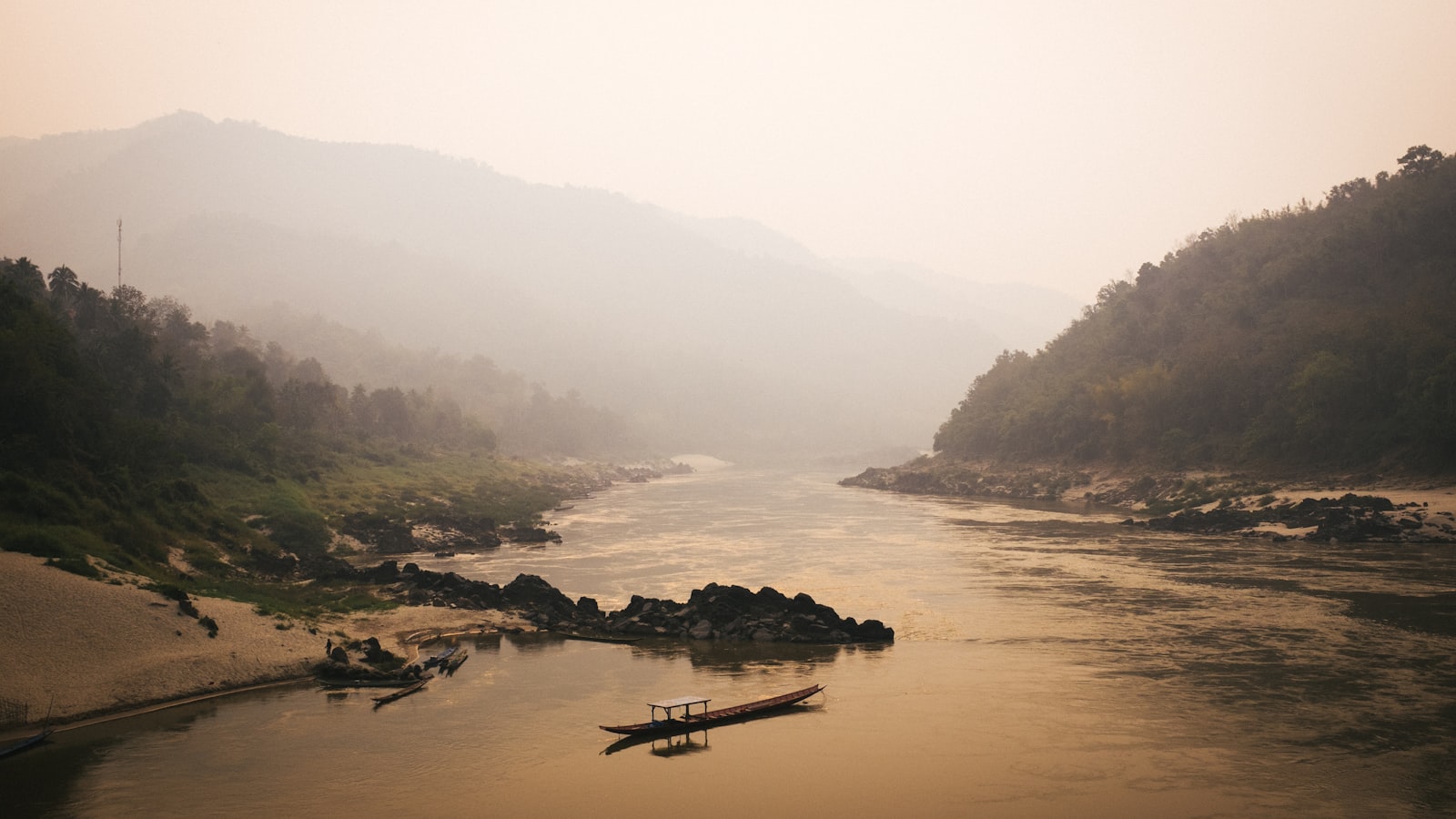
Bueng Kan has the Mekong stretching the whole length of the province as its border with Laos, and across the water you get a clear view of the mountains around Pakxan. The riverside in town has a walkway along the river that's nice for an evening stroll, while Kaeng Ahong outside town is the spot people believe is the navel of the Mekong — a good atmosphere for taking in the view and paying respects at the temple.
Wat Ahong Silawat — the Navel of the Mekong
A riverside temple in Ho Kham subdistrict, about 20 km out of town. Right in front of the temple is Kaeng Ahong, the spot people believe is the deepest point of the Mekong, where the water swirls into a funnel shape — known as the navel of the Mekong, tied to naga legend. In the dry season when the water drops, the rock rapids surface beautifully. A calm place to take in the view and pay respects.
Riverside Walkway in Town
The walkway and plaza along the Mekong in central Bueng Kan. In the evening locals come to exercise and sit in the breeze, looking across to the Laos side. You can carry on to the markets and riverside shops — an easy chill spot you don't have to drive far for, perfect for ending the day before grabbing dinner.
Waterfalls — Swimming in the Rainy Season
Bueng Kan's waterfalls are beautiful and fun to swim in during the late rainy season, around July to October, when the water is plentiful and clear. The standout is that several of them have rock platforms and natural water channels like slides. Come in the dry season and the water is low or gone, so if you're set on swimming, check the timing first.
Seven-Color Waterfall
A multi-tier waterfall spreading down a sandstone cliff in the Phu Wua Wildlife Sanctuary, Seka district, formed by the Huai Ka-am stream cascading down about 3 levels. The name 'seven colors' comes from the spray catching the afternoon sun in rainbow hues during the rainy season. Each tier has rock platforms and pools you can swim in like a natural water park, with rock chutes to slide down. It's the most popular waterfall in Bueng Kan.
Tham Phra Waterfall — Phu Wua
A large 3-tier waterfall flowing onto a wide sandstone platform in the Phu Wua area, Seka district, with pools and rock channels for swimming. The forest setting is quieter than Seven-Color Falls, and you have to walk in a fair bit, so it suits people who like less crowded nature. It's good for swimming in the rainy season too.
Straight Talk About the Waterfalls
Bueng Kan's waterfalls are only truly beautiful from the rainy season into early winter. If you come in the dry season, around March to May, the water is usually low or gone, and you'll likely be disappointed if you came to swim. The period with the most water and the safest conditions is roughly August to October, and you should check for heavy-rain warnings before getting in, because flash floods can run strong.
Nature and Lakes
Beyond the hills and waterfalls, Bueng Kan also has wetlands and lakes for slower-paced visits, good for birdwatching and catching the sunset, plus the wide green rows of rubber plantations that are a familiar sight in this province, since Bueng Kan is one of Isan's major rubber-growing areas.
- Bueng Khong Long — a large wetland of international significance, with an observation tower and birdwatching spots. It's prettiest at sunset, and in winter there are migratory birds to see. An unhurried spot to visit, near the route to Three Whale Rock.
- Rubber Plantation Rows — along the driving routes through the province you'll see long stretches of green rubber plantations. It's a plain, lingering view for visitors, and you can pull over for photos on the way.
- Phu Wua Wildlife Sanctuary — the large forest where Tham Phra Waterfall sits, with hiking trails and nature to explore. It suits people who like serious forest country.
- Riverside Markets and Food — end the day with local food: Mekong river fish, Isan dishes, and Vietnamese kuai-chap noodles that are a specialty of this area.
Putting Together a Bueng Kan Trip
Bueng Kan's attractions are spread across several districts, and driving between spots takes a fair while. This plan is laid out as 2 days, 1 night to cover all the main sights. If you only have one day, pick a single zone. If you have three days, add the Phu Wua waterfalls and some slower-paced sightseeing.
Rock Hills + Naga Cave (Mueang Bueng Kan–Bueng Khong Long–Si Wilai zone)
Mekong + Waterfalls (town–Phu Wua zone)
- If you have one day — pick a single zone, e.g. Three Whale Rock in the morning + Naga Cave, or Phu Tok + Bueng Khong Long. Don't try to do it all in one day, the distances are long.
- If you have three days — add the Phu Wua waterfalls and some slower sightseeing, with morning birdwatching at Bueng Khong Long and an extra hike at Phu Langka.
- Getting there — fly into Udon Thani or Nakhon Phanom and rent a car to drive on, or take a coach into Bueng Kan town. Within the province, nearly everywhere needs a private vehicle.
- Best season — late rainy season into early winter, around October to January. The waterfalls still have water, the air is cool, and the sea of fog at Three Whale Rock is beautiful.
See hotels and the full Bueng Kan travel guide before you set off
See the Bueng Kan Guide →