🔄 Updated 21 Jun 2026
Ask anyone in Bueng Kan what they eat for breakfast and the most common answer is khao piak sen — chewy Vietnamese-style rice noodles in a hot pork-bone broth. Other Vietnamese dishes like nem nuong, steamed rice rolls and mu yo are woven into daily life so thoroughly that hardly anyone thinks of them as foreign food. The reason is the Vietnamese community that crossed the Mekong during the Indochina wars and brought their recipes with them.
Vietnamese food across the upper Isan towns — Bueng Kan, Nong Khai, Udon — looks much the same, but Bueng Kan's charm is that most of the shops are still small family places: cheap, and often run by the children and grandchildren of the first Vietnamese arrivals. We've ordered the list by where locals actually eat and what reviews say, not as a fixed best-to-worst ranking, because each shop is strong on a different dish.
8 Vietnamese food spots in Bueng Kan locals go to
Khao Piak Dim Sum Na Bueng Kan
The khao piak sen shop people in town mention most. The fresh rice noodles are springy and chewy, the pork-bone broth is clear but full-flavored, and it comes loaded with mu yo, meatballs, pork blood and pork bone. Eat it with roasted chili paste and a squeeze of fresh lime — a warm breakfast, especially in the cool season.
Nem Nuong Khun Or (Bueng Kan)
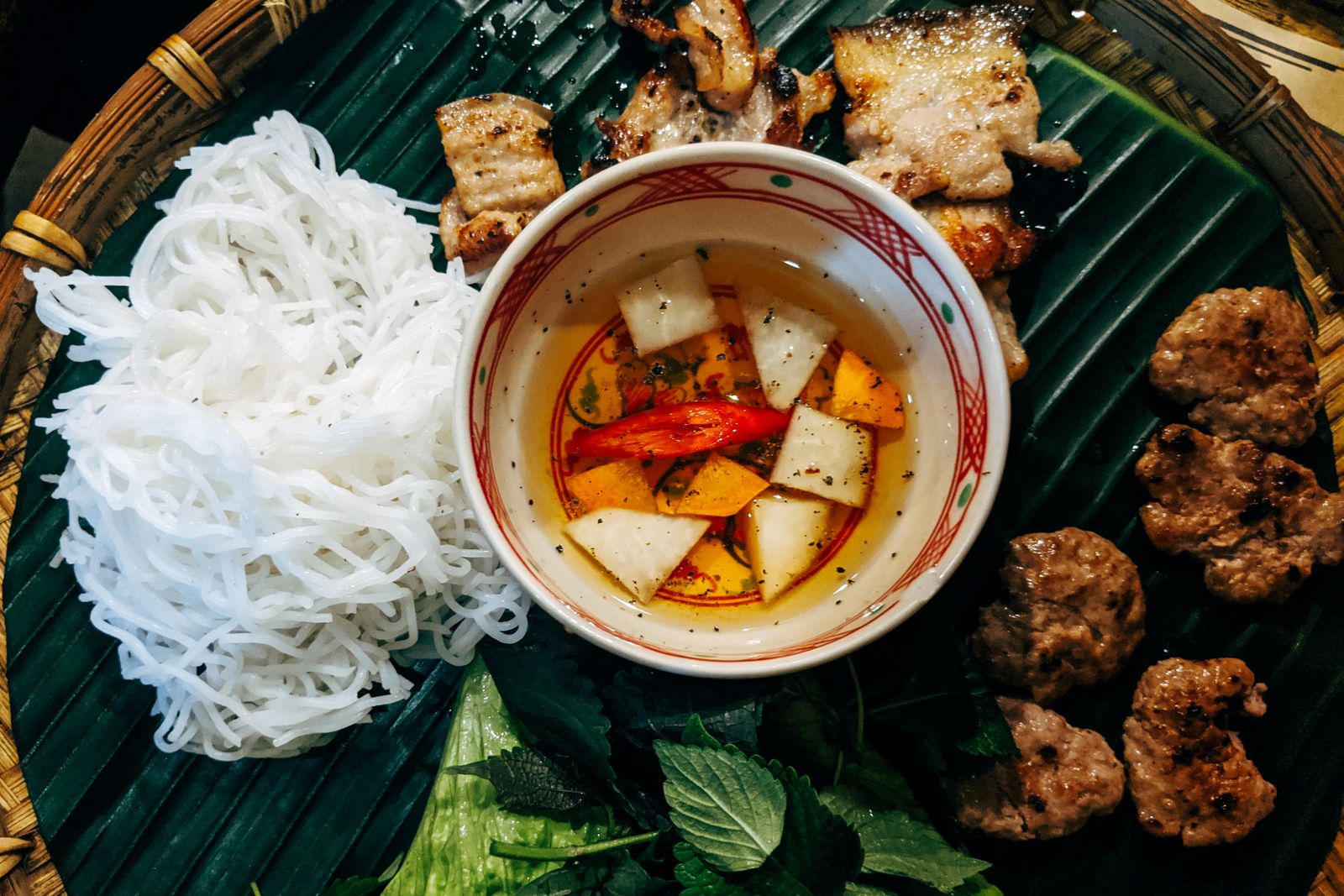
The Bueng Kan branch of a nem nuong maker that's been at it for decades. The grilled pork sausage is firm and fragrant, served with a big pile of fresh greens, rice paper and a generous pour of peanut dipping sauce — no skimping. There's also Vietnamese steamed rice rolls, blanched mu yo and other Vietnamese small bites, all under one roof.
Vietnamese Kuay Jab Madame Kai (original recipe)
A Vietnamese kuay jab spot Bueng Kan locals know well. The rolled noodles are soft and chewy, the broth is fragrant with aromatics, and it comes with mu yo, minced pork and egg. Reviewers like that the flavor is well-seasoned, not bland — a light, satisfying lunch.
Khun O — Vietnamese Kuay Jab & Made-to-Order
A small shop in Wisit subdistrict that locals nearby drop in on regularly. Vietnamese kuay jab is the star, with made-to-order dishes you can add on — good for a group where everyone wants something different. Prices are easygoing.
Baan Khao Piak
A khao piak shop people call a neighborhood icon — passersby tend to stop in. The noodles are made fresh and the broth is rich. In the cool-season high season it sells so well there's a queue, so if you want a relaxed bowl, come a bit later in the morning to dodge the work crowd.
Khao Piak Sen (Pak Wak)
A khao piak sen shop in Wisit subdistrict with prices that are very kind to your wallet — bowls start at just a few baht, and you can add egg or order a special bowl. The broth is homey and easy to eat, good for filling up without denting your budget.
Thippawan Restaurant (Vietnamese line)
A sit-down, table-service Vietnamese place with small and large nem nuong sets, Vietnamese kuay jab, mu yo with pork skin, Vietnamese steamed rice rolls and spring rolls. Great for families who want to order several things to share. The fresh greens and dipping sauces are what people like most.
Local mu yo vendors (market stalls / souvenir shops)
Bueng Kan mu yo follows recipes passed down from the Vietnamese community — bouncy and firm, and some makers add pork skin and pepper for a stronger, more traditional kick. Buy it at the morning market or souvenir shops in town. It's the most popular thing to bring home, but get it close to when you leave — fresh mu yo doesn't keep long.
Tips for eating khao piak sen
Khao piak sen is a breakfast dish — most shops open early and start running out by late morning. If you want fresh noodles and broth that hasn't been simmered down to a salty reduction, go before 9:30, and don't forget to squeeze in your own lime and add roasted chili paste to taste. That's how the locals do it.
Want to taste deeper? Try a Bueng Kan food tour or cooking class
Half a day with a local who knows the lanes — or cooking a dish yourself — teaches you more than just eating. Book ahead on Klook or GetYourGuide.
Know your Bueng Kan Vietnamese dishes before you order
If you've never eaten Vietnamese food from this part of Thailand, the unfamiliar dish names can be confusing. Here's a rundown of the main plates you'll run into, so you order the right thing and have more fun eating.
- Khao piak sen — Vietnamese-style noodles made from rice flour blended with tapioca, chewy and springy, in a pork-bone broth with mu yo, pork blood and meatballs. Eaten hot, it's the go-to breakfast for people in Bueng Kan.
- Nem nuong — seasoned ground pork shaped and grilled, eaten wrapped in rice paper with fresh greens and rice vermicelli, dipped in a thick peanut sauce. It's a dish where you get plenty of greens and the fun of wrapping your own.
- Mu yo — or chả lụa in Vietnamese, steamed ground-pork sausage with a bouncy bite; some makers add pork skin and pepper. Eat it on its own, in your khao piak, or buy it to take home.
- Vietnamese kuay jab — rolled rice-flour noodle sheets in a clear broth with mu yo and minced pork. It differs from Isan kuay jab in its softer, more slippery noodles and a broth more fragrant with aromatics.
- Vietnamese steamed rice rolls (pak mo) — thin batter steamed over cloth, filled with minced pork and wood-ear mushroom and topped with dipping sauce. A light snack many shops serve alongside nem nuong.
A 2-day Vietnamese eating trip in Bueng Kan
If you're in Bueng Kan and want to eat your way through the Vietnamese dishes, there's no rush. We've paced the meals so your stomach never feels stuffed, with walks along the Mekong in between.
Noodles for breakfast, greens for lunch, the Mekong at dusk
Another noodle shop, then mu yo to take home
Why Bueng Kan has so much Vietnamese food
Vietnamese food didn't show up in Bueng Kan as a trend — it came with people. A number of Vietnamese crossed the Mekong into upper Isan during the Indochina and Vietnam wars, and many families put down roots around Nong Khai, Udon, Nakhon Phanom and Bueng Kan. They made a living opening restaurants, and over time the recipes for nem nuong, mu yo and khao piak sen became local staples that are still here today.
An honest heads-up
Many of the small family shops in Bueng Kan don't post information online, and some change their hours by season or close on unpredictable days. If you're set on a particular shop, it's worth calling ahead — and carry cash, since plenty of places still don't take bank transfers.
Want to plan a full Bueng Kan trip — food, sights and where to stay?
See the Bueng Kan travel guide →