🔄 Updated 21 Jun 2026
The charm of Paet Riu food is that it hasn't been dressed up for tourists. Many shops have been open since the current owners' parents ran them, selling the same dishes at much the same prices. People who come to pay respects at Luang Pho Sothon usually grab a bite in town afterward or head straight to Ban Mai Market. Come on a weekday and you'll get a quiet atmosphere — but if you want every shop open, come on a Saturday or Sunday.
Ban Mai Century-Old Market — the heart of the snacking
Ban Mai is a market of old wooden shophouses along the Bang Pakong River, over a hundred years old and dating back to the reign of King Rama V. Two-storey wooden buildings line a long covered walkway, and you can graze your way along it from savoury dishes to sweets to old-style coffee. The draw is that the old atmosphere is real, not rebuilt. The market is open every day but only really comes alive on Saturdays and Sundays, roughly 8am until evening — come on a weekday and some shops will be closed.
- Riverside noodle soup — an old-school noodle shop inside the market where you eat with a view of the Bang Pakong River; bowls start around ฿40–60
- Pak mo (steamed dumpling-skin) noodles — fresh-steamed rice skins made in the market, a dish people queue for from early morning
- Old-style coffee + pa thong ko — a traditional sock-brewed coffee shop, paired with freshly fried Chinese doughnuts, priced in the tens of baht
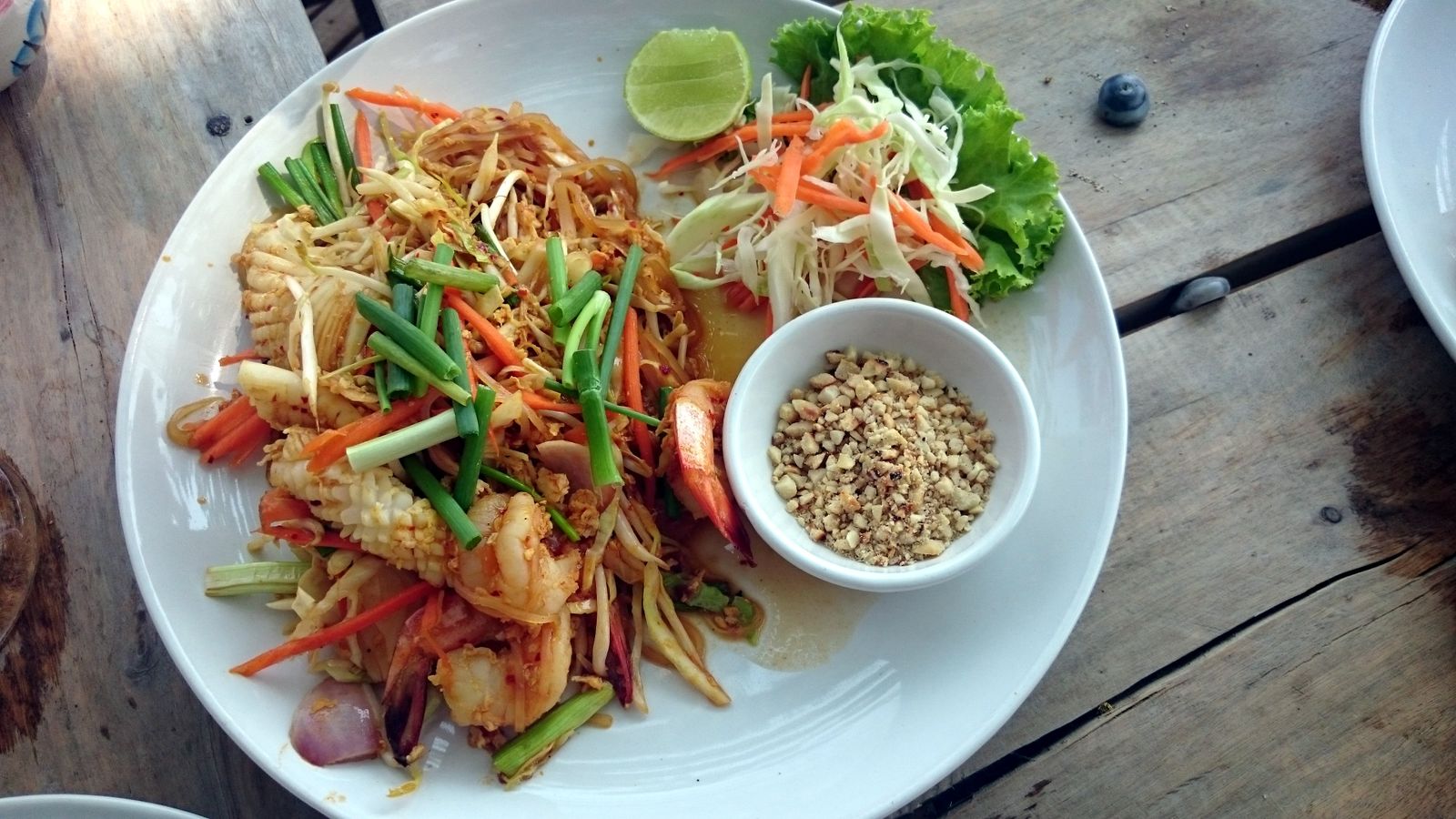
- Som tam at Baan Captain — a riverside Isan spot in Ban Mai Market for papaya salad and grilled chicken, with relaxed seating by the river
- Fruit straight from the orchard — mango and aromatic coconut, gifts from the orchards around town, at near-orchard prices without a big markup
Tip
Ban Mai Market is really a weekend market. If you come on a weekday, expect that not every shop will be open, and carry cash — many of the stalls in the old market don't take transfers or QR payments.
Want to taste deeper? Try a Chachoengsao food tour or cooking class
Half a day with a local who knows the lanes — or cooking a dish yourself — teaches you more than just eating. Book ahead on Klook or GetYourGuide.
In-town eats that locals actually go for
Around Wat Sothon and the municipal market in central Chachoengsao, you'll find old-school shops scattered about. Most are shophouse spots, open from morning to early afternoon, serving serious food at gentle prices. These are the places locals think of first.
Fish noodle soup / fresh fish
Paet Riu is a riverside town, so fresh fish noodle soup and house-made fish balls are easy to find here and done well — clear broth, fresh fish. Several shops sit around Thep Khunakon Road and inside the municipal market.
Phanom Sarakham pak mo noodles
Thin fresh-steamed rice skins rolled around minced pork, topped with fried garlic oil — a Phanom Sarakham specialty that also gets sold in town and at Ban Mai Market. A light, easy snack that won't weigh you down.
Curry-over-rice at the municipal market
Around the fresh municipal market there are several big-pot curry-rice shops with homey dishes from cooks who've been at it for years — a budget lunch that working locals in town rely on.
Old-school kuay jap / red pork rice
The Chinese-style shophouses in the old town still serve thick-broth kuay jap with crispy pork, plus red pork and crispy pork over rice in a rich sauce. They open early and sell out fast.
Khanom buang / pushcart Thai sweets
At the morning markets and around Wat Sothon you'll find carts selling Thai sweets — khanom buang, khanom krok, khanom thuay — made and fried fresh in front of you. Cheap and easy to eat as you walk.
Food around Wat Sothon
In front of Wat Sothon Wararam there are food stalls selling everything from soy milk and ice cream to grilled meatballs and smoothies — handy for a bite after paying respects. Busy in the mornings and on weekends.
Morning eats sell out fast
Many of the old-school fish noodle and red pork rice shops sell out before noon. If you're set on a famous one, aim to go mid-morning, no later than 11am, to be sure.
Mooncakes and old-school souvenirs
When it comes to Paet Riu souvenirs, mooncakes are the first name that comes up. The old shops have been selling them for decades, to the point that they've become landmarks of the town. Good to eat yourself, good to give.
Tang Seng Chua mooncakes
Paet Riu's most famous mooncake shop, selling for over 80 years. Generous fillings in many styles — mung bean with salted egg, shredded pork, and festival mooncake fillings. Some branches have a café zone and homemade ice cream.
Mango and mango sticky rice
Chachoengsao is mango country — nam dok mai, khiao sawoey, and rad varieties are easy to find at markets and along the Bang Khla route. In mango season, prices are far better than buying in Bangkok.
Mu yo / savoury gifts
Beyond the sweets, there's mu yo (Vietnamese pork sausage) and other savoury items to choose from at the souvenir shops in town — good to carry home as something for the dinner table.
Walking markets around town
Beyond Ban Mai, there are several other markets to graze through around the town and the wider province, each with a different mood. Pick one based on the day and time you're visiting.
- Khlong Suan 100-Year Market — an old market along the canal on the Samut Prakan border, with old-style Chinese–Thai food; busiest on Saturdays and Sundays
- Bang Khla Floating Market — a riverside market on the Bang Khla route for seafood and sweets, with evening boat trips to see the giant flying foxes (fruit bats)
- Night market / walking street in town — in the evenings there are several food-market zones, Thai, Japanese, and Korean, good for finding dinner
- Fresh municipal market — the locals' morning market, with fresh food, curry-rice, and local ingredients at market prices
Plan around the day
Old riverside markets like Ban Mai and Khlong Suan are at their best on weekends, while the in-town food and the municipal market are open every day. If you come on a weekday, focus on eating in town and save the old markets for a weekend visit next time.
Plan a full day of eating and sightseeing in Paet Riu
See the Chachoengsao guide →