🔄 Updated 21 Jun 2026
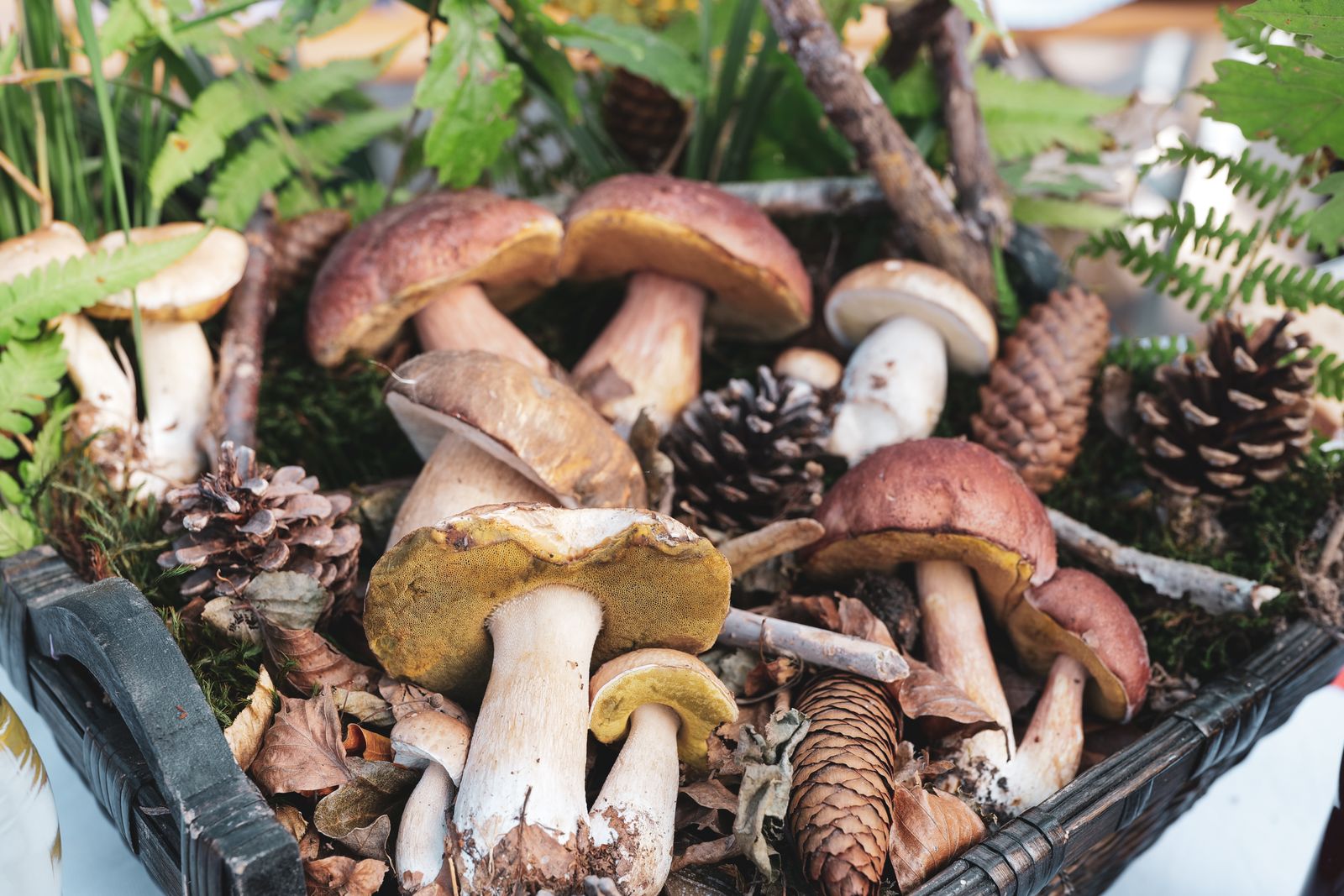
Chaiyaphum is ringed by mountains — Phu Khiao, Phu Long, Phu Laen Kha — and the forests around them are the real pantry for people who live here. Through the rainy season, from late May all the way to September, the rain comes hard, the soil stays damp, and wild mushrooms come up in waves. Bamboo shoots break the surface and local greens fill the forest edges. Villagers in Nong Bua Rawe, Phu Khiao and Khon San head into the forest before dawn to gather them, then bring them to the fresh markets a little at a time. When the mushrooms are heavy, a single day can bring in a few thousand baht.
None of this is around year-round — it's seasonal, here one moment and gone the next. If you want the full Chaiyaphum wild-food experience, you have to come during the rains. Two or three days after a heavy downpour is when the mushrooms come out thickest, and that's when the morning markets in the mountain districts are at their liveliest all year.
Rainy-season wild foods worth trying
Start with the star of the season: wild mushrooms. Chaiyaphum has several edible kinds, and they don't all come out at the same time — each has its own flavour and way of being cooked. These are the wild foods you'll most often see at the district markets, listed in the order locals tend to love them.
Hed rangok (egg mushroom)
The most popular rainy-season mushroom. While still closed up it's round like an egg, in white, yellow or red, with soft, slippery flesh. It comes out 2-3 days after rain in dipterocarp forest. Chaiyaphum locals curry it with young tamarind leaves, boil it to dip in nam phrik, or steam it as ho mok. It sells fast, and the price jumps when supply is thin.
Hed phaw (hed thop / Barometer earthstar)
A round little mushroom with a firm shell and a soft, springy inside that bounces when you bite it. People wait all year for this one because it only appears for a short window in early rains, and it's the priciest of the wild mushrooms. Curry it with ya nang leaves, dry-fry it, or boil it to dip in jaew. The smaller the ball, the crunchier.
Hed khon (termite mushroom)
Grows near termite mounds, with a big cap and a plump stem, and sweet, fragrant flesh — plenty of people call it the best-tasting of all. Use it in tom yum, stir-fries, or a clear soup with lemon basil. It's hard to get because it only grows in specific spots, and foragers usually keep it for themselves rather than sell it.
Phu Khiao bamboo shoots
Fresh shoots from the forests of Phu Khiao and Kaset Sombun — both ruak shoots and tong bamboo — sold by the bag, some as cheap as 30 baht. Curry them with ya nang, boil them to dip in jaew, or pickle them to curry all year. This is the easiest and cheapest wild food of the season.
Wild pak wan
The young shoots and tender leaves are sweet and crisp — a local green that Isan people love. Curry it with red ant eggs, make it into gaeng liang, blanch it for nam phrik, or stir-fry it with oyster sauce. It comes on strongest in early rains, and fresh wild shoots are sweeter than the garden-grown kind.
Pak tiu & pak phaew
Young pak tiu shoots have a mild sour-astringent edge; pak phaew is sharp and aromatic. They're the standard side greens on an Isan spread — eaten raw alongside laap, koi or nam phrik, or added to aom to cut the richness. You'll find them along forest edges and fence lines.
Bak bok (wild olive) & wild fruit
A sour, astringent wild fruit that locals pound into som tam, add to curries, or eat with salt and chilli. Beyond bak bok there's rattan, young krachiao buds, and several other wild shoots that rotate through the markets during the rains.
Red ant eggs
A bonus from the forest in the gap between rainy and dry season — rich, with a slight sour note. Chaiyaphum locals curry them with pak wan, make koi khai mot daeng, or fold them into an omelette. They come out most around the turn of the season, with prices rising and falling by supply — a special treat that isn't around every day.
Check before you buy wild mushrooms
Some wild mushrooms look a lot like poisonous ones. Buying from a regular market vendor who forages the same patch every year is safer, because they know exactly which ones are edible. Don't pick your own unless you really know what you're doing, and always cook every wild mushroom fully before eating — never raw.
Want to taste deeper? Try a Chaiyaphum food tour or cooking class
Half a day with a local who knows the lanes — or cooking a dish yourself — teaches you more than just eating. Book ahead on Klook or GetYourGuide.
Where to buy — the mountain-district markets
Fresh wild food isn't in the malls — it's in the morning markets of the districts that border the forest. The closer to the mountains, the more there is and the fresher it is, because foragers go in at dawn and lay it out straight away. These are the markets where you'll reliably find rainy-season wild foods.
Kaset Sombun Municipal Fresh Market
A district right up against the Phu Khiao forest, with plenty of wild food — bamboo shoots, wild mushrooms, local greens. It's the source for the well-known Phu Khiao bamboo shoots. Go early and everything's still fresh and fully stocked.
Talat Khon Phrom (Non Thong)
A community market in Kaset Sombun, open every Friday around 10:00–18:00, selling vegetables, fruit and seasonal wild foods like bamboo shoots and wild mushrooms — straight from the villagers.
Nong Bua Daeng Municipal Fresh Market
A district bordering Phu Laen Kha; through the rains there's a steady flow of wild mushrooms, bamboo shoots and mountain greens. It's the big market for this zone — a good stop to buy ingredients before heading up to the krachiao fields.
Fresh markets in Chaiyaphum town
If you're not heading out to the far districts, the in-town morning markets have vendors who carry wild food in from the outer districts during the rains. There may be less of it and prices nudge up a bit, but it's the most convenient.
Going early is the answer
Wild food sells fast and runs out. Vendors lay out their stock from around 5am into the morning, and by late morning the good stuff is usually gone. If you're set on buying egg mushrooms or hed phaw, aim to reach the market before 8am.
What to cook with it
Once you've got your wild food, the Chaiyaphum way of eating it isn't complicated — it's all about letting the flavour of the forest ingredients come through. These are the dishes locals actually make in the rainy season.
- Mixed mushroom curry with ya nang — several kinds of wild mushroom in one curry, with ya nang juice, lemon basil and ground rice for body. A round, savoury rainy-season staple across Isan.
- Bamboo shoot curry with ya nang — fresh bamboo shoots boiled in ya nang juice with mushrooms, ya nang leaves and roasted rice — punchy, savoury and full-flavoured. Eat it with sticky rice and the whole house is full.
- Boiled egg mushrooms with nam phrik — blanch the egg mushrooms just until done and dip them in pla ra nam phrik or jaew bong for a soft, full-flavoured bite.
- Pak wan curry with red ant eggs — sweet, crisp pak wan shoots meeting the rich, sour red ant eggs. A rainy-season curry you can only get for a short window.
- Blanched local greens with nam phrik — pak tiu, pak phaew and assorted young shoots, blanched or raw, dipped in pla ra nam phrik or jaew. A simple spread you can't do without.
If you're not cooking for yourself, plenty of local restaurants and som tam shops in Chaiyaphum chalk seasonal wild-food dishes on the board out front during the rains. Look for mushroom curry, bamboo shoot curry or blanched greens with nam phrik on the menu — a chance to taste it without stepping into the kitchen yourself.
When in the rainy season is there the most?
Each wild food comes at a different time. If you're planning a trip to forage and taste, time it like this.
- Early rains (late May–June) — hed phaw, wild pak wan, the first bamboo shoots. Prices run a bit high because everything's only just starting.
- Mid rains (July–August) — egg mushrooms and termite mushrooms peak, bamboo shoots are cheap, and local greens fill the market. This is when wild food is most complete and cheapest.
- Late rains (September) — mushrooms start thinning out, bamboo shoots are still around, and people begin pickling shoots to keep for the dry season.
Coming for the krachiao fields? Hit the market too
The krachiao (Siam tulip) fields bloom only in the rainy season, roughly June–August, which lines up exactly with peak wild-food time. Always check the bloom window before you go, since it shifts year to year, then plan a stop at the Nong Bua Daeng or Kaset Sombun district market on the way. You get the flower fields and a bag of wild food to take home in one trip.
Plan a full rainy-season eating-and-sightseeing trip to Chaiyaphum
See the Chaiyaphum travel guide →