🔄 Updated 21 Jun 2026
Chaiyaphum's edible souvenirs fall roughly into three lines. The first is fermented and processed meats — mam, naem, Isan sausage and sun-dried beef, which is what this province is known for. The second is wild-harvested and farm products: bamboo shoots, forest honey, candied mango, and khao mao made according to the harvest season. The last is Isan-style local snacks to keep around the house. The main place to shop is the Non Hai junction, the edge of town on the road heading toward central Thailand, where more than a dozen souvenir shops sit side by side — one stop covers almost everything. This article walks through them one by one so you buy the right things.
Mam — Chaiyaphum's number-one souvenir
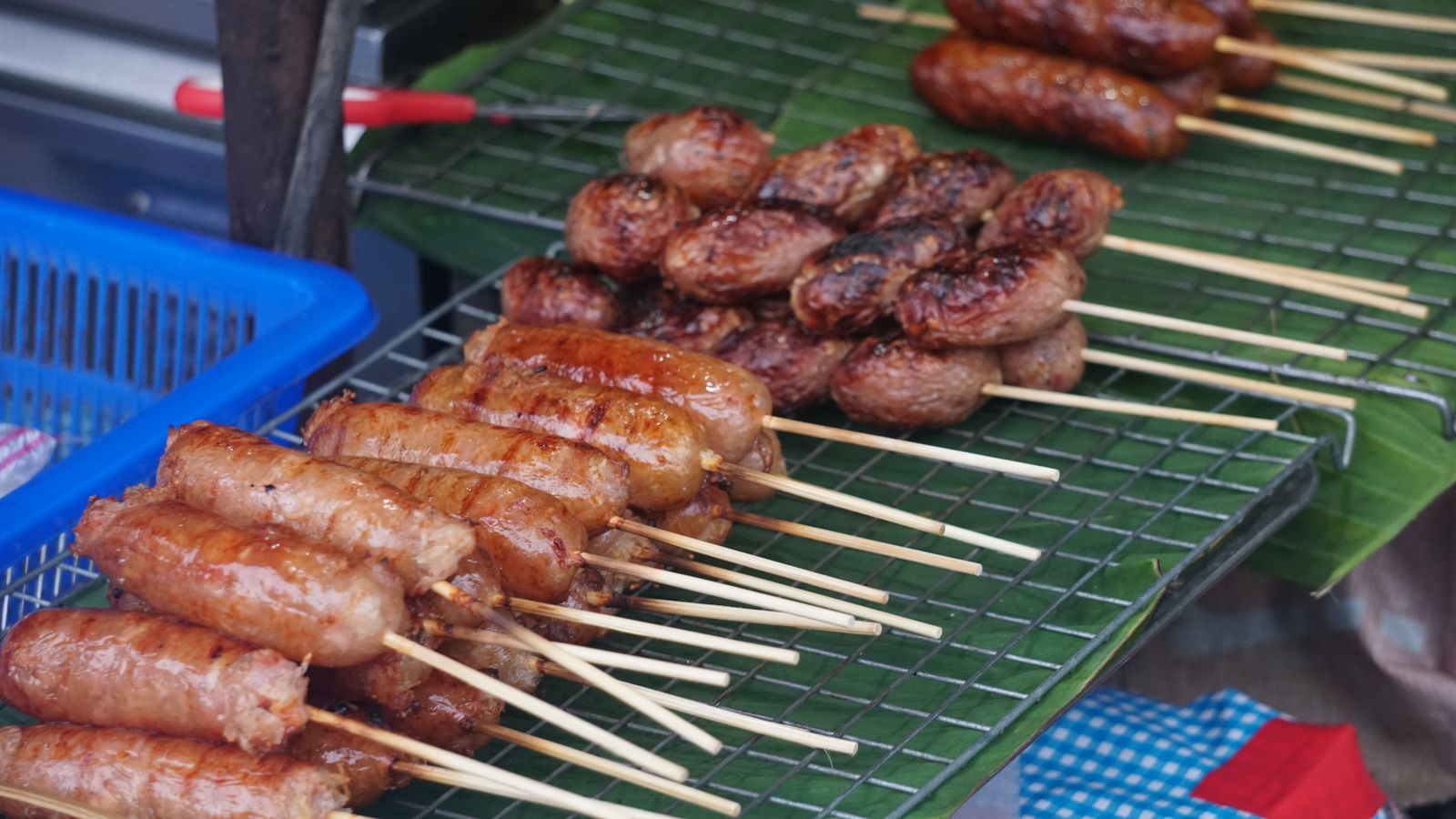
If you ask what Chaiyaphum's souvenir is, the first answer nearly every time is mam. Mam is an Isan-style fermented sausage made from minced meat mixed with liver, fat, garlic and roasted rice, then stuffed into casing and fermented until it picks up a mild sour tang. You grill or fry it and eat it with sticky rice, fresh ginger, peanuts and bird's-eye chilies. Chaiyaphum mam comes in two main types: beef mam and pork mam. Beef mam costs more because it's mostly beef, and some well-known makers play up using pure meat with no rice filler for a deeper flavor. Pork mam is cheaper and softer, an easy place to start if it's your first time trying it.
Prices at the Non Hai shops lately run about 350 THB/kg for pork mam, 440 THB/kg for beef mam, around 240 THB for pork sausage and around 330 THB/kg for beef sausage. Prices move up and down with the market price of meat. Most is sold by weight, with small bagged packs for easy carrying. Mam is fermented but not cooked — you have to grill or fry it before eating, and it should be kept cold. If you're traveling far, ask the shop to pack it in a cool bag.
Mam Yai Kham (Phu Khiao)
The old original name people bring up most when they think of traditional Chaiyaphum mam. It started in Phu Khiao district and has made mam to the same recipe for years — a rounded sourness that isn't too sharp. People passing through Phu Khiao often stop to buy it at the shop; if going up isn't convenient, several in-town souvenir shops stock it too.
Mam Makkhawan (Non Hai junction)
A shop where travelers often pull over and queue up at the Non Hai junction — busy enough to make the news during festivals. It has pork mam, beef mam, pork sausage and beef sausage all under one roof. Easy to stop at because it sits right on the way out of town, ideal to pick up on the way back.
Mam Mae Kham Tan
A shop that's been open for years around Non Hai, carrying both kinds of mam plus Isan sausage and other OTOP products in one place. Good for anyone who wants to buy several things at once without running between shops.
Nat Phop Mam Dang Chaiyaphum
A brand that has earned the province's five-star OTOP rating, making mam and processed-meat products at a serious scale. It has a storefront and sells online too, handy if you want neatly packed products to give as a gift to elders.
Mam has to be cooked before eating
Mam is raw and fermented — don't eat it raw. Always grill it over low heat or fry it until cooked through. Grilling until the skin tightens and turns fragrant gives the best flavor. It keeps in the regular fridge compartment for a few days; for longer storage, freeze it, and on a long trip ask the shop to pack it in a cool bag.
Want to taste deeper? Try a Chaiyaphum food tour or cooking class
Half a day with a local who knows the lanes — or cooking a dish yourself — teaches you more than just eating. Book ahead on Klook or GetYourGuide.
Naem, sausage, sun-dried beef — the fermented-meat line
Beyond mam, other fermented meats are popular take-home souvenirs too. Famous Chaiyaphum pork naem is made from fresh pork and skin, sour but balanced rather than sharp, and you can snack on it straight away with ginger and peanuts. Thin Isan sausage has a sour tang and gets grilled with sticky rice, while Isan-style sun-dried beef is fried and eaten with sticky rice and jaew dipping sauce. Several easy-to-find brands in the souvenir area include Tra Ying Charoen, which makes naem and pla ra from sliced gourami; Charoen Sap, which makes beef mam and som moo wrapped in banana leaf; and Khru Phani, which makes sun-dried beef and pure pork sausage in vacuum packs.
Pork naem, Tra Ying Charoen
Pork naem made from fresh pork and skin, with a balanced sourness that isn't too sharp — a snack people buy to take home often. It's wrapped into sticks that are easy to carry. You can eat it raw once it's fermented enough, or fry it.
Sun-dried beef, Khru Phani
Beef sun-dried the Isan way, with no added sugar — just the natural salty-sweet of the meat. Fried and eaten with sticky rice and jaew, it goes down well. Being a dried product it keeps longer than fermented goods, so it's good for carrying far.
Pure pork sausage, Khru Phani
Pure pork sausage in a vacuum pack that keeps for a month or so if refrigerated. Mild Isan-style sourness, grilled or fried with sticky rice. A souvenir you can carry far with peace of mind because the packing is tight.
Som moo in banana leaf, Charoen Sap
Som moo (banana-leaf-wrapped pork naem) with a rich flavor, wrapped traditionally in banana leaf. Eat it raw with ginger and peanuts or fry it — a genuine Isan snack that packs easily.
Gourami pla ra, Tra Ying Charoen
Seasoned pla ra scented with roasted rice, deboned and ready to use — a good souvenir for the home cooks. Use it in nam phrik, som tam or lon. The jar seals tight and travels easily, but wrap it against the smell if you're flying.
Khao mao — a seasonal local sweet tied to the harvest
Khao mao is young rice harvested while the grain is still soft, roasted over low heat and pounded flat into pale-green, fragrant flakes. It's an Isan local sweet made according to the harvest season around late rainy season into early cool season, roughly October to November. In Chaiyaphum, Ban Bua in Kaset Sombun district is the area where khao mao and young-rice products have been made for generations. You can have it as khao mao tossed with coconut and palm sugar, fried khao mao, or crisp khao mao mi. The catch is that fresh khao mao is only made during its season; come outside it and you'll mostly find the dried, processed versions. Before setting out to buy it at the source, check with a local shop first whether there's fresh stock at the time.
- Khao mao kluk — khao mao tossed with grated coconut, sugar and a little salt; sweet, rich and soft, best eaten fresh, but it doesn't keep long.
- Fried khao mao — khao mao molded around a banana filling and fried, crisp outside and soft inside, a popular snack.
- Khao mao mi — crisp khao mao tossed with sugar, keeping longer than the fresh version, good to carry home as a souvenir.
- Made at Ban Bua, Kaset Sombun — a housewives' group makes khao mao and rice products; check the season before you go so you get fresh stock.
Fresh khao mao is seasonal
Fresh khao mao kluk is the tastiest but only lasts a day or two. To carry it far, pick the drier khao mao mi or fried khao mao that keep longer. And if you specifically want fresh khao mao at Ban Bua, go around late rainy season into early cool season, which is when it's made — outside the season there may be no fresh stock to buy.
Wild and farm products — bamboo shoots, honey, candied mango
Chaiyaphum is a province with plenty of forest and mountains, so wild-harvested and farm products are another souvenir line worth carrying. Bamboo shoots from community forests are processed into pickled shoots, canned shoots and dried shoots, which go into bamboo-shoot soup or curries. Forest honey and wildflower honey are well known here — naturally harvested, thick and sticky, a good gift for the health-conscious. On the sweet, fruity side there's candied mango, especially nam dok mai mango, an important crop for the province, plus banana chips, taro chips and crispy fried snacks from housewives' groups that you can find at OTOP shops.
Processed bamboo shoots
Pickled, canned and dried bamboo shoots from community forests, used in bamboo-shoot soup or curries — a cooking souvenir Isan folks love.
Forest honey, Ladda
Naturally harvested wildflower honey, not heat-processed, thick and sticky — good for the health-conscious. Around ฿250 per jar.
Candied mango
Made from nam dok mai mango, a standout crop of the province; sweet with a hint of sour, a sweet to keep at home that kids and adults both enjoy.
Banana & taro chips
Crispy fried snacks from housewives' groups — sweet-salty banana chips and crunchy taro chips, a light, easy-to-carry snack that keeps well.
Mudmee silk — a non-edible souvenir, but a famous one
Although this article focuses on edible souvenirs, if you come to Chaiyaphum and want one distinctive thing to take home, Ban Khwao mudmee silk is the famous one to know about. Ban Khwao is a weaving area for mudmee silk in old patterns passed down over generations, with fine designs and natural colors — good as a length of cloth, a scarf or a special gift. If you have time to stop in Ban Khwao district you can choose right at the weaving source; if you're short on time, in-town souvenir shops and the OTOP center carry some as well.
Where to buy — real shops in Chaiyaphum
The most convenient place to buy souvenirs in Chaiyaphum is the Non Hai junction, the edge of town on the road heading toward Sikhio and central Thailand, where more than a dozen souvenir shops sit side by side — mam, sausage, naem and wild products all in one area, just right to stop at on the way back before getting on the highway. Old-name mam like Yai Kham starts up in Phu Khiao, so if you're already touring the Phu Khiao–Kaset Sombun route, buy it at the shop there. And fresh khao mao means going all the way to Ban Bua during its making season.
Non Hai junction souvenir strip
The town's main cluster of souvenir shops, on the road out toward central Thailand, with mam, sausage, naem, processed wild products and OTOP shops — more than a dozen of them in a row. Easy to pull over and shop, good for gathering all your souvenirs in one spot on the way back.
Mam Yai Kham (Phu Khiao)
The old original name that starts up in Phu Khiao district. If you're already touring the Thung Kamang–Phu Khiao route, stop and buy mam at the shop for the freshest stock. If going up isn't convenient, several in-town shops stock it too.
Ban Bua khao mao group (Kaset Sombun)
The area making khao mao and young-rice products at Ban Bua, Kaset Sombun district. Go in the late rainy season into early cool season, which is the making season, and you'll get fresh khao mao at the source. Check with a local shop first whether there's fresh stock.
OTOP center / markets in Chaiyaphum town
In the town itself there's an OTOP center and markets gathering processed souvenirs — wild products, honey, candied mango, local sweets and some Ban Khwao silk. Good if you're short on time and want to buy in town without heading out of the city.
Plan your souvenir route
If you're touring the Phu Khiao–Kaset Sombun route, buy the old-name mam and khao mao while you're passing through that area, then stop at the Non Hai junction on the way back to the highway to pick up naem, sausage and wild products — all in one loop. Buy fermented items like mam and naem last, just before heading home, so they stay fresh and you can keep them cold in time.
Tips for buying souvenirs without slip-ups
- Separate fresh from dry — mam, naem and sausage are fermented and need to be kept cold, so buy them last before heading home; sun-dried beef, banana chips and khao mao mi keep longer, so you can buy those earlier.
- Mam must be cooked — mam is raw and fermented, so don't eat it raw; always grill or fry it through first.
- Ask for a cool pack — if you're traveling far or flying, fermented items should go in a cool bag, and strong-smelling things like pla ra should be wrapped separately against the smell.
- Check the khao mao season — fresh khao mao is only made in the late rainy to early cool season; outside it you'll only find the dried, processed kind, so check the timing before you go if you want it fresh.
- Carry some cash — bigger shops take transfers, but small market stalls and some housewives' groups take cash only.
Keep planning your full Chaiyaphum eating-and-touring trip
See the Chaiyaphum travel guide →