🔄 Updated 21 Jun 2026
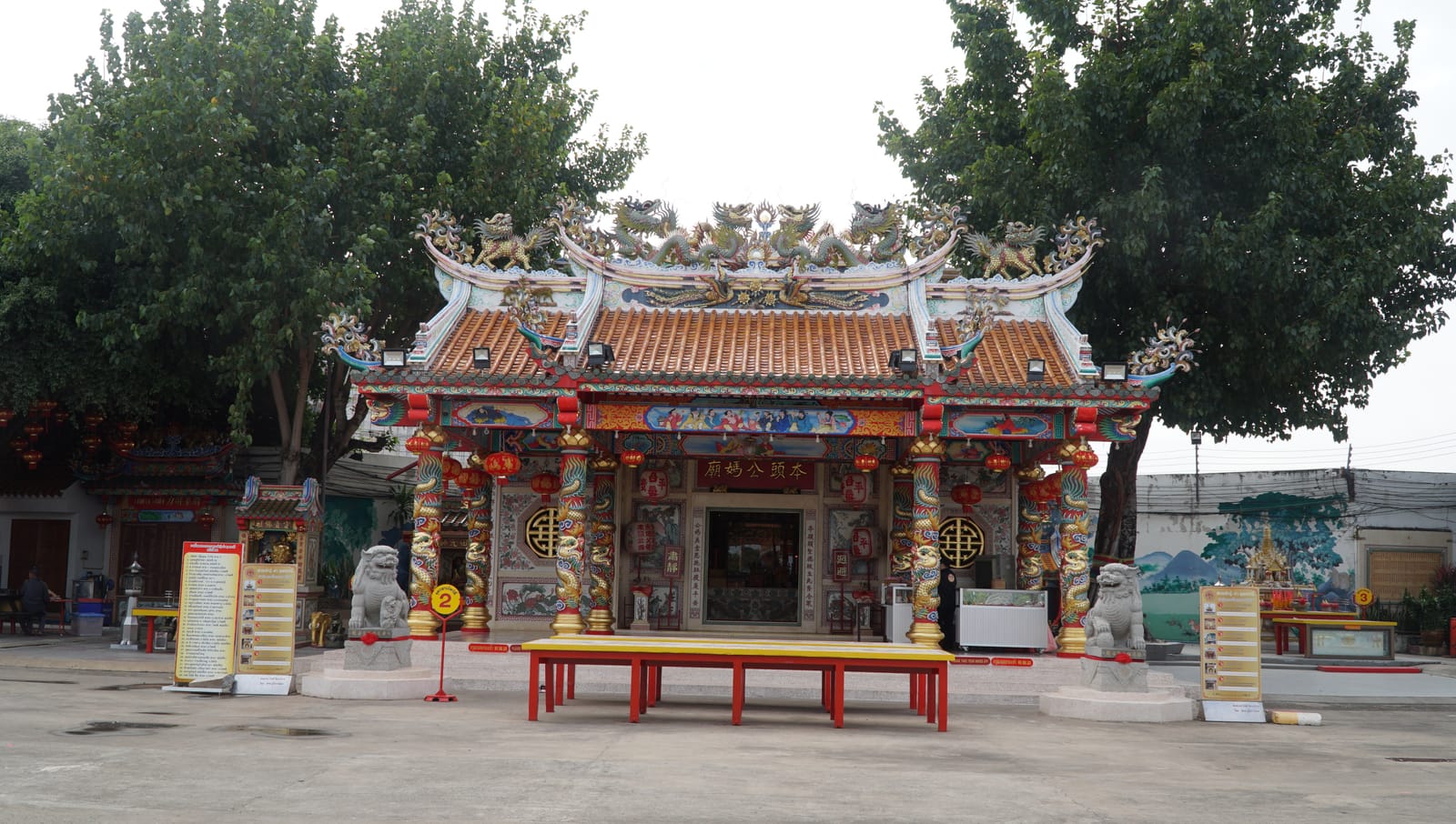
Chao Pu-Ya Shrine in Udon Thani (sometimes called Pu-Ya Nong Bua Shrine) sits in the Udon Thani municipal area on the Nong Bua market side, near the railway station and the city's old commercial district. The words "Pu" (grandfather) and "Ya" (grandmother) refer to the first generation of Chinese ancestors who migrated and settled in Udon Thani; their descendants built the shrine to honour and pay respects to them. Within the same grounds there's also a Thai-Chinese culture centre that tells the story of Udon's Chinese community, which makes this both a sacred site, a place to pray in the middle of town, and a spot for a lakeside walk all in one. It's free to enter every day, and it's an easy stop to fit into a trip around Udon.
How to get to Chao Pu-Ya Shrine and opening hours
Chao Pu-Ya Shrine sits right in central Udon and is very easy to reach. If you're staying in town, a Grab, a songthaew, or a motorbike taxi will get you there in a few minutes. From Udon Thani railway station it's about a 15-minute walk. The shrine and the Nong Bua garden are open grounds with free entry, no admission fee. Opening times vary slightly depending on the source, but the shrine is generally open daily around 07:00–18:00, while the Thai-Chinese culture centre building runs around 09:00–19:00. The busiest times for worshippers are mornings and Chinese festival periods.
- Location — on the edge of Nong Bua, Saan Chao Neramit Road, Mak Khaeng subdistrict, Mueang Udon Thani district, near the railway station and Nong Bua market
- Opening hours — the shrine is open daily around 07:00–18:00 (some sources say 08:00–19:00), and the Thai-Chinese culture centre runs around 09:00–19:00
- Admission — free entry to both the shrine and the garden; if you'd like to make merit you can drop something in the donation box or buy incense and candles as you wish
- Parking — there's parking around the shrine and along Nong Bua; during Chinese festivals it gets busy and spaces are harder to find, so leave some buffer
- Onward travel — from the shrine, Nong Prajak Park, the in-town markets and UD Town are all very close, so it's easy to keep the trip going
Before you enter the shrine
You'll need to take off your shoes before stepping inside the main shrine hall. Dress modestly — skip tank tops and very short shorts — so you can pray with peace of mind. Come on a weekday late morning when it's quiet and you'll have plenty of room to take photos and pay your respects.
Want more out of Udon Thani? Book tours & activities
Booking online ahead on Klook or GetYourGuide is usually cheaper than the gate and skips the queue. Pick only the experiences you actually want — prices and availability are shown live on each site.
Praying at all 6 worship points
The heart of a visit here is paying respects and praying for blessings. Inside the shrine there are several points for worship, and most have staff and signs showing the order to follow, so going in sequence means you won't miss any or get confused. Locals in Udon commonly come to pray about work, trade, fortune and health — Pu and Ya are especially revered for bringing prosperity in business, so people opening shops or running businesses often stop by to pay respects.
- Tee Kong (the Heavenly God) — the point for worshipping heaven and earth, usually the first place you pray
- Pung Thao Kong-Ma — the deities who watch over the community and trade; pray here for prosperity in business
- Chao Pho Nong Bua — the guardian spirit of the Nong Bua area
- Tee Chu Eia — the earth god, who looks after wellbeing and the home
- Phra Sangkajai — pray here for fortune and abundance
- Chang Nguan Suay — a deity people commonly pray to for health and protection
After praying, many people go on to draw fortune sticks (siamsi) — you shake the cylinder until a numbered stick falls out, then collect the matching prediction slip and read your fortune for work, love and health. Anyone in a zodiac "bad luck year" (pee chong) can also have the kae chong ritual done here to ward it off, which is a popular activity especially around the start of the year and Chinese New Year, when crowds come to do it.
Making your prayers count
You can pick up incense, candles and offerings at the shops in front of the shrine for not much money. If you're unsure of the worship order, just check the signs or ask the staff — the people here are friendly. Chinese New Year and the Hungry Ghost Festival have an especially lively atmosphere, but they're also far busier, so if you'd rather pray in peace, pick a weekday.
The 99-metre golden dragon and naga
What put Chao Pu-Ya Shrine on the map is the 99-metre golden dragon kept here. This dragon is brought out for the lion-and-dragon dance during the Thung Si Mueang festival in Udon Thani, held around early December each year — a performance known across the whole country. If you come during that time, you'll see the long dragon and lion procession weaving through the middle of town. On normal days the golden dragon rests on the pavilion out over the water, where it photographs beautifully, especially when it reflects off the surface of Nong Bua.
Besides the dragon, the grounds also have naga statues and red-and-gold Chinese sculptural work scattered around — dragon-wrapped columns, Chinese archways and deity statues. It's an enjoyable place to wander and shoot photos both inside and around the garden, and the bold colours come out vivid in pictures.
99-metre golden dragon
A 99-metre golden dragon resting on the water pavilion, brought out for the lion-and-dragon dance at the Thung Si Mueang festival each December. The shrine's standout photo spot.
Water-view pavilions
Two Chinese-style pavilions out on Nong Bua lake that you can walk across for photos, with open water views and a view back to the shrine.
Naga statues & dragon columns
Red-and-gold Chinese sculptural work — naga statues, dragon-wrapped columns and Chinese archways — all bold colours that photograph well.
Thai-Chinese culture centre
A building within the same grounds telling the story of Udon's Chinese community, with exhibitions on its history and culture. Free entry.
The garden and Nong Bua lake around the shrine
The shrine is surrounded by a shady lakeside garden on Nong Bua, with a path that runs along the water, benches to rest on, and big trees for shade. After praying, plenty of people stroll around the garden, sit and catch the breeze by the water, or take photos of the water pavilions. Mornings and evenings have the nicest weather, and some locals use the spot for an early-morning walk or run. The atmosphere is different from Nong Prajak — quieter and calmer here, with a clear Chinese feel.
- Lakeside path — walk along Nong Bua taking in the water and the pavilions, with shade in patches and easy going
- Water pavilions — two Chinese-style pavilions out on the lake that you can walk across for photos, a favourite spot for pictures
- Rest spots — benches and lakeside salas for catching the breeze after praying, handy for resting your legs in the middle of a town day
- Best times — mornings and evenings are cool with lovely light; midday sun is strong, so bring a hat and water
For the best photos
The best angle is the side facing the water pavilions — in the morning or evening, when the water is still, you'll catch the reflection of the pavilion and dragon on the surface. Inside, the red-and-gold shrine photographs well all day since it's in the shade. Ask first and be respectful when shooting in areas where people are praying.
Food and what to see next near the shrine
Chao Pu-Ya Shrine is right in the centre of town, surrounded by the Nong Bua market area and the old commercial district, with plenty of food to stop for — Chinese-Thai dishes, old-school coffee, and Udon-style snacks. We've picked out shops and dishes you can actually find in the area near the shrine and around Udon town, focusing on places that are genuinely open and that locals genuinely eat at, all an easy walk on from the shrine.
Udon Vietnamese kuay jab (kuay jab yuan)
A signature Udon dish you can't miss — soft rolled rice-noodle sheets in a clear broth with minced pork, soft-boiled egg and crispy pork rind, dusted with pepper. You'll find it at several places around town. It's a food legacy from the Vietnamese who settled in Udon.
Red pork & crispy pork over rice, in town
Chinese-Thai red-pork rice shops around the in-town market — tender red pork and crispy pork with crackling skin, drizzled with a well-balanced sweet sauce. An easy lunch after praying at the shrine.
Old-school coffee & oliang in the old market
Traditional coffee-shop-style spots in the old commercial district near the shrine serving oliang (Thai iced coffee), hot coffee and patongko (fried dough). Old-fashioned atmosphere like your dad's generation of Udon locals — a good rest after walking the garden.
Crispy noodles & kiam i at Nong Bua market
Chinese snacks at Nong Bua market near the shrine — crispy noodles, kiam i (chewy rice dumplings), dim sum and steamed buns. Grab them as a snack or to take home, and easy on the wallet.
Som tam & grilled chicken in town
A classic Udon pairing — punchy papaya salad and fragrant grilled chicken eaten with sticky rice, found at several spots in town. An easy meal you shouldn't skip when you're in Isan.
Five-spice braised duck over rice
Chinese-style braised duck shops around the in-town area — tender duck meat in a fragrant five-spice broth, served over hot rice. A filling meal after wandering around.
Shaved ice & bua loy desserts
Cooling desserts in the market area — shaved ice, bua loy (rice balls in coconut milk), tofu pudding and Chinese sweets. A good way to finish lunch after praying at the shrine.
Local food souvenir shops in town
Near the shrine there are Udon food-souvenir shops with mu yo, naem, Isan sausage and khanom jeen to take home. Easy to swing by on the way from the shrine.
Extending your trip in town
From Chao Pu-Ya Shrine, head over to Nong Prajak Park to photograph the yellow ducks and walk around the lake, or go to UD Town, an open-air market-mall in the middle of town, for dinner. Both are close to the shrine, so it's easy to build out a half-day around town.
Making the most of Chao Pu-Ya Shrine in half a day
Praying, the garden, and lunch
Nong Prajak Park & dinner in Udon
Before you go
- Dress modestly — this is a sacred site, so avoid tank tops and very short shorts, and remember to take off your shoes before entering the main shrine hall
- Pick your timing — mornings and evenings have nice weather and lovely light; midday sun is strong, and Chinese New Year and the Hungry Ghost Festival get very crowded
- Cash & small notes — incense, candles, fortune sticks and most shops around the shrine take cash, so bring small notes
- Check the hours — opening times vary slightly by source; generally the shrine is open around 07:00–18:00 and the culture centre around 09:00–19:00
- Thung Si Mueang festival — if you want to see the 99-metre golden dragon procession, come in early December when the Thung Si Mueang festival is held
Straight talk
Chao Pu-Ya Shrine isn't a big attraction that needs a whole day — about one to two hours is enough to see it all. Its appeal is being a pretty lakeside Chinese shrine in the middle of town where you can genuinely pray and take good photos. If you come expecting something flashy you might find it underwhelming, but if you come to pray, admire the Chinese sculptural work and walk the garden on Nong Bua, it's worth it and pairs nicely with other spots around town.
Want a full-day Udon Thani plan to follow on from Chao Pu-Ya Shrine?
See the Udon Thani travel guide →