🔄 Updated 14 Jun 2026
Before diving in, it helps to know where good khao soi actually differs. The broth is everything. Some shops go deep and spice-forward; others lean coconut-cream soft and easy to eat. The heat level varies quite a bit too. Noodles and condiments are fairly consistent across the board, so you are really comparing broths and protein. We have grouped the list into legendary old-timers, easy-access in-town spots, out-of-town places worth the drive, and new-generation shops — so you can match the recommendation to where you are based that day.
How to use this list
The order here is not a ranking — khao soi is entirely a matter of personal taste. Someone who loves an intense, spice-heavy broth and someone who prefers a mellow, coconut-forward bowl will walk away with different favorites. We have tried to spell out each shop's character clearly enough that you can pick the one that suits your palate rather than just following the crowd.
Fa Ham Legends on the East Bank
The Fa Ham neighborhood along the Ping River is Chiang Mai's original khao soi heartland. Several of the city's most storied shops are clustered along Charoenrat Road near Wat Fa Ham — places where locals' parents and grandparents ate as kids. If you want the oldest surviving recipes, start here. The lunch rush is real; give yourself extra time to find parking.
Khao Soi Lamduon Fa Ham
The city's most iconic bowl — open since around 1943, over 80 years, and Michelin Guide-listed. The broth is rich and fragrant with spice, balanced rather than blow-your-head-off spicy, and this is the version many Chiang Mai regulars use as their personal benchmark against everything else. Price is fair. At lunch the queue is long and street parking is nearly impossible; aim for mid-morning or early afternoon.
Khao Soi Samujai Fa Ham
Another old-timer right next to Wat Fa Ham, a short walk from Lamduon, open for over 30 years. The broth is equally rich; braised chicken and beef are both tender. What sets it apart is the side menu — nam ngiao, sai ua sausage, and khao kan jin (Northern rice dishes) available in the same sitting. Chiang Mai locals love to debate whether Samujai or Lamduon is better. They are so close together you might as well try both and decide for yourself.
Fa Ham tip
These two shops are literally a few steps apart. If you are in a group, split up and order from both, then swap bowls to compare — it is the most efficient taste test in Chiang Mai. If you are staying in the Old City, a Grab or songthaew is far easier than driving yourself at lunchtime.
Want to taste deeper? Try a Chiang Mai food tour or cooking class
Half a day with a local who knows the lanes — or cooking a dish yourself — teaches you more than just eating. Book ahead on Klook or GetYourGuide.
In-Town Spots — Easy to Reach
Not every itinerary leaves room for a cross-town detour. The city center has solid khao soi options spread across Nimman, the Old City, and the Charoen Prathet area near Night Bazaar — all walkable or a short Grab ride from most hotels, no car needed.
Khao Soi Mae Sai (Ratchaphruek, Chang Phueak)
Consistently the shop both locals and international reviewers mention most — and it is Michelin Guide-listed. The broth is well-balanced: coconut-forward without being greasy, spiced without overpowering. The braised beef is silky, the noodles have good chew. Everything works, with no obvious weak point. It sits in Chang Phueak, an easy walk from Nimman. If this is your first Chiang Mai trip and you are not sure where to start, this is the safest bet.
Khao Soi Khun Yai (Old City, Soi Si Phum)
A tiny shop tucked into a lane near the Old City moat that many Chiang Mai residents call their personal favorite. The chicken khao soi stands out — broth and noodles click together in a way that feels effortless. Homey atmosphere, fair prices. The catch: it opens for a short window and sells out fast. If you have your eye on it, get there before noon.
Khao Soi Islam (Charoen Prathet)
A Muslim-Chinese Haw-style khao soi shop beside Ban Haw Mosque on Charoen Prathet Road, near Night Bazaar — in this spot for over 40 years. It is halal, the broth leans spice over coconut, and the noodles are made in-house. Not as sharp or assertive as some, but distinctly different from the typical Thai coconut-curry version. Chicken and braised beef khao soi are the draws; khao mok (Thai biryani), oxtail soup, and a salad are available on the side. Worth it for the contrast alone.
Khao Soi Sri Phan (Nong Hoi)
A long-running neighborhood spot in Nong Hoi, offering khao soi and nam ngiao in the style people who live here actually eat. Choices include chicken, pork, beef, and fish balls. The noodles are tender with a proper crispy-noodle topping; the broth is gentle and savory without going heavy. A good option if you want something middle-of-the-road and easy, and you get to try nam ngiao in the same visit.
Halal or vegetarian?
For halal khao soi, Khao Soi Islam on Charoen Prathet Road is the main go-to. Vegetarians and vegans: Chiang Mai has several shops in Nimman and the Old City doing jay (Buddhist vegan) and fully vegan versions — check our Chiang Mai vegetarian food guide for those.
Worth the Drive — Out-of-Town Shops
If you have a car and do not mind a bit of a detour, several spots on the city's fringes are worth the trip. Some are famous enough that people specifically drive out for them. They also make natural stops on the way to Mae Rim, San Kamphaeng, or San Sai.
Lung Prakit Khao Soi (Kad Kom Market) — the Netflix Khao Soi
A stall inside Kad Kom market, south of the Old City, that blew up internationally after appearing in overseas media — earning it the unofficial nickname Netflix Khao Soi. It has been Michelin Guide-listed for several years running. The signature is braised beef: meltingly soft, tendon included, broth rich and slightly creamy. Price-to-portion ratio is solid. Tourists and locals share the space. Stock tends to run out in the afternoon.
Khao Soi Mae Manee (Chang Phueak, toward Mae Rim)
An old-school shop in a lane off Chang Phueak Road heading toward Mae Rim, still using a traditional charcoal stove — and Michelin Guide-listed three years in a row. The broth is bold and spice-forward; braised beef shank is firm yet yielding with a great gelatinous texture. If you love a punchy, heavy broth, this place will be your pick. Good stop on the way to Mon Jam or Mae Rim; the lane is slightly off the main road so look up directions in advance.
Lung Pan Khao Soi (San Kamphaeng)
A proper Northern-style khao soi shop near Bo Sang Road in San Kamphaeng, open for many years. The broth uses thin coconut cream — not thick and heavy, but fragrant with a traditional spice blend. The stand-outs are free-range local chicken (firm, chewy in the Northern way) and braised beef shank with pleasant cartilage bite. Noodle soup and pork satay are also available. A natural stop when heading out to San Kamphaeng.
Northern Chiang Mai Khao Soi Trail
New-Generation Shops in Nimman
Beyond the old-timers, Chiang Mai has a newer wave of shops that serve khao soi in café settings or comfortable Northern-cuisine restaurants. Good for people who want to photograph their bowl without feeling rushed, or who want a full Northern spread in one sitting. Prices are slightly higher than roadside stalls, but you get proper seating and a relaxed atmosphere in exchange.
Khao Soi Nimman (Nimmanhaemin Soi 13)
A Michelin Guide-listed khao soi shop in Nimman that stays open into the evening — which is rare, since most old-school spots close by mid-afternoon. If you are based in Nimman and want khao soi for dinner, this is your main option. The broth is fragrant and coconut-forward with a rounded, agreeable flavor. Clean, comfortable space. Most convenient choice if you would rather not trek across town.
If you want khao soi alongside a full Northern spread, well-known restaurants like Tong Tem Toh in a Nimman lane and Heuan Muan Jai near Chang Phueak both do a solid bowl as part of a larger Northern menu. Good for groups ordering nam prik ong, sai ua, gaeng hang lay, and more at the same table. We cover those in detail in our Chiang Mai Northern cuisine guide.
Matching the Shop to Your Taste
Love a rich, spice-forward broth
Lamduon and Samujai in Fa Ham, or Mae Manee toward Chang Phueak — heavy, aromatic, full spice presence
Prefer a mellow, easy-drinking bowl
Mae Sai in Chang Phueak, Khun Yai in the Old City, or the Nimman shop — balanced and approachable
Need halal or Haw-Chinese style
Khao Soi Islam on Charoen Prathet — spice-based rather than coconut-heavy, with khao mok on the side
Want the best braised beef bowl for the price
Lung Prakit at Kad Kom Market — the Netflix Khao Soi, meltingly soft beef, rich broth
Chicken or beef — where to start?
If you have never had khao soi before, go chicken first: it is more neutral and easier to ease into. Beef versions are braised longer and carry a heavier, spicier broth. The shops best known for their beef are Lamduon, Khao Soi Islam, and Lung Prakit at Kad Kom.
Prices, Hours, and Practical Notes
- Price per bowl — Roadside and market stalls generally run 40–60 THB. Nimman spots and sit-down Northern restaurants are more like 60–70 THB+.
- Hours — Most old-school shops open early and close by mid-afternoon (roughly 08:00–16:30), and commonly sell out before closing time. Aim for morning to mid-morning at popular spots. For evening khao soi, stick to the Nimman area.
- Closing days — Some shops have fixed weekly days off: Khun Yai closes Sundays, Sri Phan closes Wednesdays, Mae Manee closes on Buddhist holy days. Check before you go.
- Cash — Smaller shops typically take cash or PromptPay. Keep some small bills handy.
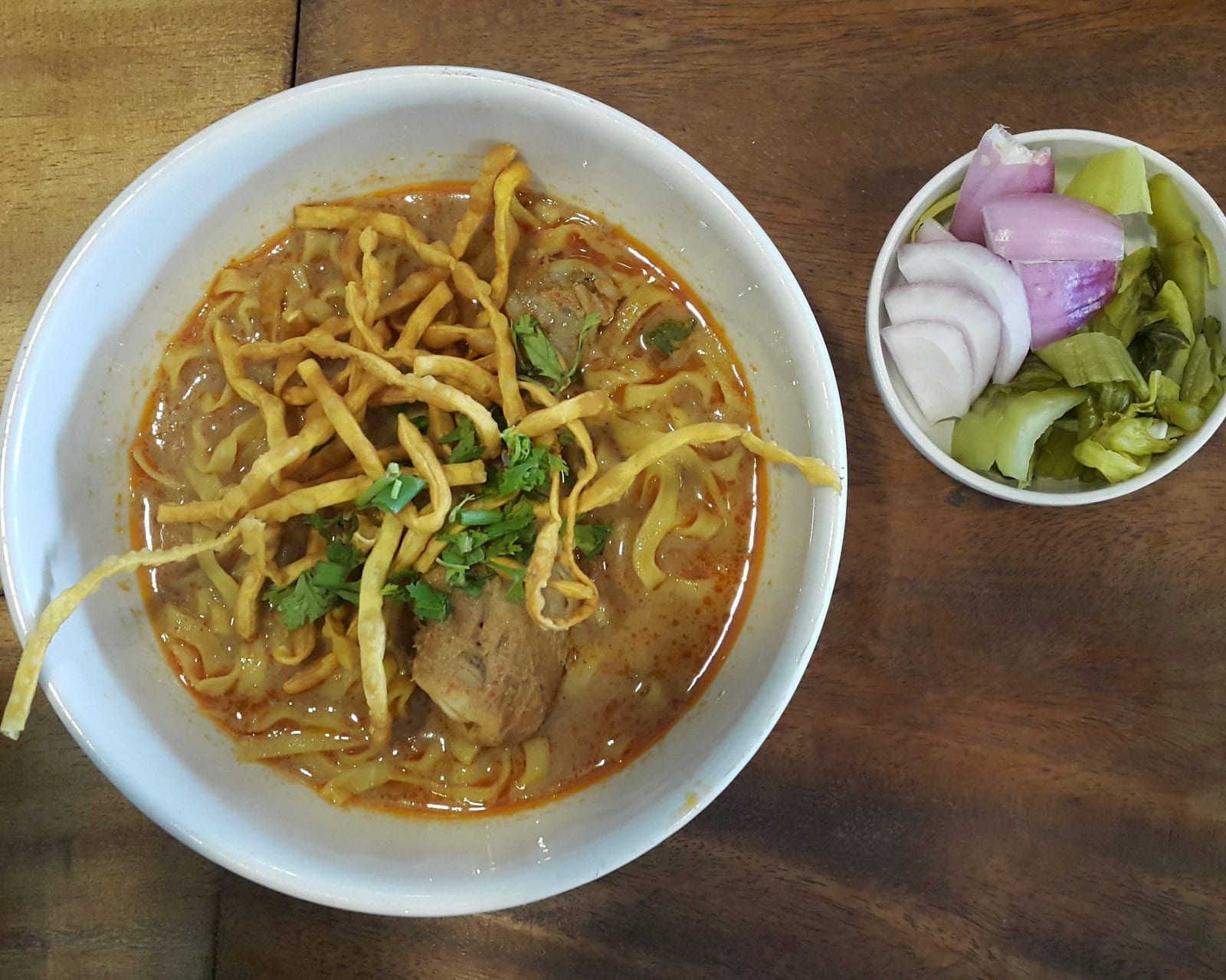
- Condiments — Pickled mustard greens, raw shallots, and lime are on every table. Squeeze lime and add the pickles — they cut through the coconut richness nicely.
- Parking — The Fa Ham strip and Kad Kom market get genuinely congested at lunch. Allow extra time to find a spot, or just Grab it.
Done with khao soi? Here is everything else to eat and do in Chiang Mai.
See the Chiang Mai city guide →