🔄 Updated 21 Jun 2026
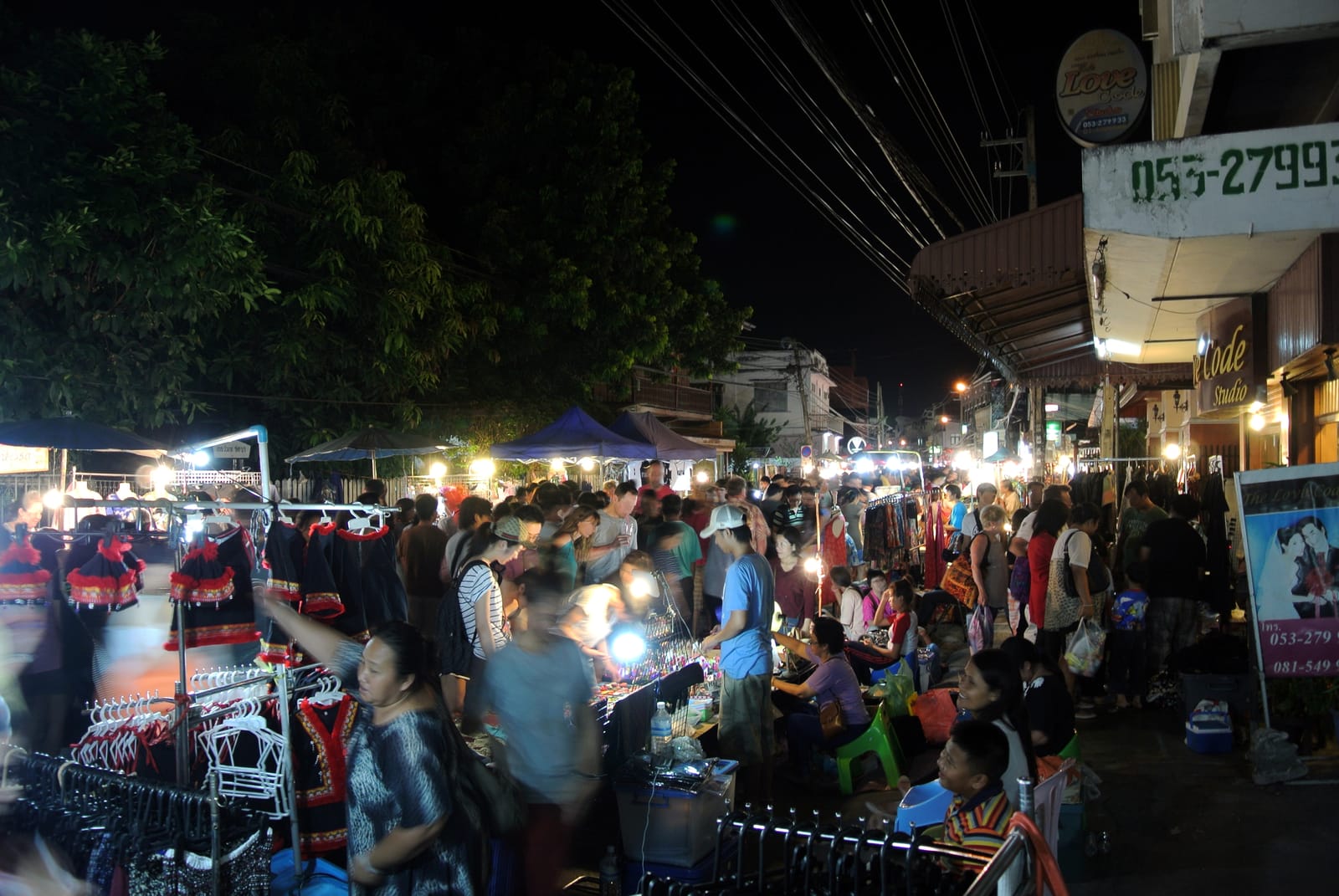
The thing people get confused about most often is assuming there's a single "Chiang Mai night market." There are actually several, each with its own style. The one that opens every single night is the Chiang Mai Night Bazaar on Chang Khlan Road. The Walking Streets come in two stretches: Tha Phae (Sundays only) and Wualai (Saturdays only). If your trip doesn't land on a weekend, the Night Bazaar is your answer.
Quick answer: which market should you go to?
- Visiting on a weekday → the Chang Khlan Night Bazaar, open every night. Shop for souvenirs, then move on to grilled seafood at Anusarn.
- Visiting on a Saturday → the Wualai Walking Street, focused on silverwork and crafts, with fewer crowds and a relaxed vibe.
- Visiting on a Sunday → the Tha Phae Walking Street, the biggest and liveliest of them all, with the full range of Northern food.
- Up early on a weekend → Jing Jai Market (Jing Jai Market / JJ Market), an organic morning market, Saturdays and Sundays before noon.
Want more out of Chiang Mai? Book tours & activities
Booking online ahead on Klook or GetYourGuide is usually cheaper than the gate and skips the queue. Pick only the experiences you actually want — prices and availability are shown live on each site.
Chiang Mai Night Bazaar (Chang Khlan Road)
The Night Bazaar sits on Chang Khlan Road, about a 10–15 minute walk from Tha Phae Gate. Its big draw is that it's open every night, 365 days a year, roughly 6:00–11:00 PM, though it only really comes alive after sunset. The busiest stretch is around 7:30–9:30 PM, and stalls start packing up around 10:30 PM. The goods lean toward handmade craft souvenirs: elephant pants, sin skirts, silverwork, paintings, bags and home décor.
The Night Bazaar area has several eating zones that people often don't realize are separate. Here's how they break down.
Kalare Night Bazaar
A big food court in the middle of the Night Bazaar, run on a coupon system, with Thai, Indian and seafood stalls and live music most nights. Good for a relaxed sit-down with plenty of seating.
Anusarn Market
At the far end of the Night Bazaar, known for fresh grilled seafood — prawns, shellfish, crab and fish ordered by weight. A proper spot for a real dinner, and there's a cabaret show too.
Ploen Ruedee
Also on the Chang Khlan side, cleaner and more orderly than the rest, with a focus on international street food, beer bars and live music.
You can haggle — but be decent about it
Souvenirs at the Night Bazaar are priced with room to bargain. Try knocking off around 10–30% within reason, but if it's a one-off handmade craft piece, don't push the price down hard — many of these stalls are run by the people who made it. Bring cash too; plenty of stalls don't take cards.
Tha Phae Walking Street (Sundays)
The Tha Phae Walking Street is the biggest and liveliest market in Chiang Mai. It runs only on Sunday evenings, roughly 5:00–10:00 PM, starting at Tha Phae Gate and stretching along Ratchadamnoen Road all the way to Wat Phra Singh — about a kilometre of it. Both sides are lined with crafts, clothing and souvenirs, broken up by temple courtyards that turn into temporary food courts.
Northern food turns up in full here, from sai ua and crispy pork rinds to nam prik num, nam prik ong, khao soi and khanom jeen nam ngiao, all the way to local sweets like khao taen, grilled bananas and fresh coconut ice cream. Most street food runs around ฿20–60 per item.
- Go early evening — around 5:30–6:30 PM it's not yet packed and far easier to walk. After 7 PM the crowd thickens until you're shuffling along.
- Temple courtyards — look for the temple grounds along the way (such as Wat Phan Tao and Wat Chedi Luang); they're spots where you can actually sit at a table to eat.
- Watch your things — it gets very crowded, so wear your bag in front and keep valuables tucked away.
Wualai Walking Street (Saturdays)
Wualai runs only on Saturday evenings, roughly 5:00–10:00 PM, along Wualai Road south of the old city. Its calling card is that this is the traditional silversmiths' quarter, so there's plenty of fine silverwork and craftsmanship on offer. It's smaller than Tha Phae, less crowded, and the atmosphere is easier and more walkable — good for anyone who doesn't enjoy being elbow to elbow.
The food holds its own against Tha Phae: khao soi, khanom jeen nam ngiao, sai ua, crispy pork rinds, gaeng hang lay, larb khua and Northern street food everywhere you look. If your trip lands on a Saturday, I'd point you to Wualai rather than hunting around for another market.
Wualai on Saturday, Tha Phae on Sunday
If your Chiang Mai stay straddles a weekend, do both: Wualai on Saturday, Tha Phae on Sunday. They're different in feel and don't repeat each other — better value than walking the same market twice.
Jing Jai Market — for early weekend risers
Jing Jai (Jing Jai Market / JJ Market) isn't a night market, but we've included it because people search for it a lot and it's a completely different mood from the evening markets. It's an organic morning market, open Saturdays and Sundays only, roughly 6:30 AM–2:00 PM, on Atsadathon Road, about a 5-minute drive north of the old city.
It splits into two main zones: the Farmers Market, Chiang Mai's first organic market, selling fresh produce, homemade bakery and ready-to-eat food straight from farmers; and the Rustic Market, a zone of handmade crafts and art. The best window is early, around 7:00–9:00 AM, before the sun gets harsh and the crowds build.
- Come early — the fresh produce and the good bakery sell out fast, and if you arrive late the popular stalls may be gone.
- Bring a cloth bag — this market cuts down on plastic, so bringing your own bag is more convenient.
- You can have breakfast here — there's hill coffee, khao soi and ready-to-eat food to sit down with.
A 3-night market plan
If you're staying several nights and want to cover the markets without repeating yourself, you can lay it out like this (swap the days to match wherever the Saturday/Sunday fall in your trip).
Chang Khlan Night Bazaar
Wualai Walking Street
Tha Phae Walking Street
Things to know before you go
- Cash matters — most stalls take cash, some have PromptPay, but don't count on every stall accepting it.
- Parking is tough — on Walking Street nights traffic is jammed and parking is hard, so a Grab or songthaew is easier.
- Plan for rain — in the rainy season (June–Oct) the markets still open as usual, but showers come and go, so carry a small umbrella.
- Lots of repeat souvenirs — elephant pants and keychains are at nearly every stall, so don't rush to buy at the first one; compare prices first.
Plan your whole Chiang Mai trip without missing the food or the sights
See the Chiang Mai travel guide →