🔄 Updated 21 Jun 2026
Chiang Mai's Old City is the square grid King Mangrai laid out back in 1296, wrapped by walls and a moat that run about 6.4 kilometres around. Inside, it's packed with dozens of temples big and small. The handy part is that the important ones sit close together, so you can walk between them without flagging a ride every time. With half a day you can comfortably cover all three of the main temples.
We've ordered them the way locals and most reviews suggest: start with Chedi Luang in the centre of town, then spread out to Phra Singh on the west side and Chiang Man up in the northeast corner. The entry fees and hours below were checked across several sources in early 2026, but these things change. If you go on a Buddhist holy day or during a merit-making festival, some spots may close temporarily, so keep a little flexibility in mind.
Wat Chedi Luang — the city's biggest stupa
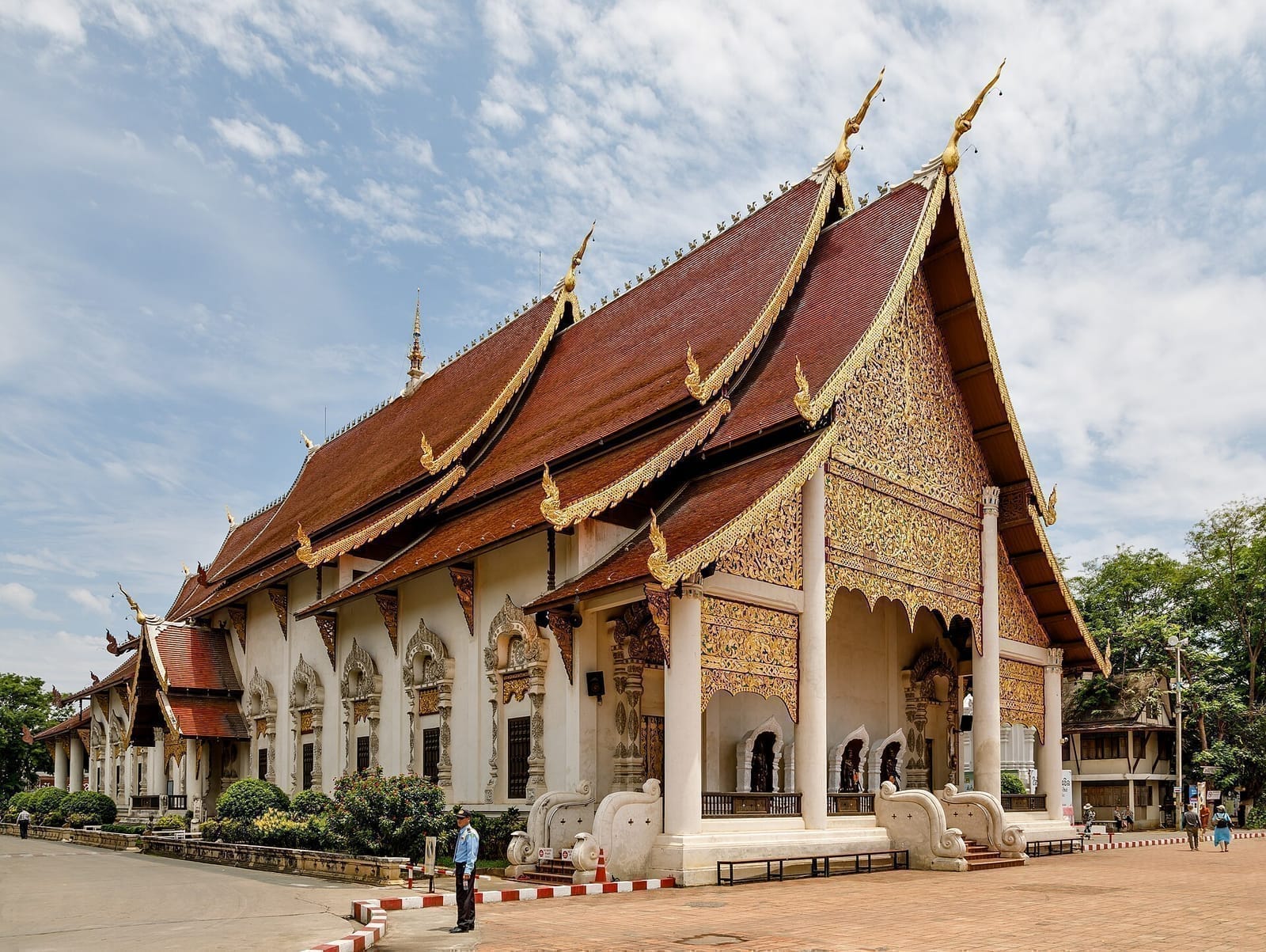
If you only pick one temple in the Old City, a lot of people go with Wat Chedi Luang. The draw is the enormous brick stupa that once stood over 80 metres tall, until part of it collapsed in a 16th-century earthquake. Today what's left is a broad base with a sheared-off top — the most recognisable, and most photogenic, sight in the Old City. Around the base you'll find stucco elephants and naga staircases to walk past.
The same grounds hold the main viharn and the Inthakhin pillar (the city's foundation pillar), which Chiang Mai people deeply respect. Around May and June there's the Inthakhin worship festival, or the "Sai Khan Dok" flower-offering ceremony, when crowds pour in. Go then and you'll catch a genuinely local atmosphere.
- Entry — around 40 THB for adults, 20 THB for children, free for little ones
- Hours — daily, roughly 06:00–18:00 (interior buildings often close before evening)
- Where — Phra Pokklao Road, right in the centre of the Old City, about a 10–15 min walk from Tha Phae Gate
Dressing for the temple
Chedi Luang is a touch stricter on dress than the other temples — shoulders and knees must be covered. If you turn up in shorts or a sleeveless top, the temple has wraps to borrow at the entrance, but bringing your own cover-up is easier on the mind.
Want more out of Chiang Mai? Book tours & activities
Booking online ahead on Klook or GetYourGuide is usually cheaper than the gate and skips the queue. Pick only the experiences you actually want — prices and availability are shown live on each site.
Wat Phra Singh — the city's royal temple
Wat Phra Singh is a first-class royal temple at the western end of Ratchadamnoen Road in the Old City. It houses the Phra Buddha Sihing, one of the city's most revered Buddha images. Inside the gilded Lai Kham viharn are murals telling stories of Lanna life, beautifully done and rich in detail. It's a wider, more open temple than Chedi Luang, and easier to stroll around.
During Songkran in April, the Phra Buddha Sihing is carried in procession around the city for people to pour water over, and this temple becomes the centre of the celebrations. On an ordinary weekday morning it's still quiet, so you can wander at your own pace.
- Entry — around 20–50 THB for foreign visitors (sometimes charged only for the Lai Kham viharn); Thais are usually not charged
- Hours — daily, roughly 06:00–18:00; the Lai Kham viharn opens a little later
- Where — far western end of Ratchadamnoen Road, about an 8–10 min walk from Chedi Luang
Wat Chiang Man — Chiang Mai's first temple
Wat Chiang Man is the oldest temple in the city, built in 1296 alongside the founding of Chiang Mai itself. King Mangrai used this spot as his residence while overseeing the city's construction. The thing to look for is the elephant-buttressed stupa: a square base with 15 stucco elephants jutting out as if holding the stupa up — a rarely seen blend of Lanna and Sri Lankan style.
The viharn also holds two important Buddha images: the Phra Sae Tang Khamani (the White Crystal Buddha), carved from clear crystal — small but very old, believed to be centuries old — and the Phra Sila, a Buddha image carved in low stone relief thought to have come from Sri Lanka, which locals believe can be asked for rain. This temple sits in the northeast corner of the city, with fewer visitors than the first two and a quieter feel.
- Entry — free (there's a donation box for those who wish to give)
- Hours — daily, roughly 06:00–17:00
- Where — northeast corner of the Old City, near Chang Phueak Gate
Straight talk
If you're genuinely short on time and not a history buff, Chiang Man is the one to drop first. It sits toward the corner of the city and is a longer walk than the other two. But if you love old stories and want to dodge the crowds, it's worth the detour.
Walking the moat — start at Tha Phae Gate
Chiang Mai's moat is a square running about 6.4 kilometres in total. Walking the whole loop takes nearly two hours and gets pretty hot midday, so most people don't do the full circuit. Instead they pick the prettiest stretch — the east side with Tha Phae Gate, an old gate that's been nicely restored and is a popular photo spot, with flocks of pigeons and a wide plaza out front.
- Tha Phae Gate — the main gate on the east side and the best starting point; walk straight in along Ratchadamnoen Road to reach the temples
- Si Phum Corner — the old brick wall corner in the northeast, lovely for photos in the evening
- Chiang Mai Gate — the south side, with Chiang Mai Gate Market selling street food in the evening; an easy add-on after the temples
- Suan Dok Gate — the west side, near Wat Phra Singh, leading out toward the Nimman area
Best time to go
Walking the moat and visiting temples is best in the morning before 10am, or from around 3pm onward. At midday the sun is brutal and walking is rough. If you come on a Sunday, Ratchadamnoen Road turns into a walking street in the evening, so you can keep going for ages.
A half-day, three-temple route
Here's a route that links all three temples into an easy walk with no backtracking — start in the morning and finish before noon, in time for a bowl of khao soi.
Tha Phae → Chedi Luang → Phra Singh → Chiang Man
If you have a full day and still have energy, add some smaller temples in the afternoon — Wat Phan Tao (right next to Chedi Luang), Wat Umong Thera Chan — or just wander the Old City's lanes, which are dotted with cafés.
Good to know before you go
- Dress modestly — cover shoulders and knees, men and women alike, and take your shoes off before entering a viharn
- Cash — entry fees and donation boxes take cash, so carry small notes and coins
- Respect those praying — there are real monks and worshippers here; keep your voice down and don't point your feet at the Buddha images
- Songthaew / Grab — in the Old City you can charter a red truck for short hops if you'd rather not walk; agree the price before you get in
Stay in the Old City
If you want to be walking temples from early morning without a ride, pick a place inside the walls or near Tha Phae Gate
Mind the holy days
On Buddhist holy days and during festivals, some viharns close for monks' services — check ahead or build in extra time
Keep planning your Chiang Mai trip — temples, cafés, mountains and food
See the Chiang Mai travel guide →