🔄 Updated 21 Jun 2026
If it's your first time in Chiang Rai, the appeal is how much variety sits within a short drive. Spend the morning at contemporary art temples you won't find anywhere else, head up a mountain at midday to sip tea among the green rows, then come back down for an evening market in town. We've sorted the attractions into four lines — art temples, mountains and tea farms, misty nature, and the border points — so you can mix and match based on the days you have.
Art temples you shouldn't skip
Chiang Rai is the home town of several major artists, so the temples here aren't your usual old wats — they're contemporary artworks the artists designed themselves. The three below sit in different directions, but you can see them all in one day if you start early.
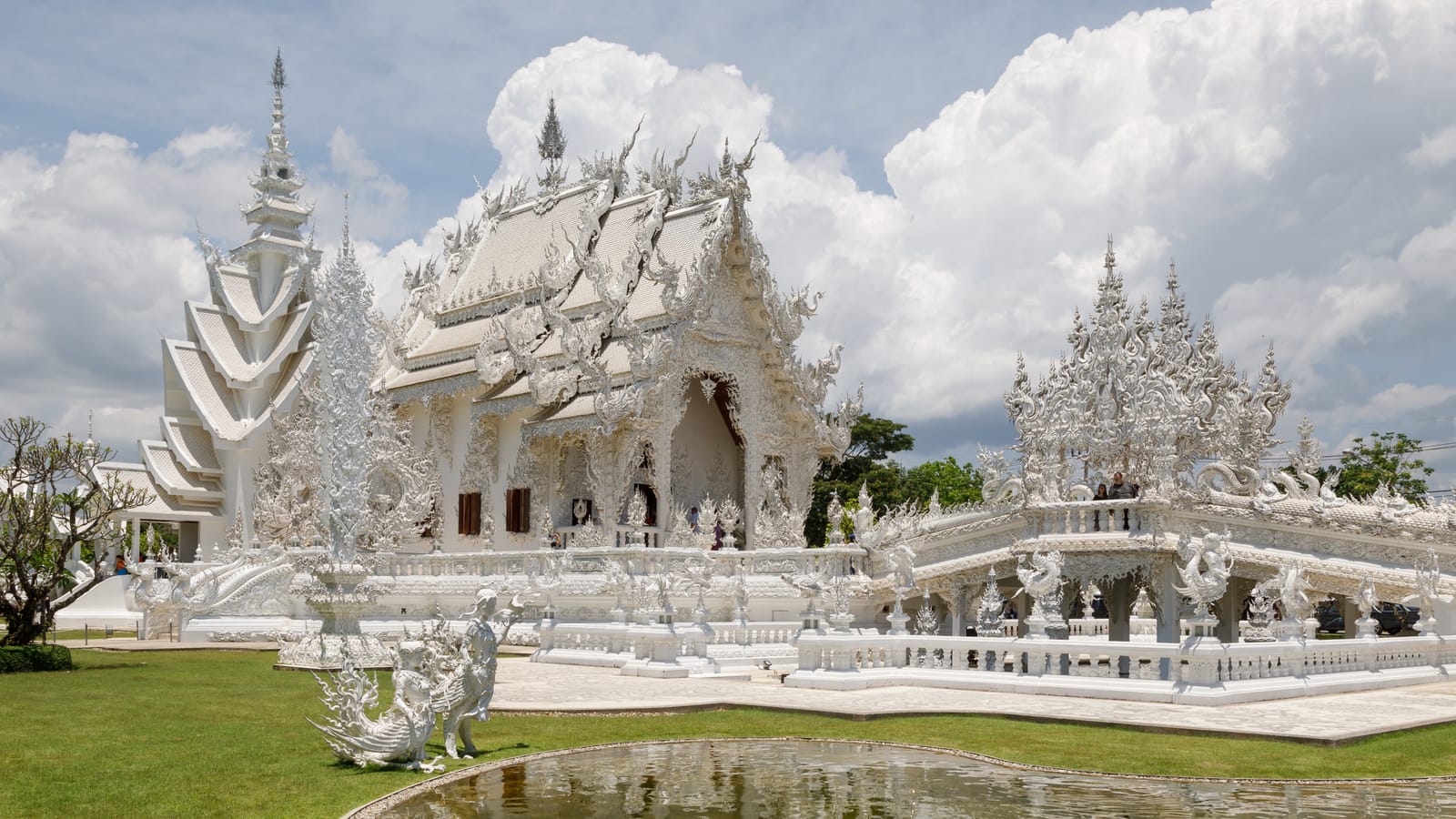
Wat Rong Khun (White Temple)
An all-white temple studded with glittering mirror mosaic, the work of artist Chalermchai Kositpipat, who has been building it for decades. The bridge crossing to the white ordination hall is the photo spot where people queue up. Strong midday sun makes the white surfaces reflect especially well.
Wat Rong Suea Ten (Blue Temple)
A deep-blue ordination hall trimmed with gold, the work of Sala Nok, a student of Chalermchai's school. Inside, the murals and a white principal Buddha image stand out beautifully against the blue walls. It's in town across the Kok River, so it's easier to reach than the White Temple.
Wat Huay Pla Kang
Known for its nine-tier Pho Chok Dhamma pagoda blending Chinese and Lanna art, plus a giant Guan Yin statue about 79 metres tall (the tallest in Thailand). You can take the lift inside the pagoda up for city views. It feels like a Chinese temple set in a valley, and plenty of people come to pray for blessings.
Tip
All three are working temples, so dressing modestly with shoulders and knees covered makes entry easier. The White Temple is busiest by late morning — if you arrive when the gates open at 08:00, you'll get clearer photos of the bridge.
Want more out of Chiang Rai? Book tours & activities
Booking online ahead on Klook or GetYourGuide is usually cheaper than the gate and skips the queue. Pick only the experiences you actually want — prices and availability are shown live on each site.
Mountains and tea farms
Chiang Rai is cool and high, which is good for growing tea, so the hillside tea farms have become popular spots to take photos and sip tea. Doi Tung, meanwhile, is a cool-climate flower garden that people come back to in every season.
Choui Fong Tea Farm
Green terraced tea rows stretching as far as you can see in Mae Chan, with the farm's own café serving its tea and bakery. The view is best in the early morning while there's still mist. Entry is free — you only pay for food and drink.
Mae Fah Luang Garden, Doi Tung
A cool-climate flower garden in the valley that rotates blooms all year so it never looks the same twice. Nearby is the Doi Tung Royal Villa to walk through. Entry is split into several zones, and you can buy a combined ticket.
Doi Chang
Chiang Rai's well-known Arabica coffee-growing area. Head up to taste coffee right at the source on the farm, with cool air and mountain views. Good for coffee lovers who want to see where the beans come from.
Nature and seas of mist
If you come in the cool season, Chiang Rai has mist-viewing points that are worth the early start. The two below are the highlights, but check the weather first — the mist doesn't show up every day.
- Phu Chi Fa — a cliff peak for watching the sunrise over a sea of mist, in Wiang Kaen district, about 1.5–2 hours' drive from town. You walk up the last stretch on foot, so get there before dawn for the full view.
- Singha Park (Boon Rawd Farm) — a large agricultural farm outside town with tea fields, seasonal flower gardens, an animal farm, and activities like zip-lining. You can ride the tractor-trailer tour around the farm. Good for families.
- Khun Korn Waterfall Forest Park — a large waterfall near town reached by a short forest walk. Good for a day when you want to swap the scenery for water and green forest.
Worth knowing
The sea of mist at Phu Chi Fa is best from late rainy season into the cool months, through around February. If you come in the hot season or during heavy rain, there may be no mist — keep a backup plan like a tea farm or a temple in town.
Border and history
The far north of Chiang Rai borders other countries, so you can visit the meeting point of three nations and the border markets. It works well as a half-day trip right after Doi Tung.
Golden Triangle
Where Thailand, Laos and Myanmar meet along the Mekong River in Chiang Saen, with a large riverside Buddha image and boat rides to see all three banks. Nearby, the Hall of Opium museum lets you walk through the area's history.
Baan Dam (Black House Museum)
The collection of artist Thawan Duchanee — a cluster of black wooden houses displaying animal horns, hides and raw-edged art. A good contrast to the white and blue temples. It's in Mueang district and easy to reach.
How to plan a route that's worth it
- One day — do the in-town spots first: Blue Temple, Wat Huay Pla Kang, Baan Dam, then finish at the White Temple in the afternoon.
- Two days — temples on day one; head up the mountains on day two to Choui Fong tea farm, then Doi Tung, and stop at the Golden Triangle.
- Cool season — add Phu Chi Fa at dawn on your last day, then come down to see the other spots.
Plan a full Chiang Rai trip, hotels included
See the Chiang Rai travel guide →