🔄 Updated 21 Jun 2026
Chiang Rai souvenirs split neatly into two groups. The first is fresh and semi-fresh food like sai ua, khaep mu, and chili dips — delicious, but you need to watch the use-by date and how it's packed if you're flying. The second is dry goods and sweets that keep for ages — khao soi tat, khao taen, dried pineapple, tea, coffee — easy to grab and carry home. We've ranked the things people buy most often first, then we'll point you to where it's most convenient to shop.
The Chiang Rai Souvenirs People Buy Most
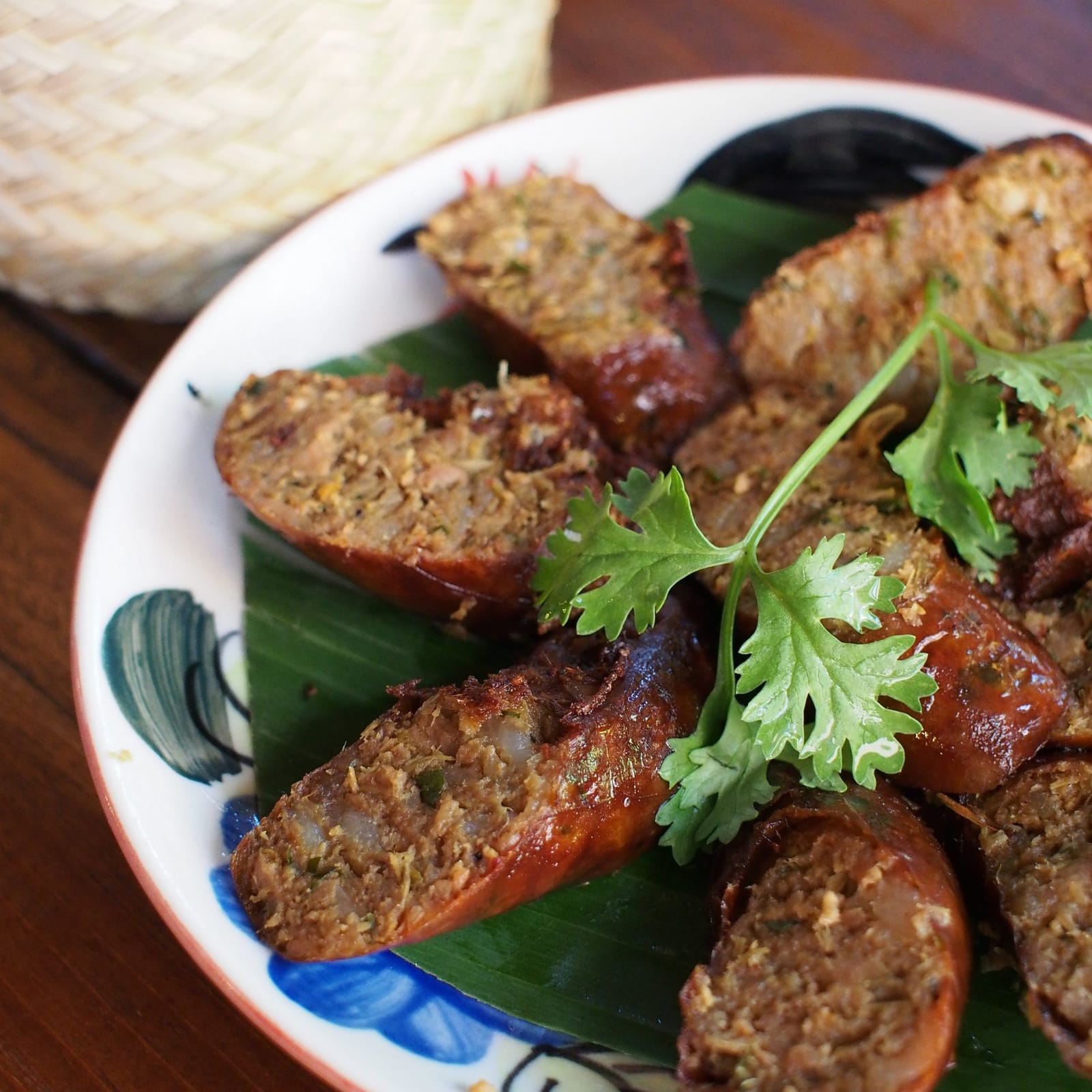
Sai Ua (Northern Herb Sausage)
Northern herb sausage stuffed with a curry paste of lemongrass, kaffir lime leaf, and shallot, then grilled or fried until fragrant. Eaten with sticky rice and nam prik num, it's the number-one souvenir out of Chiang Rai. If you're flying, get the fully-cooked kind and ask for vacuum packing.
Nam Prik Num (Green Chili Dip)
Roasted young green chilies pounded with garlic and shallot, mild rather than fiery. It pairs perfectly with khaep mu and sticky rice and usually comes in a bag or tub. It's the constant companion to sai ua and khaep mu as a souvenir set.
Khaep Mu (Fried Pork Rind)
Pork skin fried until puffed, sold both with the fatty layer and without. Crunchy on its own or dipped in nam prik num, it keeps longer than sai ua, so it's an easy souvenir with no worries about flying.
Khao Soi Tat
A traditional sweet — thin sheets of dough that look like crisp-fried khao soi noodles, tossed in a touch of sugar. It keeps well and makes an easy souvenir since it doesn't spoil and needs no refrigeration.
Khao Taen Nam Taeng Mo (Watermelon Rice Crackers)
Sticky rice mixed with watermelon juice, pressed into round disks, sun-dried, then fried until puffed and glazed with reduced cane syrup. Sweet, crunchy, and moreish — a classic northern sweet you'll find at every souvenir shop.
Khanom Wong (Khao Nom Khuay)
A Tai Yai sweet — glutinous rice flour kneaded with grated coconut, rolled in sesame, shaped into rings, fried, then dipped in cane syrup. Fragrant with sesame and pleasantly sweet, it's a heritage sweet that's getting harder to find, turning up in morning markets and specialist northern-sweet shops.
Phulae Pineapple / Dried Pineapple
Phulae pineapple is small with dense, sweet, crisp flesh — a fruit Chiang Rai is known for. If you're carrying it far, the dried or candied versions travel better than the fresh fruit.
Doi Chang Macadamia
Macadamias grown on Doi Chang, roasted rich and fragrant — a healthier snack. They cost more than other souvenirs but they're a local specialty, and a jar makes a good gift for the older folks.
Doi Mae Salong Oolong Tea
Oolong tea grown on Doi Mae Salong — fragrant with a smooth taste, available in several grades and price points. Buy it in easy-to-brew sachets. It's a souvenir tea lovers appreciate, and it flies with no problem.
Doi Tung Coffee
Arabica coffee from the Doi Tung project, roasted to a consistent standard, sold as whole beans or ground. You can buy it at Doi Tung shops and the airport — a reliable pick for the coffee crowd.
If You're Flying
Sai ua and chili dips are semi-fresh — ask the shop to vacuum-pack them and put them in checked luggage. Avoid carrying them in the cabin, since the smell is strong and they count as liquids over the limit. Dry goods like khaep mu, khao soi tat, tea, and coffee are fine in your carry-on.
Want to taste deeper? Try a Chiang Rai food tour or cooking class
Half a day with a local who knows the lanes — or cooking a dish yourself — teaches you more than just eating. Book ahead on Klook or GetYourGuide.
Where to Buy Souvenirs in Chiang Rai
You can pick up Chiang Rai souvenirs in plenty of spots, and each one suits a different kind of item. If you want fresh sai ua, khaep mu, and chili dip at local prices, head to a market. If you want neat gift packaging and vacuum-pack service, a dedicated souvenir shop is more convenient.
Nantawan
A dedicated souvenir shop that gathers sai ua, naem, mu yo, khaep mu, chili dips, tea, and dry goods in one place. Everything comes gift-packed and they offer shipping — ideal if you want to wrap up your shopping in a single store.
Kong Kham
A well-known maker of old-recipe sai ua, with nam ngiao curry paste, naem, khaep mu, and chili dips too. You can order ahead or have it packed for shipping — great for sai ua fans who want the traditional flavor.
Clock Tower Roundabout
Right in the town center, the area around the Clock Tower has several souvenir shops in a row, so you can compare prices — sai ua, nam prik num, khaep mu, mu yo, and OTOP products. A good stop in the early evening before dinner.
Kad Luang (Municipal Fresh Market)
The fresh market in the middle of town — a source of fresh northern food at local prices, with chili dips, curry pastes, freshly-made northern sweets, and seasonal fruit. Best if you actually want to walk a real market.
Chiang Rai Night Bazaar
A night market near the old bus station, with crafts, hill-tribe woven textiles, and souvenirs mixed in with snacks. Good for non-food souvenirs and an evening stroll.
Mae Fah Luang Airport
Your last chance before flying out — Doi Tung coffee, tea, and dry goods packed ready for the plane. Prices run a little higher than in town, but it's handy if you forgot to buy something.
How to Buy the Good Stuff
- Check the production and use-by dates, especially on sai ua and chili dips. The fresher the better — don't buy too far ahead if you still have several days of travel left.
- Ask for a taste if the shop offers samples. Nam prik num and khaep mu vary from maker to maker, so taste first, then pick what suits you.
- Get semi-fresh items vacuum-packed and tell the shop how many hours you'll be traveling. Most souvenir shops will pack it for you and advise on storage.
- Dry goods you can buy early. Khao soi tat, khao taen, khaep mu, tea, and coffee keep for ages — buy them on day one and they'll be fine.
- Compare market prices against souvenir shops. Markets are usually cheaper but with plain packaging; souvenir shops cost a bit more but pack nicely and can ship.
Plan a full eat-and-explore trip in Chiang Rai
See the Chiang Rai travel guide →