🔄 Updated 21 Jun 2026
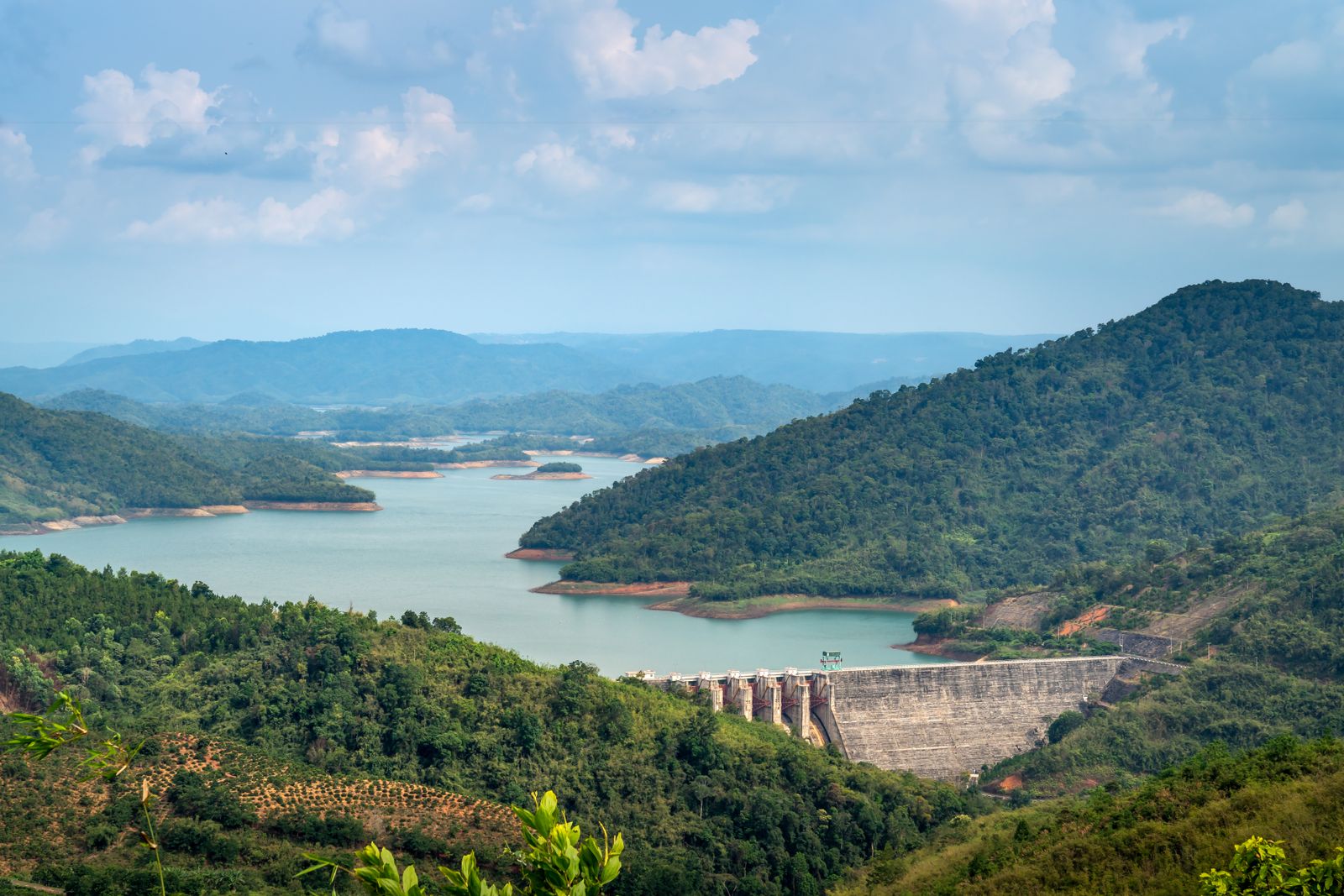
When people talk about Chaiyaphum, the krachiao (Siam tulip) fields usually come to mind first. But Chulabhorn Dam is another spot that wins visitors over, because it's the highest dam in the country, sitting at around 800 metres. The air stays cool and easy almost year-round — mornings often have mist drifting over the reservoir, the midday sun isn't as harsh as down on the flats, and nights get cold enough that you'll want a jacket.
The dam holds back the Phrom River up in the Khun Phai range, in Thung Phra subdistrict, Khon San district, Chaiyaphum. It's run by the Electricity Generating Authority of Thailand (EGAT), and some people call it Nam Phrom Dam after the river. It's a rockfill dam with a clay core and an underground power station — and for travellers, what matters is that it has viewpoints, a relaxing park, and cabins you can stay the night in.
Why come to Chulabhorn Dam
- Thailand's highest dam — perched on the mountain at around 800 metres, with cool air nearly all year. You don't have to wait for winter to feel a cool breeze.
- Reservoir and mountain views — green-blue water framed by layers of ridges, with plenty of angles to shoot from, both on the dam crest and from the viewing pavilions.
- You can stay overnight — there are lakeside EGAT cabins to book, plus a camping ground for the tent crowd.
- Quiet and uncrowded — fewer people than many of the big-name spots, so it suits anyone who actually wants to rest.
Want more out of Chaiyaphum? Book tours & activities
Booking online ahead on Klook or GetYourGuide is usually cheaper than the gate and skips the queue. Pick only the experiences you actually want — prices and availability are shown live on each site.
Things to see around the dam
The dam area is large, and you can drive around to take in several spots. Set aside at least half a day if you want to cover them all.
Dam crest and reservoir
The main photo spot — stand on the dam crest and look down over the green water and the long line of ridges. Early mornings bring pretty mist over the water.
Lub Khuan viewpoint pavilion
A viewpoint at around 800 metres. On clear days you can see all the way to Phu Kradueng and Phu Luang in Loei province. There's a camping ground nearby.
Chulabhorn Dam park
A conservation forest of about 41 rai with ancient plant species and shaded walking paths, plus the Phrom Phisamai pavilion to sit and rest. Good for a morning or evening stroll.
Phra Phuttha Sirisattaraj replica
A replica of the Seven Kings Buddha (Luang Pho Jet Kasat), enshrined on the left side of the dam head, across from the park. A spot where visitors stop to pay respects and make a wish.
Photo tip
The prettiest windows are early morning while the mist hasn't burned off yet, and late afternoon near sunset, when the light is soft and the water is still. Staying overnight in the dam area gives you an edge, since you can be out on the crest right as the mist settles in.
Where to stay in the dam area
Inside the dam area there are EGAT guest cabins you can book for the night, with room for around 98 people — everything from standalone lakeside houses to small rooms in row houses. The price per house varies by size and location. Based on recent rates, the larger lakeside houses run from the low thousands up to a bit over four thousand THB per house, while the small budget rooms start in the low hundreds. Prices and deals depend on the season, so it's best to phone the dam to check every time.
- Lakeside EGAT cabins — larger houses with reservoir views, good for a group or family. Roughly the low thousands up to a bit over four thousand THB per house.
- Row houses / small rooms — budget rates starting in the low hundreds, good for a couple or a solo traveller.
- Camping ground — along the reservoir near the Lub Khuan pavilion, for campers who want to sleep in the cool breeze.
- To book — call the Chulabhorn Dam guest house at 044-861669 ext. 4000–4001 (check prices and availability before you travel).
Straight talk
The lodging here is government guest-house style — clean and simple, not a luxury resort. If you expect a hotel's full set of amenities, you may need to adjust your expectations a little. But you get a lakeside spot and cool air that's hard to find elsewhere. Rooms fill up fast on long weekends, so book ahead.
When to go
Because it sits high on the mountain, Chulabhorn Dam stays cool and comfortable nearly all year, but each season has its own feel.
- Nov–Feb (cool season) — the best window. Thick morning mist, genuinely cold nights, clear skies and sharp views. This is when most people come.
- Jun–Aug (rainy season) — the forest is deep green and the reservoir is full. Some days the rain may hide the view behind clouds, but the atmosphere is lush. This also lines up with the Siam tulip bloom, so you can pair the two.
- Mar–May (hot season) — the lowlands are hot, but the mountain stays much cooler than below, making it a good place to escape the heat.
If you're pairing it with the Siam tulip fields
The Siam tulip fields at Pa Hin Ngam and Sap Lang Ka (Suan Hin Pha Ngam) only bloom in the rainy season, roughly Jun–Aug — not year-round. If you're coming specifically to see the flowers along with the dam, check that year's bloom window before you plan, because the peak doesn't fall on exactly the same dates each year.
Getting there and what to know
- From Chaiyaphum town — drive up via Khon San district, about 120 km, roughly 2 hours. The last stretch is a winding climb up the mountain.
- A private car is easiest — the spots inside the dam area are spread out, and there's no public transport running within it, so you'll want your own vehicle.
- Fill up before the climb — petrol stations and shops up the mountain are scarce. Fill the tank and grab snacks in town before heading up.
- Pack a warm layer — even in the hot season, nights on the mountain are cool. If you're staying over or getting up early for the mist, a long-sleeve helps a lot.
- Check the opening hours — the tourist area has set entry and exit times, and some spots are EGAT property, so follow the signs and staff instructions.
Plan a full Chaiyaphum trip — the dam, waterfalls, and the Siam tulip fields
See the Chaiyaphum travel guide →