🔄 Updated 21 Jun 2026
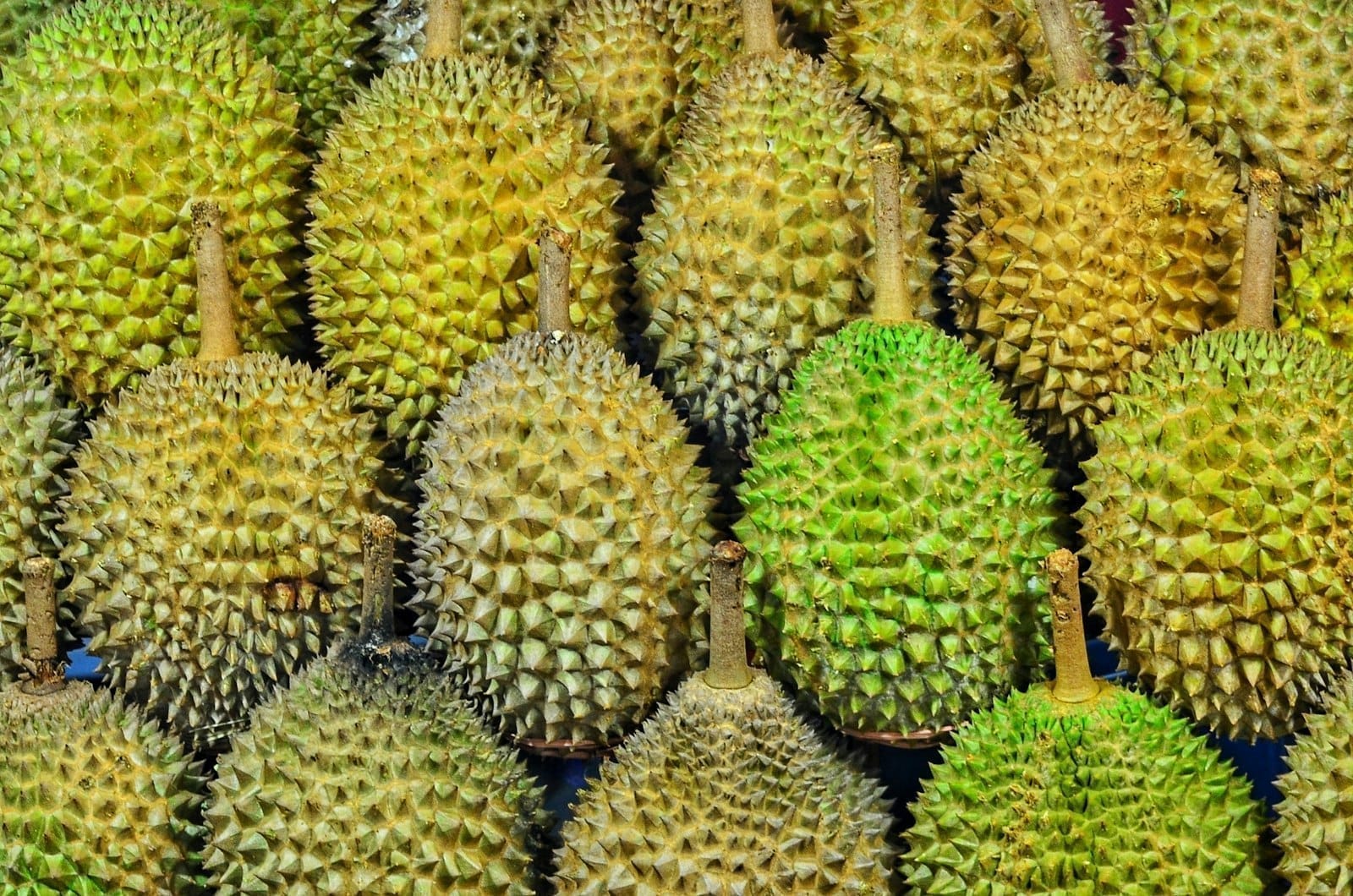
The appeal of Chumphon fruit is how fresh it is — picked from orchards within the province and sold almost the same day, without passing through several layers of middlemen the way fruit shipped to other provinces does. The main durian here is Mon Thong: thick flesh, flat seeds, nicely sweet and creamy, not too strong-smelling. But plenty of locals secretly prefer Puang Manee and Kan Yao for their bolder flavour and stronger aroma. Fruit season peaks from mid-year into the late rains, and if you time it right you'll eat for a fraction of Bangkok prices.
A note on seasonality. Fruit is a product of nature — in a wet year or a dry year the fruiting window can shift by weeks, even a month. The table below is a rough guide. If you're coming specifically to eat fruit, it's worth checking with the orchards or a Chumphon fruit-market Facebook page before you set off, so you don't end up disappointed.
Chumphon fruit by season — what's ripe each month
Chumphon's headliners are durian and mangosteen, and both come in right around mid-year. Come in July or August and you've hit the jackpot, because you get them both at once. Rambutan, longkong and mangosteen then stretch on a bit longer into the late rains.
- Durian (Mon Thong, Puang Manee, Kan Yao) — roughly June to October, peaking in July and August. That's when the roadside stalls are in full swing and prices drop the most.
- Mangosteen — roughly July to August, coming in right alongside durian. Chumphon mangosteen has firm flesh with a sweet-tart balance; the fruit isn't large but it's good.
- Rambutan — roughly July to September. The Rongrian variety has flesh that comes cleanly off the seed, crisp and sweet, and is usually sold on the same stall as mangosteen.
- Longkong & langsat — roughly August to October, coming in at the tail end of the season as the sweet finish to the fruit calendar.
- Lebmuenang banana — around nearly all year. A Chumphon signature: small, sweet and fragrant fruit, also popular dried as a take-home snack.
Want both durian and mangosteen — which month?
July and August are the golden window for Chumphon fruit: durian is coming in heavily, prices are down, and mangosteen and rambutan arrive at exactly the same time. Come in early June and you might catch the first durian of the year, still pricey and with some orchards not yet in full swing. October is the tail end — supplies are thinning out, but there's still some longkong and late-batch durian around.
Want to taste deeper? Try a Chumphon food tour or cooking class
Half a day with a local who knows the lanes — or cooking a dish yourself — teaches you more than just eating. Book ahead on Klook or GetYourGuide.
How to buy durian at Chumphon roadside stalls without getting fooled
All along the Phetkasem Highway and the Asia Highway through Tha Sae, Chumphon town and down toward Sawi and Lang Suan, durian season brings dozens of roadside stalls lined up one after another. Most of the fruit is fresh and cheaper than buying in other towns, but a few stalls sell underripe fruit or shave the scales. So you do need to choose with a little care. Chumphon itself runs a programme that certifies roadside durian stalls with a label, and has a website mapping their locations (mocdurianchumphon.com) where you can check which stalls are certified.
- Pick stalls with the provincial certification label — stalls in the provincial commerce programme display a label, weigh honestly and take more responsibility for quality.
- Ask to taste before buying a whole fruit — most stalls will let you taste or open one up to show the flesh. Buying it already cut into segments is a safer bet on ripeness than gambling on a whole fruit.
- Ask the price per kilo and watch the weighing — Mon Thong prices move with the season and the grade; pricey early, cheaper mid-season. Keep an eye on the scale every single time.
- Say when you plan to eat it — eating today? Ask for one that's ripe and ready. Carrying it a long way? Ask them to pick one that's still slightly firm so it doesn't over-ripen en route.
- Beware pre-cut fruit that's been sitting too long — durian segments boxed up and left in the sun all day go mushy and the smell turns. Choose busy stalls that turn over their stock fast.
Roadside fruit-stall areas worth a stop
Phetkasem Highway around Tha Sae
The northernmost zone of the province before you reach the town, and a major durian-growing area with plenty of roadside stalls and durian warehouses. A good stop coming down from Prachuap or Bangkok.
Bypass & Asia Highway around Chumphon town
Closest to the town and easy to pop into on your way to your hotel or to pay respects at the Krom Luang shrine. Durian, mangosteen and rambutan are sold side by side here.
Southern road around Sawi & Lang Suan
The route down to the southern part of the province, a zone of orchards and mangosteen. A good stop as you drive on toward Surat Thani or back from Lang Suan.
Which Chumphon durian variety is which
Mon Thong
Chumphon's main variety and the best-seller. Thick, pale-yellow flesh, flat seeds, nicely sweet and creamy with a milder aroma. It's the variety most people find easy to eat and easy to carry home, since the flesh is drier and doesn't go mushy. Available at every stall.
Puang Manee
The durian many locals name as their favourite. Smaller fruit, deep yellow-orange flesh, intensely sweet and creamier than Mon Thong, with a stronger smell. Great for anyone who likes a bold durian — it doesn't last long on the stalls and sells out fast.
Kan Yao
A traditional variety with fine, chewy flesh that's sweet, creamy and soft on the tongue, with the long stem its name refers to. Usually priced above Mon Thong because it's scarce and sought-after. Good for anyone wanting to try an old-school durian with a deep, mellow flavour.
Long Laplae / Lin Laplae (some orchards)
A few Chumphon orchards grow the smooth-flesh, small-seed Long Laplae type for limited sale. Golden-yellow flesh, less sweet and more creamy, small enough to finish on your own. Stock is limited and prices are high, so you have to ask around in batches.
Chumphon orchards you can visit and taste at
Beyond the roadside stalls, Chumphon has agritourism-style orchards where you can walk in, see the trees and taste fruit on site. Most are around Lang Suan and Sawi, a zone that grows a mix of fruit. Call ahead to the orchard every time, since many open only during the fruit season and need advance booking.
200-Year Orchard (Lang Suan)
An old mixed orchard in Lang Suan district with native durian, mangosteen, rambutan and langsat. Walk among the very old trees and taste seasonal fruit — an agritourism spot for the southern part of the province.
Chumphon Horticulture Research Centre (Sawi)
In Wisai Tai sub-district, Sawi, open Monday to Friday, with plots of fruit and horticultural varieties to walk through. Good for anyone who wants to understand durian and coconut varieties rather than just eat.
Durian orchards around Tha Sae & Pathio
The main durian-growing zone in the north of the province. Many orchards open for on-site tasting during durian season, but you need to arrange it in advance through the orchard's Facebook page, since these are working orchards, not restaurants.
Etiquette when visiting a fruit orchard
Most agritourism orchards are working farms people make a living from, not theme parks. Book ahead, ask clearly about any entry or tasting fee first, don't pick fruit yourself, and stick to the paths the owner points out. Ripe durian can drop off the tree on its own and it's heavy, so mind your head when walking under the trees during the ripe season.
Processed fruit and take-home gifts
- Fried durian / durian paste — keeps for a long time and travels fine on a plane or in the car, with none of the smell issues of fresh fruit. A popular take-home gift.
- Frozen / freeze-dried durian — for anyone visiting off-season or wanting to carry it far. Many stalls and warehouses offer frozen packing.
- Dried Lebmuenang banana — a Chumphon signature, sweet, fragrant and moreish, sold at gift shops and markets all over town.
- Mangosteen paste / mangosteen juice — when mangosteen floods the market there's often processed stock for sale, a sweet-tart snack.
- Aromatic coconut — Chumphon is coconut country too, so you can grab a fresh one to drink roadside almost all year.
Plan a full eat-and-explore trip to Chumphon
See the Chumphon travel guide →