🔄 Updated 21 Jun 2026
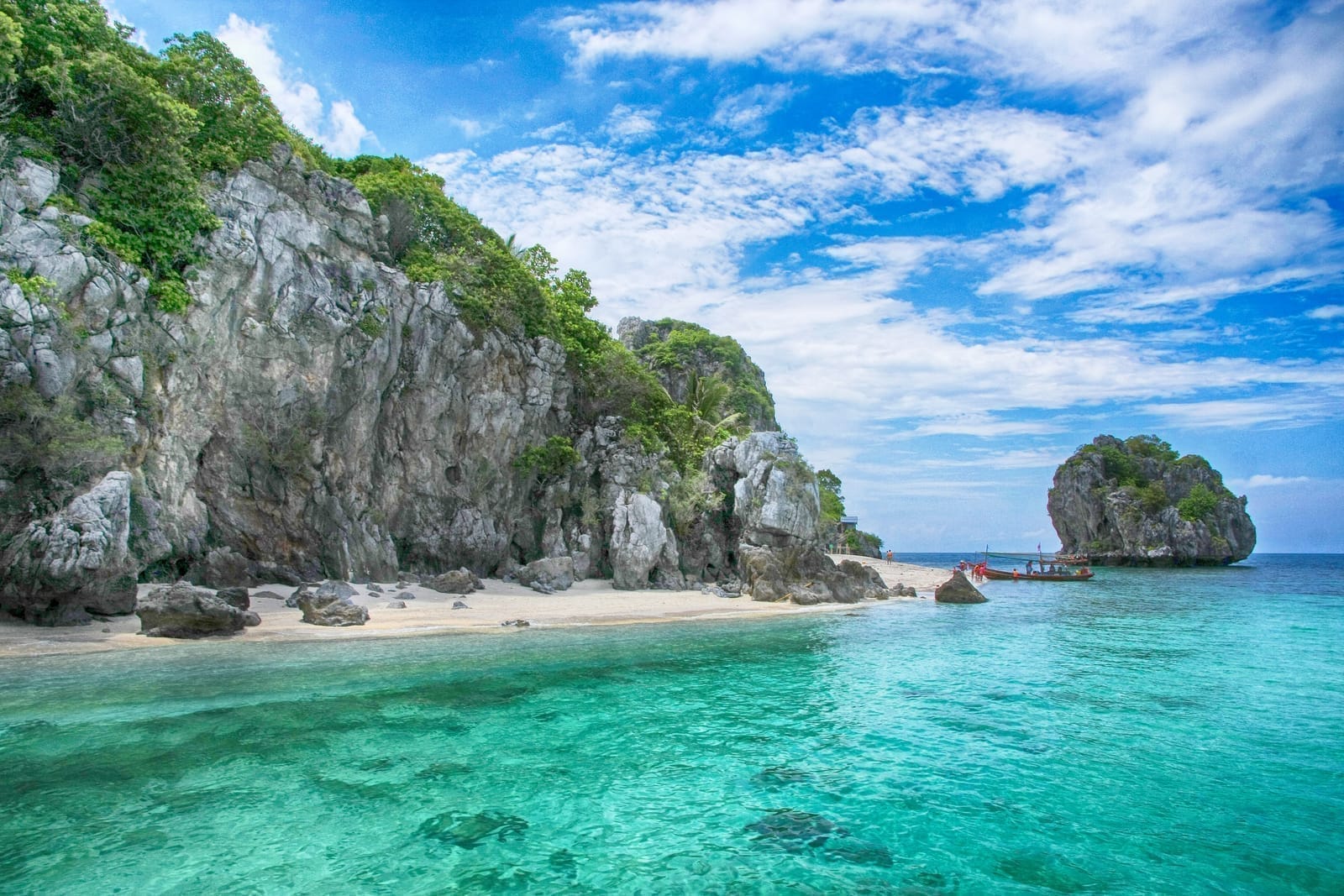
The Chumphon Islands sit within Mu Ko Chumphon National Park, with its headquarters at the mouth of Khlong Tha Jorakhe in Hat Sai Ri subdistrict, Mueang district. It covers more than 40 islands stretching from the Chumphon rivermouth southward. The draw is that this part of the Gulf of Thailand still has several kinds of coral and plenty of fish to see, both shallow snorkeling along the islands and underwater rock pinnacles for deeper divers. Most tour boats run as day trips, looping around several islands in one go, which suits anyone who comes to Chumphon and wants a day out at sea without staying overnight on an island.
Worth knowing before you plan. Dive trips here are split into odd-day and even-day routes that visit different groups of islands, so if there's one particular island you want to see, check which route falls on that date. The Gulf of Thailand is clearest in the dry season, roughly February to May, while the late-year monsoon brings strong waves and boats often don't run. Get the timing right from the start and you won't waste the trip.
The dive islands you should know
Koh Ngam Noi & Koh Ngam Yai
This pair of rocky islands is the highlight of the Chumphon sea and falls on the odd-day route. Underwater there are rock pinnacles and colourful soft coral, loads of fish, and it's the best spot in the area for a whale shark sighting. Koh Ngam Noi also has a cave where swiftlets build their nests. It works for both shallow snorkeling along the cliffs and deeper dives around the pinnacles. The waves run a touch stronger than the other islands since it sits further from shore.
Koh Mattra
A larger island about 6.5 km from the park headquarters, which many people rate as the prettiest snorkeling spot in the Chumphon Islands. The water is shallow and clear, the coral starts right off the beach so it's easy to get in even if you're not a strong swimmer, and schools of fish come in close. It's on the even-day route and suits beginners and families who just want relaxed, easy snorkeling.
Koh Lang Ka Jiu
A birdnest island with a special history: King Rama V visited three times and carved his royal cypher, Jor Por Ror, into the cliff face. It's a swiftlet-nest concession island that's open to visitors only on the western beach, a stretch of white sand about 100 metres long with clear water, coral and pretty fish all around the island. It's on the even-day route and suits anyone who wants both snorkeling and a bit of history.
Koh Lak Raed
A dive spot people love for its large, beautifully coloured brain coral that's hard to find elsewhere, sitting in big mounds underwater with schools of all kinds of fish circling around. It's on the even-day route, in the same group as Koh Mattra and Koh Lang Ka Jiu. It suits divers who can go deeper and want to see big coral mounds you don't often find in other places.
Koh Lawa
A snorkeling spot known for clownfish (the Indian-red kind) living in shoals among the sea anemones, which make for great underwater photos. The water isn't too deep, so it's good for beginners, and it's on the even-day route. Kids tend to love this island because the fish are easy to see and come in close.
Koh Thalu & Koh Kalok
Two islands on the odd-day route, in the same group as Koh Ngam. Koh Thalu has a rock arch you can shoot photos through, with coral and fish around the island, while Koh Kalok is a snorkeling spot with clear water on a good-weather day. They make a good stop after Koh Ngam to round out the odd-day trip.
Odd-day vs even-day: how to choose
The odd-day route goes to the Koh Ngam Noi, Koh Ngam Yai, Koh Thalu and Koh Kalok group, with whale shark chances and pinnacles for deeper divers. The even-day route goes to Koh Mattra, Koh Lak Raed, Koh Lawa and Koh Lang Ka Jiu, focused on clear-water snorkeling plus the history at Lang Ka Jiu. If you're only here for a day, check which route falls on that date first, then book to match the island you most want to see.
Want more out of Chumphon? Book tours & activities
Booking online ahead on Klook or GetYourGuide is usually cheaper than the gate and skips the queue. Pick only the experiences you actually want — prices and availability are shown live on each site.
Where the boats leave from & what tours cost
The main pier for the Chumphon Islands is Tha Yang on Khlong Tha Taphao, along with the nearby Chumphon PAO tourist pier. Most tour boats also offer pickups from Hat Sai Ri, Hat Thung Wua Laen and Hat Pharadon beaches, so if you're staying in the beach area you don't have to head into town yourself. Join-tour day trips usually leave around 9am and get back about 4pm.
Join-tour 4-island dive trip by speedboat
The go-to trip for day visitors. A speedboat loops four islands on either the odd-day or even-day route, with the price covering the boat, life jacket, snorkel mask, lunch, drinks, a guide, accident insurance and site fees. Adults run about ฿1,500, kids 80–130 cm tall about ฿900. Some operators run a national-park promo starting around ฿1,450, and most set a minimum number per departure.
Private boat charter (speedboat / longtail)
Good for groups of friends or families who want to set their own islands and schedule without waiting on anyone else. Pick the islands you want and stay as long as you like. The charter price depends on the boat size and number of islands, and it works out well when you split it across several people. It's best to contact a local operator ahead of time and ask clearly whether gear and park fees are included.
National park entry fee (paid separately if not in the tour)
Most of the dive islands are inside Mu Ko Chumphon National Park, which charges an entry fee: Thai adults ฿40, children ฿20; foreign adults ฿200, children ฿100. Most join tours include it, but if you charter your own boat you'll need to budget for it. For questions about which sites are open, call the park office on 077-558144.
Want to fish for squid or fish instead of diving
Beyond diving, the Chumphon sea is a well-known fishing and squid-jigging spot among people into those activities. There are operators who charter out boats with a skipper to take you to the pinnacles and gas platforms. Squid trips usually run from evening into the night because they use lights to draw the squid in, while fishing trips go out both by day and overnight. Some boats are air-conditioned with sleeping cabins for longer trips, which suits groups who want to sleep out at sea.
Evening–night squid jigging
Head out in the evening and anchor by the gas platforms, use lights to draw the squid in, then jig with a squid rig. It's good fun and you get fresh squid to cook up on the boat. Great for a group of friends wanting to try it for the first time.
Overnight fishing (1 day, 1 night)
An overnight trip out to the pinnacles far from shore. Some boats are air-conditioned with sleeping cabins, suiting anyone serious about fishing who wants long hours out at sea.
Small-group charter
Get about 6 people together and you can charter a boat for fishing or squid jigging. Prices start in the low thousands per group depending on the boat and the length of the trip. Ask clearly whether tackle and food are included.
Getting ready before you board
Use reef-safe sunscreen so you don't harm the coral, bring seasickness tablets if the waves are up, wear shoes that can get wet, and bring a waterproof pouch for your phone. Leave valuables on the boat rather than carrying them into the water. If you can't swim, tell the guide beforehand; there are life jackets for everyone. Check the forecast the night before you travel, because if the waves are strong the boat may not run for safety reasons.
Sample Chumphon Islands itinerary
A full day of snorkeling
Fishing & squid jigging, or onshore sights
When is the water clearest? Which months to go
- February–May — the clearest water, calm seas and boats running consistently; the best time for diving
- June–September — still doable but it's day by day; some days the waves are up, so check the weather before booking
- October–December — Gulf of Thailand monsoon season, strong waves and boats often cancel; best avoided if you're set on diving
- Whale sharks — no fixed season; you might spot one on a lucky day in the clear-water months, usually around Koh Ngam on the odd-day route
- Weekdays — fewer people than weekends, easier to book, and the water isn't churned up by lots of boats
Plan a Chumphon trip that's full of both sea and food
See the Chumphon travel guide →