🔄 Updated 21 Jun 2026
When people talk about Thai coffee, one of the first names that comes up is Doi Chang — and it isn't just a brand here, it's a real mountain in Mae Suai district, Chiang Rai. Doi Chang coffee began when the Akha and Lisu communities up on the mountain switched to growing arabica in place of their old crops, following a royal initiative, and the beans now ship to several countries. So a trip up here gets you fresh coffee straight from the tree, views over farms tucked into the valley, and a look at daily life on the mountain all at once.
Why go up to Doi Chang
The charm of Doi Chang is that it hasn't been polished into a full-blown tourist attraction. Many cafes sit right in the middle of a family's own coffee farm — the owner brews your cup and can tell you exactly how it was grown, so the feel is relaxed and homey rather than franchise-slick. Mornings bring low mist drifting across the rows, the air stays cool year-round because of the elevation, and the coffee you're drinking comes from the trees in front of you. It's an experience you won't find back in the city.
- Coffee from the source — drink Doi Chang arabica right where it's grown; some farms will walk you through the drying and roasting areas
- Farm and mist views — most cafes face the valley, and on cool-season mornings there's mist almost every day
- Akha & Lisu life — the villages up here are still lived-in, with hill-tribe food and local goods made by the community
- Cool all year — above 1,200 metres, daytime stays comfortable even in the hot season and nights get properly cold
Want more out of Chiang Rai? Book tours & activities
Booking online ahead on Klook or GetYourGuide is usually cheaper than the gate and skips the queue. Pick only the experiences you actually want — prices and availability are shown live on each site.
Coffee-farm cafes on Doi Chang
Cafes are scattered across the hillsides, most open morning to evening (roughly 08:00–17:30), with drinks around 35–95 THB. These are the places that are actually open and that reviewers mention often, ordered by how easy they are to fit into a visit — not by how good the coffee is, since each one stands out in its own way.
Doi Chaang Coffee House (the original on the mountain)
The flagship cafe of the Doi Chang coffee brand, right next to its own sorting facility and drying yards on the mountain. It's a two-storey wooden building with the baristas downstairs and seating upstairs that looks out over the whole valley of coffee, and you can watch the processing as you go. A good first stop to understand where this mountain coffee comes from.
ABONZO Coffee
A long-running family arabica farm with plenty of space split into several zones, so it handles bigger groups well. Their grade-A beans ship to Japan and the US, and it's a nice place to settle in for a while over a quality cup with the farm in view.
JADAE HOUSE – IRONDark Cafe
A new-generation cafe built on the family's coffee farm, with a near-180-degree open view and signature black swivel seats. The drink to try is the Creamy Espresso — smooth with a faint bitter finish — and it stays open into the evening.
DOI CHANG Coffee FARM
An open-air cafe on the hillside looking out over the green farm filling the valley. They've been making coffee for more than 8 years across a 50-rai farm, and the standout is the Lemon Coff, a refreshing lemon coffee. Best for valley photos in the early morning while the mist is still around.
The BC2
A laid-back, stylish cafe with lots of photo corners, including a raised room with panoramic mountain-and-mist views. Beyond coffee, it serves Akha dishes and local snacks to try — a good one to come to with a group of friends.
Alio Slow Bar and FARM
A minimalist slow-bar cafe set in a coffee farm, focused on pour-over coffee made slowly in front of you with a chat about the beans. Great for people who take their black coffee seriously and want a quiet, uncrowded spot.
YAYO FARM
Part learning centre and coffee-processing point, part cafe, with photo corners like a glass dome and a swing. The signatures have quirky names like Yuzu on the hill, and it's a good fit for families who want the kids to learn a bit about coffee.
Tips for choosing a cafe
If you only have half a day, stop at Doi Chaang Coffee House to understand the backstory, then add just one more cafe with an open view — no need to tick off every spot. The roads up here climb and drop steeply, so driving around hunting for cafes eats more time than you'd expect.
The community and the coffee farms
Doi Chang is more than cafes. The villages on the mountain are lived-in Akha and Lisu communities. This area once grew other crops before switching to arabica under a royal initiative meant to give the people up here a sustainable income, and today many families grow, harvest and roast their own coffee. Coming up to visit supports the community directly. If you want to dig deeper, several farms let you walk the planting beds and see the whole process, from picking the cherries to drying the beans.
- Walk the farms and the process — during harvest (Nov–Jan) you'll see fresh coffee cherries being picked
- Local goods to take home — roasted beans, drip bags, woven textiles and local snacks bought straight from villagers
- Hill-tribe food — some cafes like The BC2 serve Akha dishes to pair with your coffee
- Respect village life — ask before photographing people in the community, and don't wander into someone's planting beds without asking
How to get up to Doi Chang
Doi Chang is about 70 km from central Chiang Rai, roughly 1.5–2 hours by car. The main route heads south out of the city onto Highway 118 (Chiang Rai–Chiang Mai), passes the White Temple (Wat Rong Khun) before long, then turns onto the road up Doi Chang (Route 1130), following the signs. The last stretch is about 20 km of steep, winding mountain road — paved, but you'll want to drive carefully, especially if you're not used to hill roads.
- Own car / rental — the easiest option; pick something with enough power for the steep climb, and if you ride a motorbike, be confident on steep grades
- Car with driver / tour — good if you'd rather not drive the mountain yourself; half-day and full-day tours run from central Chiang Rai
- Public transport is limited — there's almost no scheduled service up to the village itself, so don't count on it
- Fill up before you go — there are few stations on the mountain, so top off at the base or in town first
About driving up
The climb is steep with lots of curves, so go up during the day in good light and avoid driving down in the evening or in thick mist when visibility is poor. If it rains and the road is slick, slow right down, and use a low gear on the way down rather than riding the brakes.
When to go + what to bring
The best window is the cool season, November through February — clear skies, cool air around 15–25°C, and it lines up with the coffee harvest, so you'll see red cherries covering the trees and the picking in action. Mornings often have mist drifting over the farms. In the rainy season (Jun–Oct) the farms are lush and green, but the roads are slippery and the mist comes down thick, so you'll need to drive with extra care.
- Warm layer — it's cool up here year-round, and cool-season mornings and evenings get cold, so always pack a jacket
- Go early, leave before dark — mornings have lovely mist and good light for photos, and driving down in daylight is safer than after dark
- Cash — some small cafes up here only take cash or bank transfer, and signal is weak in spots, so carry cash just in case
- Allow at least half a day — just driving up and back eats 3–4 hours; if you want to hit several cafes, set aside the whole day
Pair it with Wat Rong Khun
The drive up to Doi Chang passes right by the Wat Rong Khun area — stop at the White Temple first, then head up the mountain mid-morning.
Farm-view cafesAdd on Choui Fong Tea
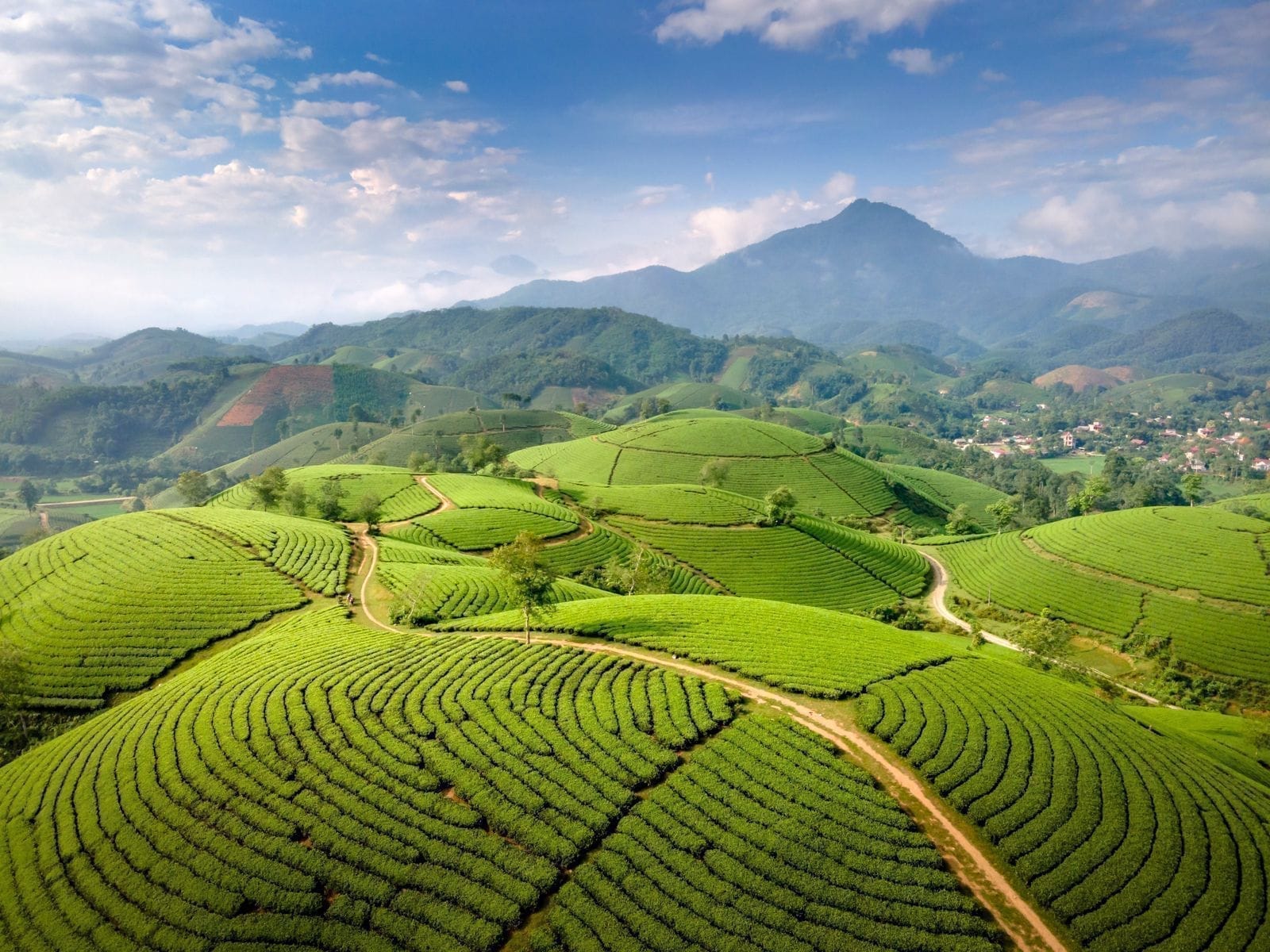
If you're hooked on the farm-view cafes, Choui Fong Tea on the other side of Chiang Rai is a tea-farm view you shouldn't miss.
Plan a full Chiang Rai trip — the mountains, cafes, and where to stay
See the Chiang Rai travel guide →