🔄 Updated 21 Jun 2026
Don Hoi Lot sits at the mouth of the Mae Klong River in Bang Cha Kreng subdistrict, Mueang Samut Songkhram district, only about 5 kilometres from downtown Mae Klong. Drive out of Bangkok along Rama II Road and you'll be there in a little over an hour. The draw is the mudflat sandbar, formed where river sediment meets the sea — at low tide it turns into a flat that stretches as far as you can see, home to the razor clam, a long tube-shaped clam that buries itself in the mud.
What makes this place special is that it can be several things in a single day. Come in the morning to stroll along the seawall and pay respects at the Krom Luang Chumphon shrine, take a boat out to dig clams once the tide drops, head back in for fresh seafood by the beach, then pick up dried seafood to take home. We've pulled together everything you need to know — from how to read the tides to which restaurants Mae Klong locals actually go to.
The tides — the heart of this trip
Don Hoi Lot is only worth visiting at low tide, because when the tide is in the sandbar is completely submerged — all you see is brown muddy water, and you can't walk out or find any clams. So before you set off, always check the tide chart for Mae Klong Bay on the day you're going.
- Best months — March to May, when the tide drops low and stays out the longest. The sandbar shows clearest and is easy to walk on.
- Check the tide chart first — pick a day when low tide falls during daylight, so you have plenty of time to walk the sandbar and dig for clams. You can find tide charts on the Hydrographic Department website or any general tide app.
- Give yourself a buffer — aim to arrive about an hour before the lowest tide, so you can catch a boat just as the sandbar starts to appear.
- If the tide is in — you can still have a good day: eat by the beach, visit the shrine, walk the market. You'll just miss the clam digging.
How to read the tide chart
Around the 13th–15th day of the waxing or waning moon (spring tide), the water swings between high and low the most, and the lowest point is best for walking the sandbar. On the 7th–8th day (neap tide) the water is calmer and doesn't drop as far. Pick a spring-tide day in the dry season and you'll get the widest sandbar.
Want more out of Samut Songkhram? Book tours & activities
Booking online ahead on Klook or GetYourGuide is usually cheaper than the gate and skips the queue. Pick only the experiences you actually want — prices and availability are shown live on each site.
How to dig razor clams
The razor clam is a long, slender clam shaped like a tube, buried upright in the mud — you can spot it by the little holes on the mud's surface. The traditional method locals use is to dip a thin stick, about the size of an incense stick, in limestone paste and poke it down into the hole. The clam gets a sting and pushes itself up, and you lift it out gently — yank too hard and the clam tears apart.
- Gear — a poking stick and limestone paste, sold near the pier for a few dozen baht a set, or locals will often lend you some.
- Getting to the sandbar — catch a boat from the pier in front of the Krom Luang Chumphon shrine out to where the sandbar surfaces. It's a short ride.
- Watch the mud — it's soft and slippery, so wear shoes you don't mind getting wet or go barefoot, and bring water to rinse your feet.
- Take only what you'll eat — dig for the fun of it, no need to gather a lot. Leave the rest to keep breeding.
Straight talk
There are far fewer wild razor clams around here than there used to be — some days you'll only dig up a handful. If you've come specifically to eat razor clams, buying from a beachside restaurant is a surer bet. Think of digging your own as a fun way to get a taste of the fishing-village life rather than something to count on for quantity.
Boat trips to the river mouth and mangroves
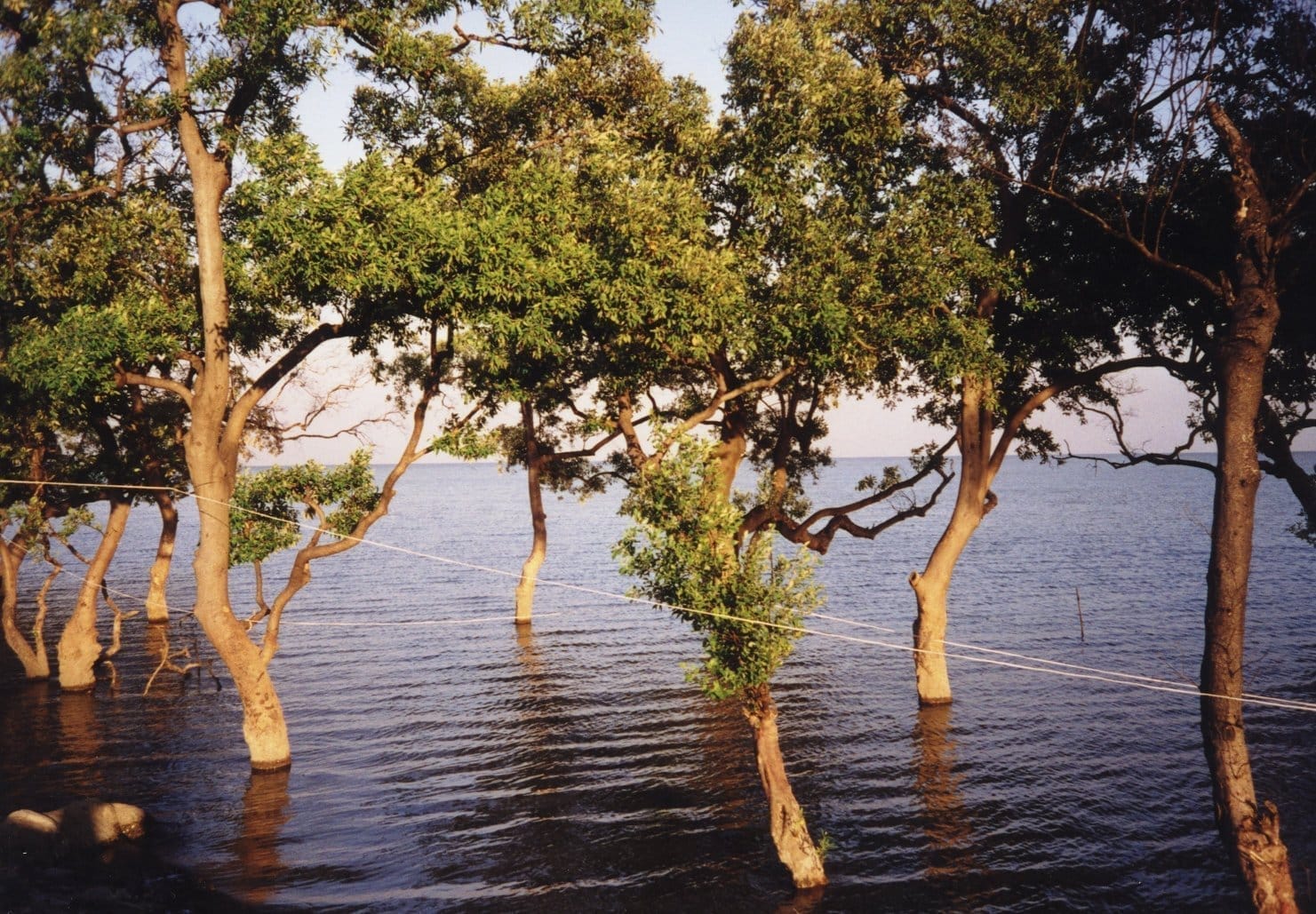
Besides heading out to the sandbar, another popular option is chartering a boat to see the mouth of the Mae Klong River and the mangroves around it. You can arrange a boat at the pier in front of the Krom Luang Chumphon shrine; prices are reasonable and depend on the route and group size.
Clam-digging boat to the sandbar
Drops you at the sandbar at low tide. Share a boat with others for around 50 THB per person, or charter a small one for about 200–300 THB.
River-mouth boat tour
Loops around where the river meets the sea, with views of traditional fishing and stake traps. Around 300 THB for a small group charter.
Mangrove boat tour
Threads through the mangrove thickets to see the river-mouth ecosystem. About 400 THB to charter, seats up to 7 people.
Boat prices are rough figures you'll commonly come across — agree on the price and route with the boat owner clearly before you get on, since different operators and different tide stages charge differently.
Krom Luang Chumphon shrine and the seawall
Right at the entrance to Don Hoi Lot stands the shrine of Krom Luang Chumphon Khet Udomsak, the father of the Royal Thai Navy, revered by fishermen and by anyone who comes to pray for safe travel on the water. Around the shrine is a wide seawall plaza where you can stroll and catch the sea breeze, looking out over the river mouth and the fishing boats. It doubles as a photo spot and the place to arrange boats. The shrine is open roughly 8am–5pm.
Beachside seafood — the places locals actually go
The food is the main reason a lot of people come to Don Hoi Lot. All along the front there's a row of beachside seafood restaurants, with ingredients fresh from Mae Klong Bay — the short, fatty Mae Klong mackerel, blue swimmer crab, prawns, squid, and of course stir-fried razor clams. These are the restaurants and spots whose names come up most often in real reviews.
Krua Khun Pao Don Hoi Lot
A long-running seafood spot that tends to be the first one people think of in this area. You sit right by the sea, shaded by the mangrove line. The dishes people order most are stir-fried razor clams, mackerel sataeria, crab in curry powder, and prawns stir-fried with salt and chilli.
Krua Khun Lin Rim Khlong (Riverside Chu Chi branch)
A local seafood place just before you reach Don Hoi Lot, known for fresh ingredients and unusual dishes. The ones people talk about are five-flavour prawns, steamed crab claws, sweet baby squid, and sea bass fried with fish sauce.
Krua Khun Lin Pak Ao
Another branch of the Khun Lin group, set on the water with a view over the mouth of the Mae Klong. A good spot to settle in for a long seafood meal in the sea breeze.
Don Hoi Lot Samakkhi Market
A zone of ready-to-eat seafood stalls at easy prices — clams, crab, prawns, grilled squid, dried seafood. Good for snacking as you walk and picking up gifts to take home.
Fresh Mae Klong mackerel stalls
The short, bent-necked Mae Klong mackerel is a local signature. Buy fresh steamed mackerel by the basket from the roadside stalls — cheaper than in town, and delicious fried up back home.
Stir-fried razor clam stalls
The signature dish to try if you've made it to Don Hoi Lot — razor clams stir-fried with hot red curry paste and holy basil, fragrant with the sea. You'll find it at nearly every beachside restaurant.
Steamed and grilled crab
Crab from Mae Klong Bay with firm, packed meat — order it steamed with seafood dipping sauce, or grilled. Most beachside spots have fresh crab you can pick out and have weighed by the kilo.
Dried seafood for gifts
Khlong Khone shrimp paste, dried shrimp, salted fish, dried squid, crispy squid — plenty to choose from at the stalls near the entrance. Good to grab as gifts to bring home.
Eat smart
Mae Klong mackerel is so good because it lives in a brackish bay where fresh and salt water mix — short-bodied and full of fat. If you spot a stall with fresh steamed mackerel, buying it to fry at home yourself is better value than buying in town. Most beachside restaurants open around 8am–6pm; come from late morning to afternoon and it's at its liveliest with the freshest catch.
How to get to Don Hoi Lot
- Self-drive — from Bangkok take Rama II Road toward Samut Songkhram, then follow the signs to Don Hoi Lot. About an hour and a half in total, with parking near the shrine.
- Van/coach — ride to downtown Mae Klong, then take a songthaew or motorbike taxi out to Don Hoi Lot, about 5 kilometres.
- Pair it with somewhere else — spend half a day at Don Hoi Lot and easily add Amphawa Floating Market or the Mae Klong Railway Market to the same trip.
Plan a full Samut Songkhram trip — food, sights, and where to stay
See the Samut Songkhram guide →