🔄 Updated 21 Jun 2026
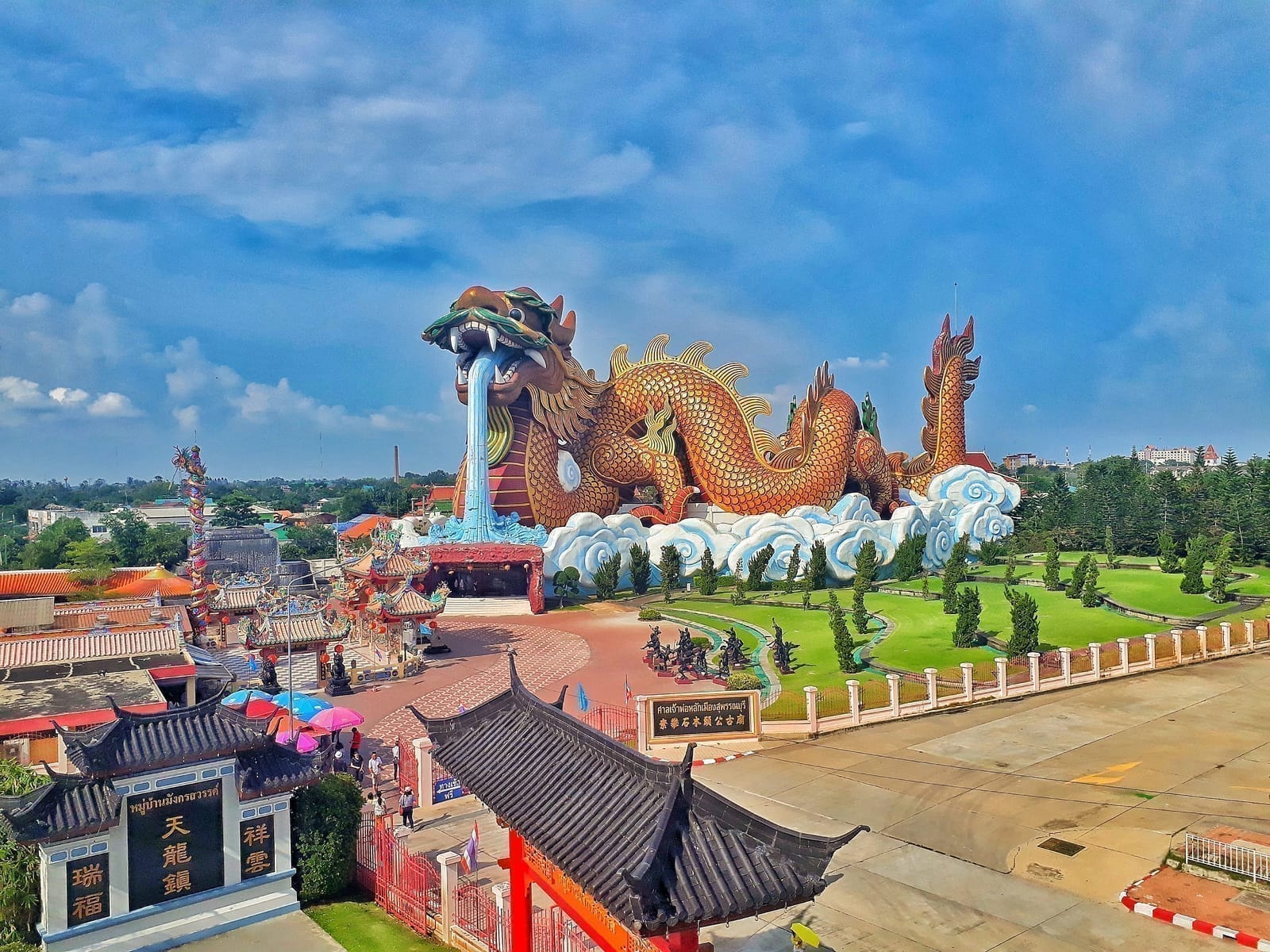
The Dragon Descendants Museum isn't the kind of museum where you wander quietly past glass cases. Instead you walk right inside the dragon, through large staged dioramas room by room, with a guide leading each tour. The story runs from the Chinese myth of how the world began, through the various dynasties and the building of the Great Wall, to the Republic era and the tale of Thai-Chinese immigrants who came and put down roots here. It's a good fit for history buffs, families who want the kids to learn something, and anyone after photos you won't get anywhere else.
Where Heavenly Dragon Park Came From
Heavenly Dragon Park was built in 1996 to mark the 20th anniversary of Thai–Chinese diplomatic relations, on the same grounds as the Suphan Buri City Pillar Shrine. The dragon-shaped building was designed to be both a landmark and a museum in one: 135 metres long, 35 metres tall, and 18 metres wide, with the interior divided into 18 exhibition rooms tracing more than 5,000 years of Chinese civilisation.
The scene a lot of people talk about is in the Qing dynasty room, which recreates the moment "Puyi" — the last emperor of China — took the throne at just three years old, seated as the Son of Heaven. It's done on a grand scale and carries a genuinely solemn atmosphere.
Want more out of Suphan Buri? Book tours & activities
Booking online ahead on Klook or GetYourGuide is usually cheaper than the gate and skips the queue. Pick only the experiences you actually want — prices and availability are shown live on each site.
What Walking Inside the Dragon Is Like
Visits run in timed tours, each one led by a guide the whole way through, because many rooms have lighting and sound cues staged scene by scene. Walking all the rooms takes about an hour and 20 minutes. The path follows the dragon's body, starting with the creation of the world and of humankind in Chinese belief, then moving dynasty by dynasty up to the modern era.
- Tour times — on weekdays the tours are spaced about an hour apart, while on Saturdays, Sundays, and public holidays they run more frequently, roughly every 20 minutes. If you're coming on a weekday, check the schedule first so you don't end up waiting around.
- A guide on every tour — you walk as a group and listen as you go, rather than exploring on your own. Good if you want the context explained.
- The building is air-conditioned — a comfortable, cool walk, unlike being out in the open at the shrine.
- Photos allowed — many of the staged rooms are big and striking, so there's plenty to shoot, but try to keep pace with the group.
Tip
The building is closed every Tuesday, and tour times are limited. If you're coming specifically for the museum, aim for the morning or early afternoon to leave room for the wait. Saturdays and Sundays have more frequent tours and longer opening hours.
Ticket Prices and Opening Hours
Adult Ticket (Thai)
Museum admission including a guide for the whole tour, walking all 18 rooms inside the dragon.
Child Ticket (Thai)
Child rate for Thai visitors — good for a family visit, letting kids see the historical scenes for real.
Adult Ticket (Foreigner)
Rate for foreign adult visitors.
Child Ticket (Foreigner)
Child rate for foreign visitors.
- Opening hours — Monday–Friday 10:00–16:00 · Saturday–Sunday 09:00–17:00 · closed every Tuesday.
- Location — on the grounds of the Suphan Buri City Pillar Shrine, Malaiman Road, Muang district, Suphan Buri province.
- Call to check tour times — 0 3552 6211–2 (it's worth phoning ahead to confirm tour times and opening days, as hours can shift during festival periods).
An honest note
The ticket prices are fairly steep compared with other attractions in Suphan Buri, and you can only enter on a timed tour. It pays off if you're coming as a group or a family that enjoys history. But if you just want to photograph the dragon from outside and pay respects at the shrine, that part is free to walk around without buying a ticket.
Suphan Buri City Pillar Shrine
Before or after the museum, don't skip the City Pillar Shrine, which sits on the same grounds. This shrine is more unusual than most city pillars: the pillar itself is a low-relief stone slab carved with Vishnukarma in the Khmer style, roughly 1,300–1,400 years old, and there's an Avalokitesvara Bodhisattva that villagers found and enshrined here more than 150 years ago. Suphan Buri locals have revered it for generations.
In 1904, King Chulalongkorn (Rama V) made an incognito royal visit and performed a rite at this shrine, donating from his personal funds to build a retaining wall around the shrine mound, a low surrounding wall, and an extension of the shrine in Chinese pavilion style. That's why the shrine still carries its blended Thai–Chinese character today.
Prayers & Bad-Luck Rituals
A popular spot for making wishes and the bad-luck-year (chong) ritual, especially around Chinese New Year, when the crowds are at their thickest.
Free to Walk Around
The shrine area and the dragon plaza outside are free to walk and photograph. Only the museum inside the dragon charges admission.
Planning a Half-Day at Heavenly Dragon Park
Shrine + Museum
On to Suphan Buri's Food
Getting There and Parking
- From Bangkok — about a 1.5–2 hour drive via Malaiman Road into Suphan Buri town. The park is right on the main road, with the dragon visible from a distance.
- Parking — there's a parking area on site, fairly large, though it can fill up by late morning on weekends.
- Combine with other sights — it's close to the town centre, so you can carry on to Banharn–Jamsai Tower, the temples in town, or out to Sam Chuk Market in the same trip.
Want a full-day Suphan Buri itinerary with food and places to stay
See the Suphan Buri travel guide →