🔄 Updated 21 Jun 2026
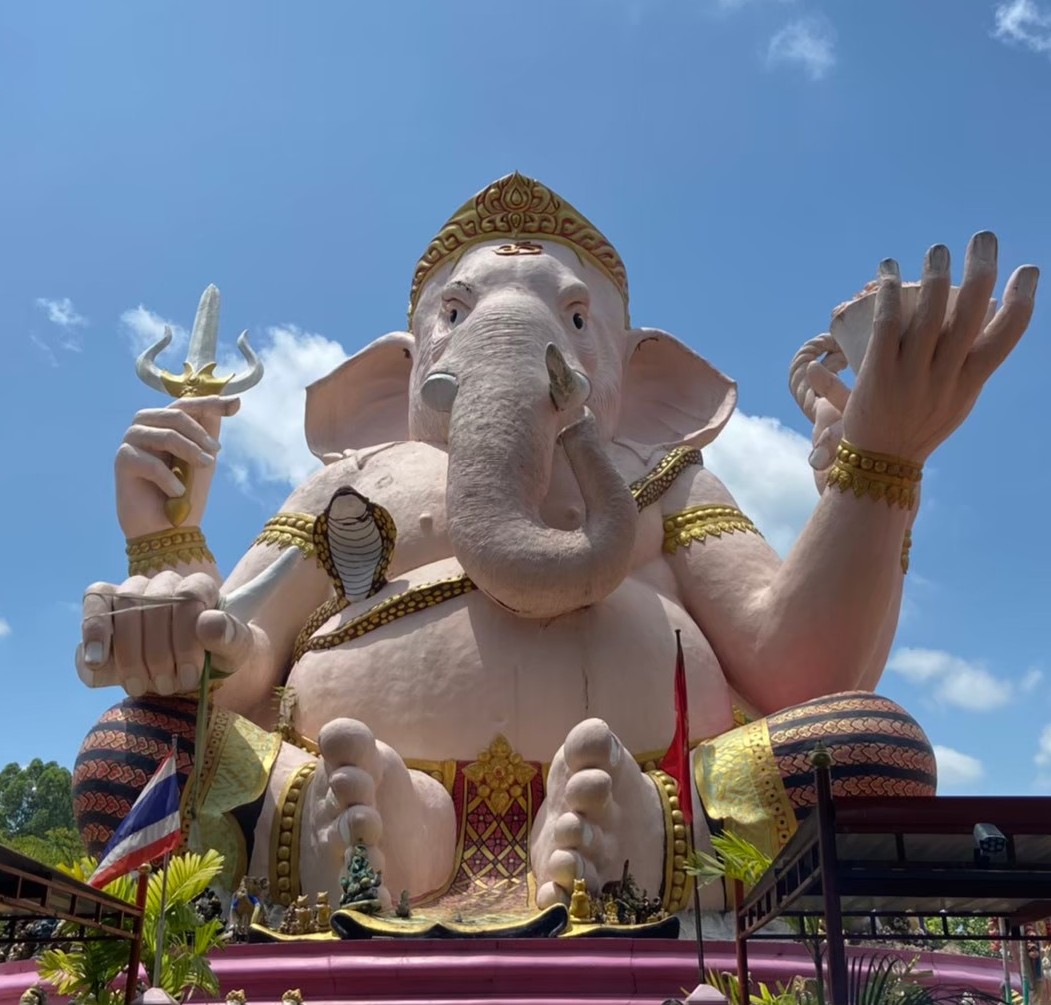
Ganesha Park sits in Sarika sub-district, Mueang Nakhon Nayok district, about 5 km from town along the road toward Sarika and Nang Rong waterfalls. It's a place of worship and practice that enshrines a giant Ganesha statue, along with a museum collecting Ganesha in 108 forms and several other deity figures. The thing most people come for is the giant sculpted statue, said to be the largest in Thailand — you can spot it before you've even finished the drive in.
The Giant Ganesha — Two Statues, Two Poses
The heart of the park is a pair of large sculpted Ganesha statues, standing in the same area but each in a different pose with a different meaning. You can walk to both spots in one loop.
The Seated Blessing Pose
This is the one most people recognize first — Ganesha seated, one hand raised in blessing. It's the pose people most often come to for success in work, study, and trade. It's so large you have to tilt your head back to take it in, and it makes the most striking photo backdrop in the whole park.
The Reclining Pose (Ganesha at Rest)
Ganesha lying on his side in a relaxed posture, representing happiness, abundance, and the rest that follows success. People usually come to this one to ask for happiness in life, family, and health. It's a rarer pose than the seated one, which is why so many visitors make a point of photographing it.
See both poses
A lot of people pay respects at the seated statue and head straight back out, missing the reclining statue tucked around the other side. Walk the full loop first so you catch both poses — and the photo angle most people overlook.
Want more out of Nakhon Nayok? Book tours & activities
Booking online ahead on Klook or GetYourGuide is usually cheaper than the gate and skips the queue. Pick only the experiences you actually want — prices and availability are shown live on each site.
How to Ask for a Blessing — Whisper to Mushika
The custom people most like to follow is whispering your wish through Mushika, Ganesha's mouse attendant. The belief is that Mushika carries your wish and whispers it to Ganesha for you. The steps are simple — just follow along.
- Pay your respects to Ganesha first — settle your mind and say your full name to yourself.
- Walk over to Mushika — the mouse figure is near the main statue.
- Cup your hand over one of the mouse's ears — to keep the wish from leaking out the other way, then whisper your wish into the other ear.
- Ask for what matters to you — people usually ask about work, trade, and love. Keep it clear, short, and to the point.
About the offerings
Popular offerings to Ganesha are fresh milk, sweets, sugarcane, fruit, and bright-colored flowers. There are stalls selling offering sets in front of the park, so if you didn't bring anything you can buy on the spot — a set runs about 50–100 THB.
The 108-Form Museum and Other Corners
Beyond the two giant statues, the park has a few other spots worth a slow wander — good for anyone into spiritual sites and the history behind the beliefs.
The 108-Form Museum
A collection of Ganesha in many different forms and styles, showing how many meanings one deity can carry. It's an easy walk-through and great for photographing the details.
Hall of the Great Deities
Enshrines the three great deities — Brahma, Vishnu, and Shiva — for anyone who wants to pay respects to all of them in one place.
The Ancient Black Ganesha
An old figure said to be several hundred years old, another spot people make a special point of visiting to ask for a blessing.
Photo Spots
- In front of the seated statue — step back far enough to fit the whole statue in, and shoot from a low angle to get all that grand scale in the frame.
- The reclining statue — the angle people overlook; shoot horizontally to fit the whole figure in and it comes out better.
- Early morning or late afternoon — the low, soft light brings out the statue's color far better than the harsh, flat light of midday.
- Watch out for crowds on weekends — if you want a clean shot with no one in it, go right after opening in the morning, when it's quietest.
Hours, Entry Fee, and Dress Code
- Hours — open daily, roughly 08:00–18:00 (on some weekdays it starts at 09:00). Worth checking before you go if you're planning an early start.
- Entry fee — free, no admission charge. The only cost is the offering set, which is up to you.
- Dress code — it's a sacred site, so dress modestly, nothing too short or too revealing.
- Parking — there's a lot on site; on busy weekends you may have to park a little farther out.
Getting There
The park is on the Sarika–Nang Rong road in Sarika sub-district, about 5 km from Nakhon Nayok town, near the Pracha Kasem market junction. It's easy to reach by both private car and public transport.
- By car from Bangkok — about 2 hours; drive into Nakhon Nayok town, then turn toward Sarika Waterfall. Drop a pin for "Ganesha Park Nakhon Nayok" in Google Maps and it takes you right there.
- Route within the province — from town, take Route 3049 (Sarika–Nang Rong) and watch for the giant statue beside the road; a little farther on you reach Sarika and Nang Rong waterfalls.
- No car — take a minivan or bus into Nakhon Nayok town, then connect by songthaew or hire a local motorbike/taxi out to the park.
- Easy add-on — it's on the same route as Sarika and Nang Rong waterfalls, so you can pay respects in the morning and hit a waterfall later in the day.
Half a day is plenty
It takes about 1–1.5 hours to see the whole park, so it pairs well with a waterfall or a cafe on the same day — no need to set aside a full day for just this one stop.
Plan a full Nakhon Nayok trip — waterfalls, cafes, and food
See the Nakhon Nayok travel guide →