📝 Written 2 Jul 2026 · ✅ Fact-checked 3 Jul 2026 · prices and schedules can change — check with the operator before booking
Nakhon Nayok's biggest advantage is distance. The town center sits about 105 kilometers from Bangkok, and the main route is Highway 305, which runs alongside Khlong Rangsit through Thanyaburi, Ongkharak, and Ban Na before reaching the town. It takes roughly an hour and a half to two hours depending on traffic. Because it's this close, many Bangkok residents visit Nakhon Nayok as a day trip, leaving in the morning and returning in the evening, hitting the waterfalls and the dam in a single day without needing to stay overnight. The province has no airport and no train line, so the main ways to get there are all road-based: self-driving, scheduled vans, and intercity buses.
What really needs some thought isn't just how to reach the town center, but how to get around the province, because highlights like Nang Rong Waterfall, Sarika Waterfall, Khun Dan Prakan Chon Dam, and the Nakhon Nayok side of Khao Yai are all outside town and scattered in different directions. Public transport in the area is very limited, so choosing how to travel also depends on how many people are going, whether you want to hit multiple spots, and whether driving yourself is convenient. Below is an overview comparison in a single table, followed by details on each method.
| Method | Route | Cost | Best for | Watch out for |
|---|---|---|---|---|
| Self-drive from Bangkok | Highway 305 Rangsit–Ongkharak into town, ~1.5–2 hrs | Round-trip fuel about ฿500–800 / sedan + toll fees | Families and groups of friends who want to hit multiple waterfalls and the dam | Traffic around Rangsit · some roads up to the waterfalls/dam are steep and narrow |
| Van (Victory Monument / Future Park Rangsit–Nakhon Nayok) | Expressway/Highway 305 into town, ~1.5–2 hrs | Cheap · Future Park Rangsit route about ฿70–80 · Victory Monument route slightly higher | Solo or duo travelers with no car who want to reach town quickly | Only drops you in town — you'll need to arrange onward transport to waterfalls/the dam · limited luggage space |
| Intercity bus (BKS) | Departs Mo Chit 2, arrives at Nakhon Nayok Bus Terminal | Cheapest · roughly tens of baht to just over a hundred per trip | Budget travelers with luggage who aren't in a rush | Fewer departures than vans · still need onward transport within the province |
| Grab / private taxi from Bangkok | Door-to-door from your accommodation in Bangkok | Most expensive · round-trip/full-day charter runs from around a thousand to several thousand baht | Groups splitting the cost, seniors, or anyone who'd rather not drive or transfer | Agree on a set price up front · hard to hail a return ride within the province |
| In-province songthaew | Runs within town and along market/village routes around town | Very cheap · tens of baht per trip | Travelers staying within town or nearby on a tight budget | Doesn't run directly to the waterfalls/dam · infrequent and stops running by early evening |
| Motorbike rental in the province | Ride yourself around town and up to the waterfalls/dam | ~฿250–350 / day + fuel | Confident riders with a full license who want independence and value | Roads up to the waterfalls are steep with curves · requires a license + helmet |
Self-drive from Bangkok
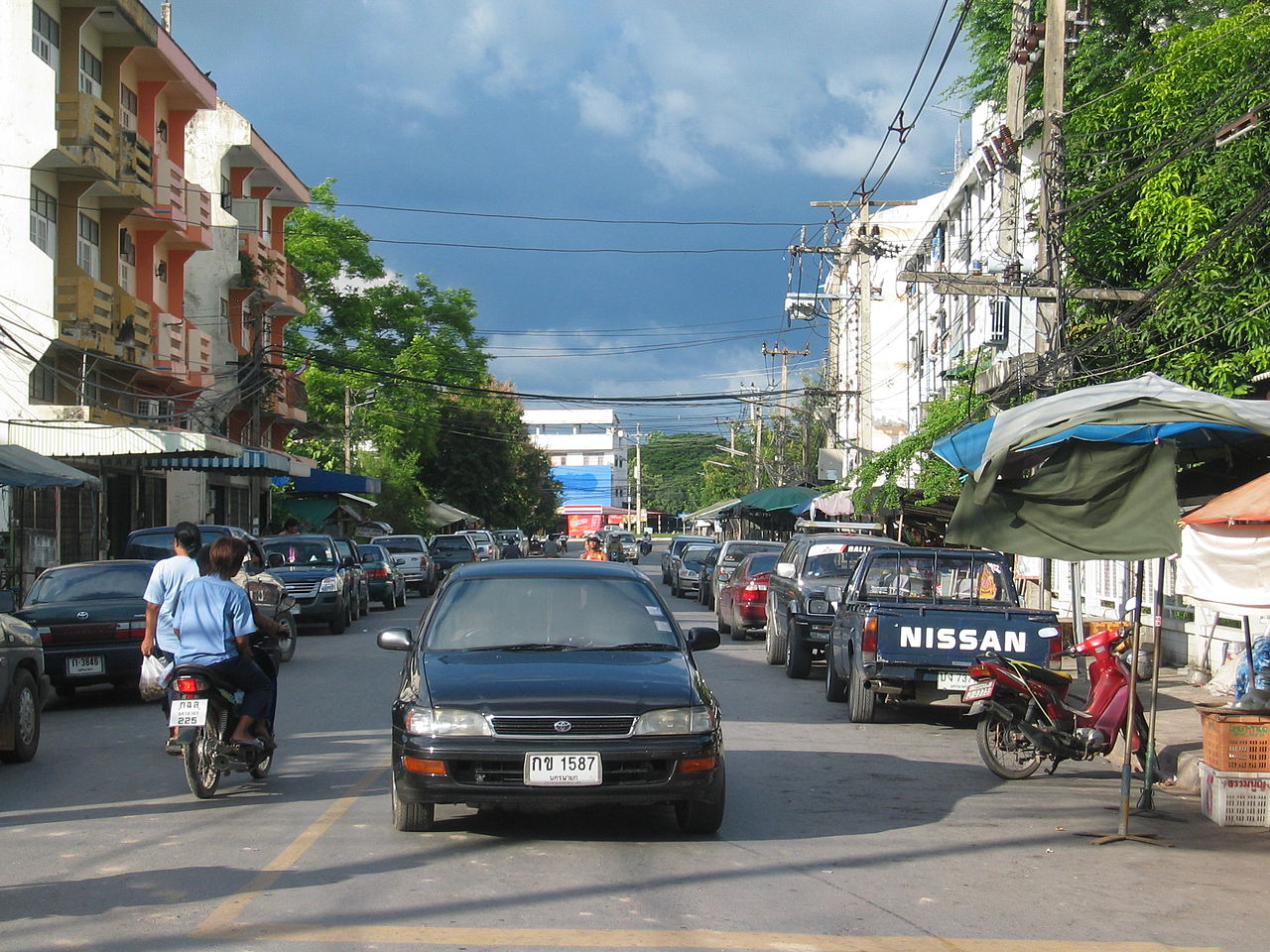
For Nakhon Nayok, self-driving is the most flexible and cost-effective option if you're traveling with several people, since the main attractions are scattered outside town in different directions — Nang Rong Waterfall and Sarika Waterfall to the north of town, Khun Dan Prakan Chon Dam deeper toward the mountains, and cafés and viewpoints on the Khao Yai side. With your own car, you can hit them all at your own pace without waiting for rides or transferring multiple times. The main route from Bangkok is Highway 305, which runs alongside Khlong Rangsit through Thanyaburi, Ongkharak, and Ban Na into Nakhon Nayok town — about 105 kilometers, taking roughly an hour and a half to two hours to drive. Those without their own car can rent one in Bangkok; round-trip fuel runs about 500–800 baht per sedan, and once split among a group, it's often cheaper than taking a van and then arranging transfers within the province.
One thing to keep in mind is that the Rangsit and Don Mueang areas can get congested, especially on long-weekend mornings when many people head out of the city at once. Leave early to avoid traffic and to see the waterfalls while the water is still clear and before the crowds arrive. Another thing many people don't anticipate is that some roads up to the waterfalls and the dam are steep, narrow mountain roads with continuous curves. Drivers should be comfortable with steep inclines and should check their brakes before setting out. During the rainy season, the road surface gets slippery and may have runoff crossing it, so extra caution is needed. Parking at popular waterfalls fills up quickly on holidays — arriving late may mean parking far away and walking in. Planning your stops in a loop by direction will save you from backtracking and wasting time and fuel.
- Most flexible — visit multiple waterfalls, the dam, and cafés in a single day
- Traveling with several people and splitting fuel costs is often cheaper than a van plus transfers within the province
- Reaches spots public transport doesn't, like Khun Dan Prakan Chon Dam and the Khao Yai side
- Leave on your own schedule — suits both day trips and overnight stays
- Traffic possible around Rangsit–Don Mueang, especially on long-weekend mornings
- Some roads up to the waterfalls and dam are steep, narrow, with continuous curves
- Parking at popular waterfalls fills up fast on holidays — late arrivals may have to park far away
Van (Victory Monument / Future Park Rangsit–Nakhon Nayok)

Scheduled vans are the go-to option for people without a car who want to reach Nakhon Nayok town quickly, with plenty of departures throughout the day. The busiest pickup point is the intercity van stop opposite Future Park Rangsit, with fares into town running around 70–80 baht. Vans depart frequently through the daytime and stop running in the evening. If you're staying in inner Bangkok, take the BTS/MRT or a bus to Rangsit first to connect. Another option is the route from Victory Monument, which takes the tollway expressway through Rangsit into Nakhon Nayok — convenient for those staying in the central city, with fares slightly higher than the Rangsit route based on distance. Both routes take roughly an hour and a half to two hours if traffic isn't heavy, which is fast and affordable relative to the distance.
The key limitation to know before deciding is that vans only drop you in Nakhon Nayok town itself — they don't run out to Nang Rong Waterfall, Sarika Waterfall, or Khun Dan Prakan Chon Dam outside town. Once you get off the van, you'll still need to arrange onward transport to those spots, and local options are quite limited — you'll have to rely on songthaews, motorbike taxis, a rented motorbike, or a chartered car. Anyone planning to focus on the waterfalls and the dam should plan the connecting leg carefully before setting out, or risk a long wait for transport in town. Also, van seating is fairly tight with limited luggage space, so it may not suit those carrying a lot of belongings. Seats fill up quickly on long weekends, so arrive early at the pickup point or allow time to wait for the next departure.
- Very cheap for the distance — Future Park Rangsit route about ฿70–80
- Frequent departures throughout the day, quick to town if traffic is light
- No need to drive yourself — good for solo travelers or couples without a car
- Both Future Park Rangsit and Victory Monument routes available depending on where you're staying
- Only drops you in town — you'll need to arrange your own onward transport to the waterfalls/dam, which is hard to find
- Tight seating and limited luggage space — inconvenient if you're carrying a lot
- Seats fill up fast on long weekends, and the last return departure is in the early evening
Intercity bus (BKS)

Intercity buses are the cheapest option for travelers who aren't in a rush and have luggage. Most services depart from Mo Chit 2 Bus Terminal's northern and northeastern routes, arriving at Nakhon Nayok Bus Terminal. Fares run roughly tens of baht to just over a hundred per trip — cheaper than or comparable to vans, but with more legroom and an under-bus luggage compartment, making it more comfortable if you're carrying a large bag or a lot of items. It suits travelers planning to stay overnight who don't want to hold their belongings on their lap the whole ride. The cabin also feels more spacious than a van, making the longer ride a bit more comfortable.
The trade-off is fewer departures than vans — services don't run every 20 minutes like the Rangsit van route, so check the schedule before heading to the terminal, especially for the last return trip, which tends to run out in the early evening. Like vans, buses only drop you at the bus terminal in town — they don't go to the waterfalls or the dam. Once you arrive in Nakhon Nayok, you'll still need to transfer to a songthaew, motorbike taxi, or chartered car to reach the attractions. Anyone planning to focus on the waterfalls should factor the cost and time of that connecting leg into their plans, or the savings from the cheap ticket may be eaten up by transfer costs and waiting time.
- Cheapest fare, ideal for budget travelers
- More legroom than vans and has under-bus luggage storage
- More comfortable for the longer ride — good for those with lots of luggage or staying overnight
- Departs from Mo Chit 2, the hub for northern routes, easy to reach
- Fewer departures than vans — check the schedule and plan around the return trip
- Only drops you at the town bus terminal — still need onward transport to the waterfalls/dam
- Slightly slower overall due to stops along the way
Grab / private taxi from Bangkok

If comfort is the priority and you'd rather not deal with connecting transport, hailing Grab or chartering a taxi from Bangkok to Nakhon Nayok is a straightforward choice. The car picks you up at your accommodation and drops you exactly where you need to go, door to door, no dragging luggage to a bus stop or waiting for a van departure. It's especially suited to families with seniors or young children, travelers with a lot of luggage, or groups of friends who can split the cost. The roughly 105-kilometer distance takes about an hour and a half to two hours, the same as other methods, but with a level of convenience public transport can't match. Some travelers choose to charter a car for the full day so the driver can take them around to the waterfalls and dam, which neatly solves the problem of hard-to-find connecting transport within the province.
The clear trade-off is price — this is the most expensive method of all. A one-way trip or round-trip charter runs from around a thousand to several thousand baht depending on distance and time, and chartering for a full multi-stop day pushes the price even higher, so it's only good value if you're splitting it among several people. Another thing to watch for is hailing a return ride from within Nakhon Nayok — app-based rides are scarce and unreliable in the provinces, especially around waterfalls or the dam outside town, and you may wait a long time or be unable to get one at all. The safer approach is to agree clearly with the driver from the start on whether it's a round trip or a full-day charter, specifying the stops, wait times, and total price before setting off, so you're not left gambling on a return ride or dealing with runaway costs.
- Most convenient — door to door, no driving or transfers needed
- Great for families with seniors/young children and those with a lot of luggage
- Full-day charter can cover the waterfalls and dam, solving the province's transfer problem
- Splitting the cost among a group makes the per-person price reasonable
- Most expensive of all the options — not worth it for solo or two-person trips
- Hard to hail a return ride within Nakhon Nayok, especially around waterfalls/the dam
- Must agree on the charter price and terms clearly up front to avoid overruns
In-province songthaew

Songthaews are the basic form of public transport within Nakhon Nayok town, running scheduled routes within the municipal area and along lines connecting the town to nearby markets and villages. Fares are very cheap, in the tens of baht per trip, and you can flag one down or get off anywhere along the route. The main draw is the low price and a taste of getting around like a local. It suits travelers who've already arrived in town by van or bus and want to explore around town — stopping at markets, restaurants, temples, or cafés along the songthaew's route — without needing to charter a car or rent a motorbike.
What's important to understand up front is that songthaews are built for travel within and near town — they don't run up to Nang Rong Waterfall, Sarika Waterfall, or Khun Dan Prakan Chon Dam, which are outside town on mountain roads. Anyone planning to visit those natural attractions can't rely on songthaews alone and will still need a motorbike taxi, a rented motorbike, or a chartered car. Songthaews also run infrequently and usually stop by early evening; some routes wait until the vehicle is full before departing. Ask locals, the driver, or your accommodation which route goes where you're headed, where it stops, and what time the last one runs, so you don't get stranded unable to get back in the evening. In short, songthaews are best used as a supplement for getting around town cheaply, rather than a primary way to reach the waterfalls and the dam.
- Very cheap, tens of baht per trip — the most economical way to get around town
- Flag it down or get off anywhere along the route it covers
- A taste of getting around the way locals do
- Good to pair with a van/bus arrival for exploring markets, temples, and cafés in town
- Doesn't reach the waterfalls/dam outside town — still need other transport
- Infrequent and usually stops running by early evening, risk of getting stranded
- Some routes wait until full before departing, making timing hard to control
Motorbike rental in the province

Renting a motorbike is a great option for travelers who've already reached Nakhon Nayok by van or bus and want to explore independently, without paying for an expensive charter or waiting on songthaews. Standard scooters rent for about 250–350 baht a day from shops in town and near accommodations. The upside is agility, easy parking, and the ability to ride yourself up to Nang Rong Waterfall, Sarika Waterfall, or Khun Dan Prakan Chon Dam — far cheaper than chartering a car for the day. It suits solo travelers or couples who already ride confidently and enjoy stopping for photos at their own pace. Fill up at a gas station in town before heading up into the hills, since there are few stations along the roads up to the waterfalls.
To be direct, riding a motorbike carries more risk than traveling by car. Many of the roads up to the waterfalls and the dam in Nakhon Nayok are steep mountain roads with continuous curves, and during the rainy season the surface gets slippery and may have runoff crossing it. Riders unfamiliar with steep inclines should be especially careful or choose another method. By law you need a motorcycle license, and foreign tourists should carry an International Driving Permit (IDP) that covers motorcycles. Always wear a helmet — it's required by law and genuinely can save your life in an accident. Before taking the bike, test both brakes, check the tire pressure and lights, and photograph any existing scratches to avoid disputes when returning it — choose a shop that takes a cash deposit rather than holding your passport. If you're not confident in your riding skills or you're traveling as a group, chartering a car with a driver will be safer and more comfortable.
- Agile and independent — reach the waterfalls/dam yourself without chartering a car
- Much cheaper than a full-day charter, about ฿250–350 per day
- Easy to park and stop for photos at your own pace
- Good for solo travelers or couples who arrived by van/bus and want to explore independently
- Roads up to the waterfalls/dam are steep with curves and slippery in the rain — riskier than traveling by car
- Requires a license (foreigners should carry an IDP) and a helmet at all times
- Few gas stations along the mountain roads — fill up in town beforehand
Which should you choose?
Thinking about group size and how far you plan to travel makes the choice easier · Traveling with several people and want to hit multiple waterfalls/the dam: Self-driving is the most flexible and best value once you split fuel costs, or charter a Grab/taxi for the full day if no one can drive · Solo or a couple, no car, want to get there fast: Van — the Future Park Rangsit route is about ฿70–80, departs frequently, and reaches town quickly · Tight budget with luggage, not in a rush: Intercity bus (BKS) — cheapest with more legroom · Once you're in town, if you're only exploring the town itself, use a songthaew for tens of baht; if you want to ride up to the waterfalls/dam yourself and know how to ride, rent a motorbike for about ฿250–350 a day — nimble and affordable, but you'll need a license and caution on the mountain roads · Whichever you choose, Nakhon Nayok is close enough for a comfortable day trip — leave in the morning, return in the evening, and you can still cover all the highlights.
Book Activities & Tours in Advance
Nakhon Nayok is a haven for adventure and nature — rafting, waterfalls, and day tours. Booking online ahead of time is more convenient.
Where to Stay in Nakhon Nayok?
Choose a riverside resort or a scenic spot at the foot of the mountains, close to the waterfalls and dam — convenient for both day trips and overnight stays.
Search Hotels on AgodaOnce you've planned your travel, pick a well-located hotel for easy access to the waterfalls and dam.
See well-located hotels in Nakhon Nayok →