🔄 Updated 21 Jun 2026
Most people come to Nakhon Phanom to pay respects at Phra That Phanom or to stroll along the Mekong, but those who stop at Ban Na Chok often leave with more than they came for. This isn't just the old home of a famous figure — it's a community of Vietnamese descent that has been part of this town for over a hundred years, still keeping its own stories, food and way of life alive. We'll walk you through what there is to see, how to take it in so the story makes sense, and how to fit it into a full day out.
How Uncle Ho ended up in Nakhon Phanom
Between 1924 and 1931 (roughly seven years), Ho Chi Minh came to live in the Isan region of Thailand, which at the time had Vietnamese émigré communities in several towns including Nakhon Phanom, Sakon Nakhon and Udon Thani. He used Ban Na Chok as one of his bases to coordinate with overseas Vietnamese, plan, and organise the movement to free Vietnam from French colonial rule — living under an assumed name and blending in with the villagers in a quiet, simple way.
The story locals still pass down is that Uncle Ho was polite, hardworking and got along well with everyone — he helped out in the fields, planted trees and taught the children to read. That's exactly what makes Ban Na Chok more than just "a place where someone famous once stayed"; it's a genuine part of the community's memory.
Want more out of Nakhon Phanom? Book tours & activities
Booking online ahead on Klook or GetYourGuide is usually cheaper than the gate and skips the queue. Pick only the experiences you actually want — prices and availability are shown live on each site.
What there is to see in the village
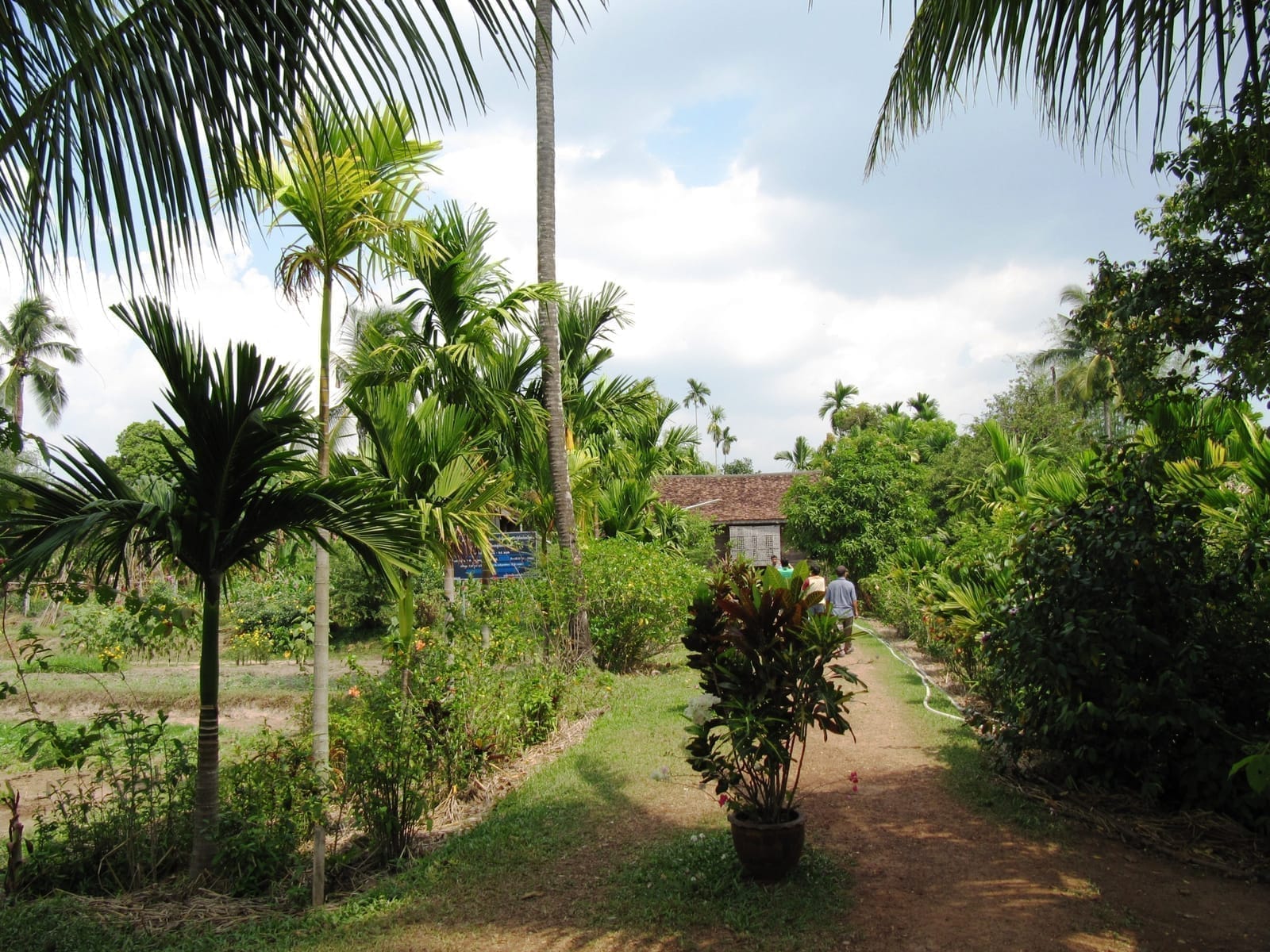
The site splits roughly into two parts: Uncle Ho's original house and the grounds around it, and the friendship village museum built later on. Walking through both takes about 1–1.5 hours to cover it all.
- Uncle Ho's original wooden house — a single-storey raised wooden home, with everyday belongings on display inside that give you a picture of how simply he lived back then.
- The coconut and star-fruit trees Uncle Ho planted himself — still standing in the grounds, and a spot many people come specifically to see because it makes the story feel tangible.
- The rice barn and old-style houses — reflecting the blend of rural Isan and Vietnamese life of that era.
- The Thai-Vietnamese Friendship Village Museum — laid out in three parts: the history of Thai-Vietnamese relations, Uncle Ho's biography with a replica of his house in Hanoi, and information on places to visit around Nakhon Phanom.
- The Vietnamese-style replica house — a recreation of Uncle Ho's birthplace and home in Vietnam, sitting alongside the Thai wooden houses so you can compare the two.
A little background
The museum officially opened on 21 February 2004, with both the Thai and Vietnamese prime ministers attending the ceremony. So it isn't just a tourist stop — it's a diplomatic symbol between the two countries.
The Thai-Vietnamese story hidden in this village
The Vietnamese community in Nakhon Phanom didn't begin with Uncle Ho's era — people had been migrating in well before that, with another big wave arriving during the Indochina wars. They settled, traded, and became so woven into the town that you can't tell them apart anymore. The clearest traces around town are the colonial-Vietnamese shophouses along the Mekong, the Vietnamese Memorial Clock Tower, and Vietnamese food you can find everywhere in the city.
Ban Na Chok is the heart of this story. Every year there's a ceremony marking Uncle Ho's birthday, drawing Vietnamese people living in Thailand as well as those who fly in from Vietnam. Time your visit right and you'll catch an atmosphere quite different from an ordinary day.
Vietnamese food around the village
One of the best things about visiting Ban Na Chok is eating authentic Vietnamese food made by the community that owns the culture. Along the road into the village there are noodle and Vietnamese-food shops open for visitors. The dishes worth trying are the local ones that Vietnamese people in Nakhon Phanom actually eat.
Nem nuang (Vietnamese grilled pork rolls)
Grilled minced-pork patties wrapped in rice paper with fresh vegetables and rice noodles, dipped in a thick peanut sauce — the first thing most people think of when they talk about Vietnamese food in Nakhon Phanom.
Kuay jap yuan (Vietnamese rolled noodles)
Round noodles in a clear broth topped with minced pork, meatballs and fried shallots — light and mellow in the Vietnamese style, quite different from the thick-broth kuay jap you may know.
Fresh spring rolls & moo yor
A snack that goes well with coffee or tea; the moo yor (Vietnamese pork sausage) is firm and freshly made, and you can buy some to take home too.
Straight talk
The shops in the village are family-run, so opening hours are less reliable than places in town — some sell out before early afternoon. If you really want to eat here, come mid-morning to noon. If you'd rather sit somewhere bigger with a nicer atmosphere, head back into town, where there are more Vietnamese restaurants to choose from.
Making a full day of Ban Na Chok
Ban Na Chok itself takes no more than half a day to walk through, so it pairs well with other spots in town. Here's a 2-day plan to show how it slots into a Nakhon Phanom trip.
Ban Na Chok + the old Vietnamese quarter
Pair with the area's other sights
What to know before you go
- Opening hours — open daily, 08:30–16:30 (some sources list 08:00–18:00). Times can shift on holidays or special events, so leave yourself a buffer and come between morning and early afternoon.
- Entry fee — free, no ticket required, though there is a donation box to help maintain the site.
- Getting there — from town head towards Sakon Nakhon on Highway 22 for about 4 km; there are signs marking the turn-off into the village. A private car is easiest, but if you don't have one you can hire a local car for the round trip.
- Dress and etiquette — this is a historic site that Vietnamese visitors hold in high regard, so dress modestly and be respectful when walking and taking photos inside the houses.
- A special time to visit — around mid-May there's a ceremony marking Uncle Ho's birthday, far livelier than an ordinary day, though it's also a lot busier.
Want a full trip plan for Nakhon Phanom?
See the Nakhon Phanom travel guide →