🔄 Updated 21 Jun 2026
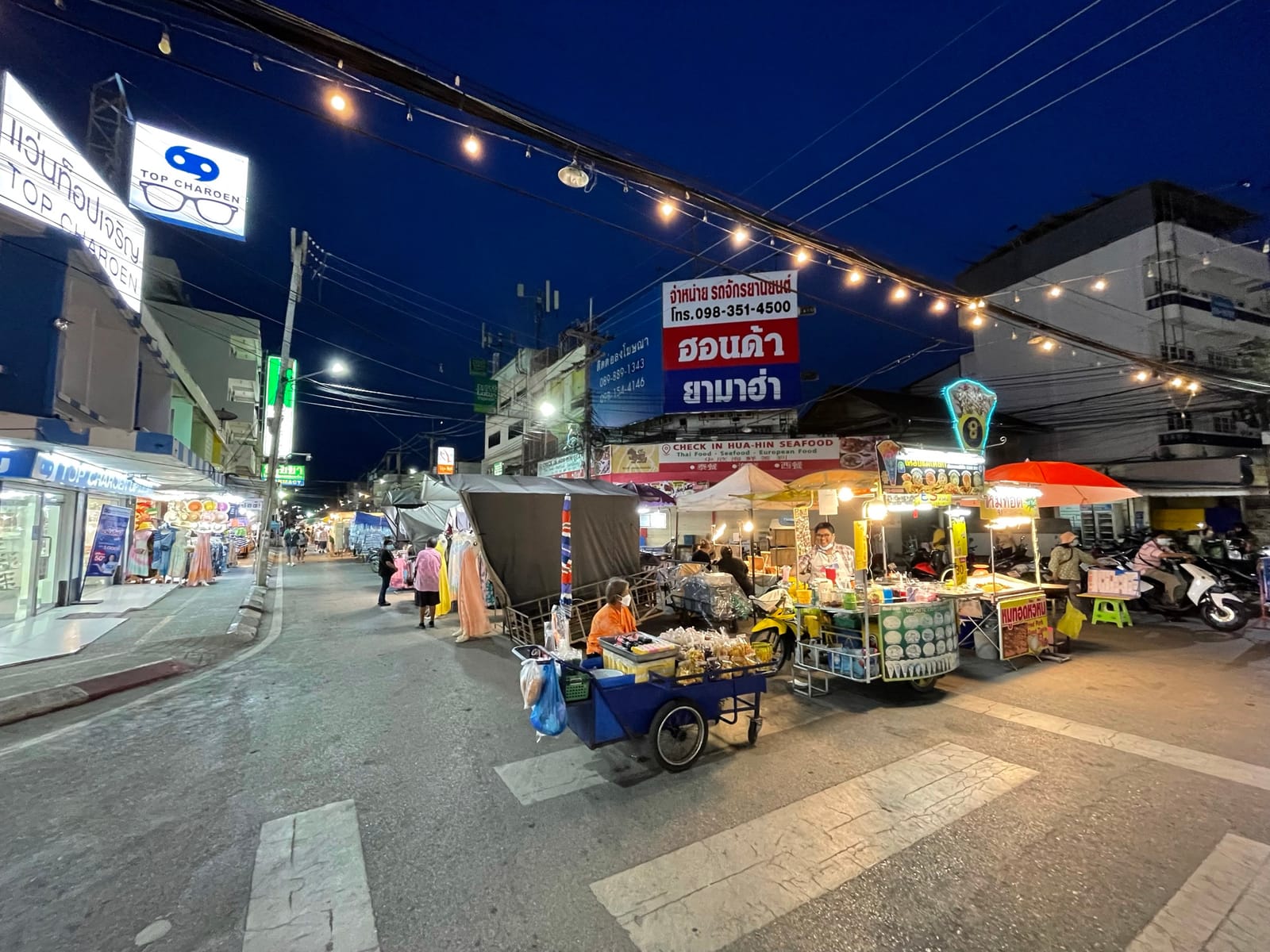
The Hua Hin Night Market runs along Dechanuchit Road in the center of town, an easy walk from the train station or the beach. In the evening the whole street turns into a walking market with open-front seafood stalls and tables set out along the road, grill carts, street-food stands, and dessert stalls, mixed in with clothing and souvenir stalls. It's a market where locals actually eat, and tourists pack it out every night too.
Two things are worth knowing before you go. First, most seafood stalls sell by weight — the price per kilo is on a sign but can be hard to read, so ask the price and have it weighed in front of you before they cook it. Second, most carts and small stalls take cash; a few accept PromptPay transfers, but not all, so small bills will keep things moving.
What to eat at Hua Hin Night Market — our top 10
The list below is ordered by how much each is a highlight of the market and by real reviews, not a fixed ranking of who tastes best, since each stall is strong in its own way. Prices are rough ranges as of early 2026 and can shift with the season and ingredient costs — especially seafood, which moves with the market.
Charcoal-grilled seafood (open-front stalls mid-market)
The star of the night market. Several open-front seafood stalls sit in a row down the middle of Dechanuchit Road, with river prawns, blue crab, squid, shellfish and fish laid out on ice. Pick what you want and they grill it over charcoal or steam it fresh, served with a punchy seafood dipping sauce. The appeal is choosing it yourself — just ask the price per kilo and watch the weighing closely before you order.
Uncle Jah's Kitchen (Crua Lung Jah Seafood)
A seafood spot in the night market that comes up a lot. The dishes people order most are scallops baked with garlic butter, grilled prawns, and curry-powder stir-fry — bold and well-seasoned. Prices are more reasonable than the seafood places in town, and you sit at the edge of the market watching the crowd go by. A safe pick if you'd rather not gamble on price.
Pork satay & grilled chicken skewers
The grill carts with the best smell in the market. Charcoal-grilled pork satay with peanut sauce and cucumber relish, plus grilled chicken, beef, and meatball skewers. These are the snacks to graze on while you walk — a few baht a stick, easy to order and easy to eat. Good to open with before you dive into the seafood.
Som tam, grilled chicken & sticky rice
Stalls pounding fresh papaya salad in a wooden mortar, paired with grilled chicken and hot sticky rice — a proper, filling, cheap meal. Order it Thai-style, with fermented fish (pla ra), or a seafood version. Plenty of locals stop here. Spice it to your liking — just tell the cook how many chilies.
Oyster omelette (hoi tod / or suan)
A hot pan, oysters or mussels fried with batter until crisp, topped with egg and bean sprouts, eaten with sriracha. A street-food favorite you'll find at several stalls here. Order it crispy (hoi tod) or soft and wet (or suan), whichever you like.
Pad thai & hot-pan oyster omelette
Fresh-prawn pad thai fired in a big pan over high heat, wrapped in egg or with bean sprouts as you like — soft noodles, balanced flavor. It's the one-plate dish foreign visitors order most: not expensive, just the right amount to fill you. Good to line your stomach as you graze from stall to stall.
Roti, fried banana & hot fried snacks
Roti stalls — crisp outside, soft inside, drizzled with condensed milk and sugar, with banana or egg added — alongside fried banana, fried taro, fried sweet potato, all fried to order and hot. Easy snacking as you walk, a dessert-snack that kids and adults both go for.
Grilled squid & flattened dried squid
Big squid grilled over charcoal and brushed with seafood sauce, or flat, crisp grilled squid on a stick. The smell hits you as you walk past. A seafood snack that's lighter on the wallet than crab or prawn, easy to chew on as you wander the market.
Fruit smoothies & coconut water
Stalls blending fresh fruit — mango, watermelon, passion fruit — plus cold coconut water, great for cooling off on a muggy night. They go well with all that bold, grilled seafood. Ask for less sugar if you don't want it too sweet.
Bua loy, Thai sweets & coconut ice cream
Finish the meal with Thai desserts — warm bua loy in ginger syrup, khanom krok, tray sweets, or old-style coconut ice cream with palm seeds, peanuts and sticky rice. A sweet stop before you head back, all easy on the wallet so you can try a few.
How to order seafood without getting overcharged
Seafood at the night market is mostly sold by weight. Before you order, always ask the price per kilo and ask to see it weighed in front of you. If you're ordering prawns or crab by the piece, ask roughly how much each one comes to before you agree, so there's no surprise at the till. Comparing 2–3 stalls before you pick is fine — prices swing a fair bit.
Want to taste deeper? Try a Hua Hin food tour or cooking class
Half a day with a local who knows the lanes — or cooking a dish yourself — teaches you more than just eating. Book ahead on Klook or GetYourGuide.
Other Hua Hin night markets — if you want a change of scene
If you've had your fill of the night market, Hua Hin has several other night markets, each a different style. Pick by the night and your mood.
Tamarind Market
In the Nong Kae area, under a big tamarind tree. Known for grilled skewers — pork ribs, grilled pork neck — at good value, with a relaxed vibe. Open Thursday–Sunday evenings.
Art · Live musicCicada Market
An arts-and-crafts market with live music, open Friday–Sunday. Food runs on a coupon system and prices sit a touch above the usual markets. Good for a relaxed wander and photos.
Seafood · MusicHua Hin Night Market (Soi 72 / Railway zone)
Another downtown night-market zone with seafood stalls and live-music bars like Railway Bar, open daily until midnight. An easy continuation from the main night market.
How to get there · best time to go
The night market is on Dechanuchit Road in the center of town, a few minutes' walk from Hua Hin train station or the beachfront road. If you're staying in town, you can mostly walk. If you drive in the evening, parking is hard to find, so it's best to park a bit further out and walk in, or take a motorbike taxi or taxi to make it easier.
- 5–6pm — stalls are just setting up, ingredients are fresh, the crowd is thin, easy walking, and you get first pick of the seafood.
- 7–9pm — peak hours, busiest, charcoal grills going full tilt, but the popular seafood stalls may have a wait for a table.
- After 9pm — the crowd starts thinning and some items begin to sell out, but it's still walkable until around 11pm.
- Long weekends / holidays — very crowded, and Hua Hin room rates swing up sharply, so booking a place in advance pays off.
Budget and paying
If you mostly graze on street food and grilled items (satay, som tam, pad thai, fried snacks, dessert), a meal runs about THB 150–300 per person. But if you go all in on grilled seafood — river prawns, crab, squid — it climbs to THB 400–1,000+ per person depending on what you order. Most stalls take cash, some take PromptPay; bring enough cash to be safe.
Straight talk
The Hua Hin night market gets packed and the aisles are narrow at peak — if you don't like crowds, try early evening or a weekday · some seafood stalls overcharge if you don't ask first, so always compare prices and watch the weighing · if you want fresh seafood at a more certain price, the sit-down seafood restaurants in town are an option, but the night-market atmosphere is a charm you won't get from a table service place.
Plan a full eating-and-sightseeing trip to Hua Hin
See the Hua Hin travel guide →