🔄 Updated 21 Jun 2026
Hua Hin sits in Prachuap Khiri Khan province, about 196 km from Bangkok — roughly 2.5 to 3 hours by car or van. It's an old-school seaside town with sandy beaches, night markets, cafes, and Khao Takiab hill for the view. Because it's close and easy to reach, Bangkok folks pile in on weekends. Three things to sort out beforehand will keep your trip from going sideways: when to go, how safe the sea is, and when to book your room.
When Is the Best Time to Visit Hua Hin
The short answer is the cool season, roughly December to February. This is when rain is least likely, the skies are clear, and the weather is comfortable — around 30–33°C in the day, a touch cooler in the early morning and at night. The sea is calmer than at other times of year, the water is clearer, and walking the beach, climbing Khao Takiab, or sitting at a seaside cafe is easy. It's Hua Hin at its best.
- Dec–Feb (cool season) — the best window. Almost no rain, clear skies, calm sea, clear water, comfortable air. It's full high season, so it's busy and room rates climb to match.
- Mar–May (hot season) — strong sun and humid heat, hitting 34–36°C in the day, but the sea is still swimmable. If you come now, swim in the morning and late afternoon and dodge the midday sun.
- Jun–Oct (rainy season) — fewer people, lower prices, but rain comes in spells and some days it rains all day. The sea starts to pick up waves and the water gets murkier.
- Nov (end of monsoon) — a transition. Some years still see heavy rain and rough seas with murky water. The second half of the month usually starts improving as the cool season sets in.
If you have the choice
The sweet spot is December to February — least rain, calmest sea, clearest water of the year. But if you want to avoid the crowds and peak room rates, skip the big long weekends like New Year and Makha Bucha and go midweek instead. It's easier on both the crowds and the wallet.
Long Weekends — How Far Ahead Should You Book
Because Hua Hin is so close to Bangkok, everyone heads there at once on long weekends. The result is two things you can count on: room rates spike and the roads jam. Over New Year, Songkran, or any run of consecutive holidays, room rates can nearly double over a regular weekday, and the good rooms fill up fast. Planning ahead saves money and saves you the gamble.
- Big long weekends (New Year, Songkran) — book around 4–6 weeks ahead or more. Sea-view rooms and the popular resorts go first; the later you book, the more you're left with only the expensive rooms or the far-out locations.
- Regular weekends — booking 1–2 weeks ahead is usually enough. Rates run higher than weekdays but there are still options.
- Weekdays (Tue–Thu) — rates can drop around 20–30% and rooms are much easier to choose from. If you can take time off, this is the best value.
- Check the traffic — heading out of Bangkok on Friday evening and coming back Sunday afternoon means heavy traffic. Pad your timing or leave earlier than usual.
A money-saving trick
Compare the same room across a few apps, then check the rate as you shift the check-in date. You'll see a big gap between weekdays and holidays — sometimes moving your check-in from Friday to Thursday by a single night is visibly cheaper. Booking early in high season usually gets you a better rate and a better room.
Swimming Safely at Hua Hin — Read the Flag First
Most of Hua Hin's beaches are long stretches of sand with gentle waves in the cool season — but don't get complacent. At certain times, especially the end of the monsoon and the rainy season, the surf picks up, the water turns murky, and there can be rip currents. You can't judge that with your eyes, so always check the lifeguards' warning flag before you go in.
- Red flag — no swimming. The waves are strong or there's a dangerous current. Trust the flag, even if the water looks calm.
- Yellow flag — caution. You can go in but stay careful and don't head far from shore.
- No lifeguard — some beaches, or some times of day, have no staff on duty. If you're not confident, don't go deep, especially with kids or weak swimmers.
- Watch for jellyfish — jellyfish come close to shore at certain times. If you see a warning sign or someone gets stung, stay out and ask the staff.
Simple rules at the beach
Swim when other people and lifeguards are around. Don't go in at dusk or in a deserted spot. Keep kids within arm's reach the whole time. And if a current pulls you out, don't fight it by swimming straight back to shore — swim parallel to the beach until you're out of the current, then head in.
Climbing Khao Takiab — Watch Out for Grabby Monkeys
Khao Takiab sits at the southern end of Hua Hin beach, with a temple and lovely sea-view spots — a regular stop for many visitors. But the hill is home to a lot of monkeys, and they're used to people enough to grab things outright. Food bags, water bottles, sunglasses, or a loosely held phone can all get snatched. Know how to handle them and you can enjoy it just fine.
- Don't carry visible food or plastic bags — monkeys associate bags with food and may lunge the moment they see one. Stash snacks in a closed, sealed bag.
- Mind your valuables — hold your sunglasses, hat, and phone tight or put them away. If you're taking photos, don't set things down beside you.
- Don't stare or provoke — staring a monkey straight in the eye is a challenge. Don't approach the babies and don't tease them.
- Don't feed them outside designated spots — the more you feed, the bolder and more aggressive they get around people. If something gets grabbed, don't fight over it — let it go and back away; it's safer.
If you're with kids
Hold their hand and don't let them carry food or snacks on the hill. Monkeys approach children more easily because they're small and things slip from their grip. Climbing Khao Takiab in the daytime when it's busy feels safer than going up when it's quiet.
How to Get to Hua Hin — Sort Out Transport First
One nice thing about Hua Hin is that there are several easy ways to get there. From Bangkok you can self-drive, take a van, a coach, or the train — pick based on budget and convenience. It's about 196 km and roughly 2.5–3 hours on a normal day, but allow extra time on long weekends when the roads jam.
- Self-drive — Bangkok to Hua Hin is about 196 km, 2.5–3 hours via Rama II Road then Phetkasem. It's the most flexible option and makes it easy to explore further out, like Khao Sam Roi Yot.
- Van/bus — several departures a day from the Southern Bus Terminal, tickets in the low hundreds of baht, dropping you in central Hua Hin. Good if you don't drive.
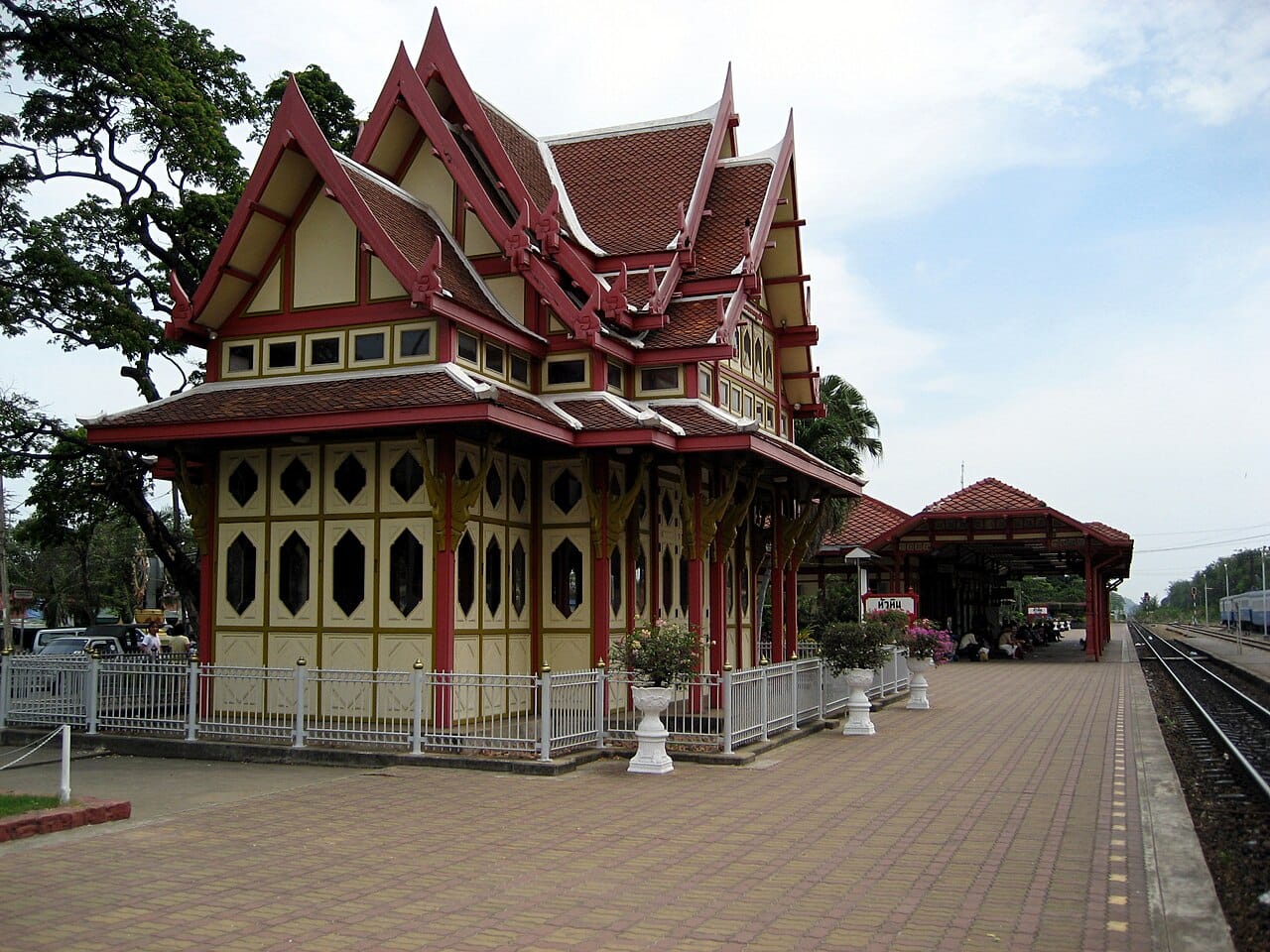
- Train — riding the train to Hua Hin's pretty old wooden station is an experience many people love, but it takes longer than the road. Check the schedule before booking.
- Getting around town — there are songthaews, taxis, and some ride-hailing apps. If you want to move around freely and head out of town, having your own car or a rental is more convenient.
How Much Does a Day in Hua Hin Cost
Costs in Hua Hin swing a lot with the season and the holidays. Honestly, the line item that moves the most is the room — a low-season weekday versus a high-season long weekend can be nearly double. Food and activities stay fairly steady. Here are rough per-person, per-day figures, not counting travel from Bangkok.
- Accommodation — budget hotels/resorts start around 600–1,000 THB/night; mid-range by the sea runs about 1,500–3,000 THB. Long weekends can add nearly half again. Splitting a room in a group brings it down.
- Food — made-to-order shops and street food run 60–150 THB a meal; seaside seafood and cafes cost more. Three meals plus snacks is around 400–700 THB/day.
- Attraction entry — the beaches and Khao Takiab are free, and the night markets cost nothing to walk. A water park or sheep farm charges entry from a hundred to several hundred baht — budget per your plan.
- Getting around town — songthaews or ride-hailing in town run tens to low hundreds of baht per trip. A car rental is about 1,000–1,500 THB/day plus fuel.
Budget summary
An easygoing Hua Hin trip works out to roughly 900–2,000 THB per person per day (room split two ways + food + activities) on a regular cool-season weekday. Over long weekends the budget can climb because room rates peak. Planning your check-in dates well is what saves you the most.
What to Wear and What to Pack
Hua Hin is an easy trip — pack light and beachy. Focus on breathable clothes, beach gear, and sun protection, plus something modest for the temple on Khao Takiab. If you're coming in the cool season, bring a light layer for the early mornings and evenings, which start to get chilly.
- Swimwear + towel — you're at the beach, so bring a swimsuit and a change of clothes. Many resorts have pools too.
- Sun protection — the beach sun is strong; sunscreen, a hat, and sunglasses are needed in both the cool and hot seasons.
- Modest clothes for the temple — at Khao Takiab and Wat Huay Mongkol, covering your shoulders and knees is more appropriate. A small shawl is handy to carry.
- A light layer for the cool season — from Dec–Feb the seaside breeze is cool in the early morning and at night; a thin long-sleeve or a hoodie is enough.
- Comfortable walking shoes — Khao Takiab has stairs and steep paths, so sneakers or strap-on sandals beat slippery flip-flops.
- Personal meds + motion-sickness pills — convenience stores and pharmacies in town have the basics, but bring your own meds. If you get carsick, pack something for the winding roads up the hill.
What people often forget
A power bank and a small waterproof bag. Using maps and taking photos all day drains the battery fast, and down at the beach or up on Khao Takiab, your valuables belong in a closed, sealed bag — waterproof, sandproof, and monkey-proof all at once.
Sketch Out a Rough Plan Before You Go
Hua Hin's sights are clustered close enough to walk or make short drives between. Roughing out a loose plan before you go makes the timing easier. Here's a rough 2-day, 1-night plan you can adjust to your energy and taste.
Arrive + beach + night market
Khao Takiab + cafe + head back
Adjust for your time
If you have more than 2 days, add a trip outside town — Khao Sam Roi Yot National Park, Pa La-U Waterfall, or Monsoon Valley Vineyard. All are within driving distance of Hua Hin. Budget for entry fees and travel time too.
Quick Recap Before You Set Off
- Best time — the cool season, Dec–Feb: least rain, calm sea, clear water. November is still end-of-monsoon and rough some years.
- Long weekends — book 4–6 weeks ahead. Peak rates and traffic jams; if you can, go midweek instead.
- Swimming — always check the warning flag first. Red means stay out. Watch for rip currents and jellyfish.
- Khao Takiab — watch out for grabby monkeys; keep food and valuables sealed away and don't provoke them.
- Budget — roughly 900–2,000 THB per person per day, not counting long-distance travel. The room is the line item that swings most with the season.
Ready? See the full picture of Hua Hin before you plan in detail
See the Hua Hin travel guide →