🔄 Updated 21 Jun 2026
Indochina Market is a reason plenty of people stop in Mukdahan rather than just passing through. The town sits on the Mekong directly across from Savannakhet in Laos, and the two sides have traded across the river for ages — so goods from Laos, Vietnam, and China all flow in and pile up at this market: clothing, kitchenware, ceramics, dried foods, souvenirs. On top of that you'll find local pieces like the hand-woven silk and mudmee made by Mukdahan weavers tucked in among them. Altogether it's a market you can happily browse for half a day.
To be straight with you, Indochina Market isn't polished like a market in a big city. It's a real working market where locals come to buy everyday things, with the busy, bustling feel of a border market. What sets it apart is the riverside location and the imported goods you won't find in other provinces. Come here and you get both your souvenirs and a river view in one trip.
Where is Indochina Market and when is it open?
The market is on Samran Chai Khong Road in Si Bun Rueang sub-district, Mueang Mukdahan, right by the Mekong in front of Wat Si Mongkhon Tai. It's only about 2–3 km from the town centre — under ten minutes by car, and an easy walk from the riverside promenade. The market is open every day, though hours vary by stall: some open at first light, but late morning through evening is when you'll find the fullest selection.
- Location — Samran Chai Khong Road, Si Bun Rueang sub-district, Mueang district, Mukdahan; on the Mekong in front of Wat Si Mongkhon Tai
- Opening hours — Open daily, roughly 08:00–18:00 (some stalls start earlier; late morning to afternoon has the fullest selection)
- Entry fee — None, free to enter; browse at both wholesale and retail prices
- Distance from town — About 2–3 km, 5–10 min by car, and you can walk straight on to the riverside promenade
- Parking — Lots around the market and along the road; quiet on weekdays, so come a bit earlier on weekends
When's the best time to walk it?
For an easy, uncrowded stroll, come on a weekday morning. For the lively atmosphere with the food in full swing, come on a weekend evening — that's when the food and grill stalls come out in force, so you can shop and then roll straight into dinner by the river.
Want more out of Mukdahan? Book tours & activities
Booking online ahead on Klook or GetYourGuide is usually cheaper than the gate and skips the queue. Pick only the experiences you actually want — prices and availability are shown live on each site.
Which zones to walk, and what you'll find
The market is loosely split into zones by type of goods, and you can cover almost all of it in a single loop. Here's a rundown of what each zone is known for, so you can plan where to hit first.
Clothing & apparel zone
The biggest pile of imported goods in the market — clothes, blankets, towels, hats, socks, all at easy wholesale prices, good for buying several at a time. This is the zone where locals actually come to stock up on everyday wear.
Household & kitchenware zone
Kitchen gear, ceramics, plates, bowls, thermoses, small electrical bits — lots of Chinese goods, cheaper than the mall. Fun to browse, and some items you simply can't find in other provinces.
Dried foods & souvenirs zone
Mu yo, naem, Chinese sausage, dried fish, Lao coffee, Vietnamese sweets, and dried goods from across the Mekong — easy to pack and ideal to take home as gifts.
Local hand-woven textiles zone
Silk, mudmee, and hand-woven cotton from Mukdahan and the surrounding area — genuine local pieces mixed in among the imports. A great choice for a special souvenir.
Souvenirs worth taking home — ranked by what shoppers actually buy
These are the things people walking Indochina Market take home most often, ordered from the local items you should grab first down to the imports you buy for fun. Prices are rough ranges as of early 2026 and are negotiable by quantity — buy a lot and you'll usually get the wholesale rate.
Mu yo & Vietnamese naem
Mukdahan's number-one souvenir — firm-textured mu yo (Vietnamese pork sausage) and just-sour-enough naem, with several stalls to compare prices. Tell the stall you're taking it back to another province and they'll pack it tight and tell you how many days it keeps.
Mudmee & local silk
A genuine local piece worth taking home — hand-woven mudmee and silk in Isan patterns, dense weave and lovely colours, great as a special gift or to keep for yourself. Price depends on the pattern and how fine the work is.
Lao coffee & Lao tea
Bold-roasted coffee from the Lao side plus herbal teas — a favourite for the drinks crowd. Light, easy to pack, and cheaper than buying in Bangkok.
Vietnamese & Lao sweets
Dried treats and sweets that come over from across the Mekong — some you won't find in other provinces. Worth buying a few to share; pick stalls that make them fresh each day so you get them crisp.
Imported clothing & blankets
Wholesale-priced imports that locals genuinely buy — clothes, blankets, towels. Buy several and you can haggle. Better for household basics than fashion; the appeal is value for money.
Ceramics & Chinese tableware
Chinese goods cheaper than the mall — plates, bowls, coffee cups, with patterns nice enough for home use. Good for anyone who likes kitchen pieces. Mind the trip home since they break easily — ask the stall to wrap them against knocks.
Dried & fermented Mekong fish
Local dried goods from Mekong fish — salty, fragrant, and long-keeping, great for anyone who likes country cooking and good to take home to cook with. Ask the stall to pack it separately so the smell doesn't spread to other things in your bag.
Kitchenware & odds and ends
Thermoses, bags, toys, miscellaneous imports you stumble on and walk away with. Prices run from tens to a few hundred baht — good for small bits and pieces you never planned to buy.
How to haggle without the awkwardness
The imports and clothing zones are open to haggling — the more you buy, the closer you get to wholesale. A polite "any discount if I take a few?" works fine. Dried foods and woven textiles tend to be fairly fixed, with only a little room. Don't push too hard with small stalls, since their margins are thin.
Right on the Mekong — what to pair with the market
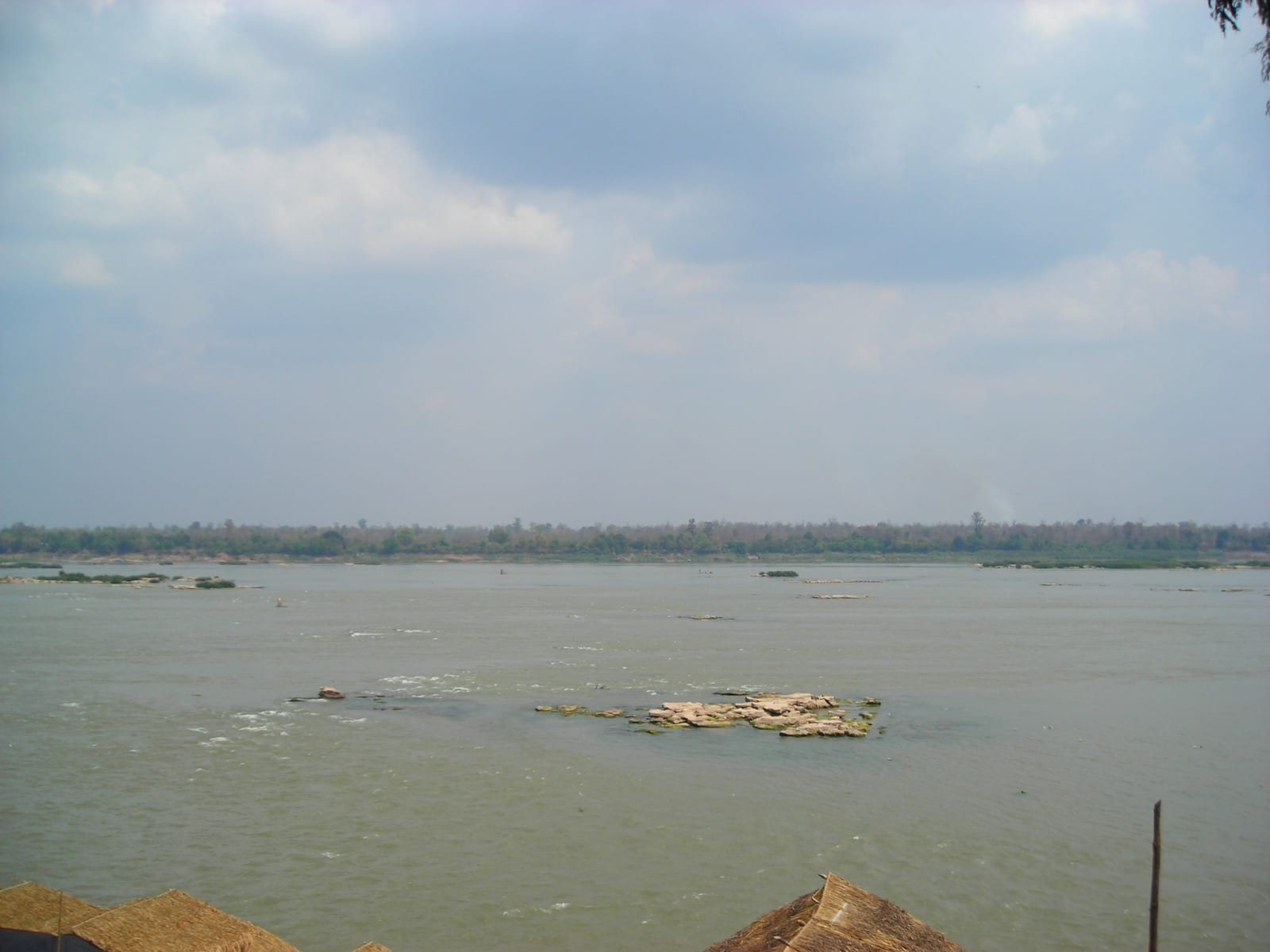
The best thing about Indochina Market is that it's right on the Mekong, so when you're done shopping you can step straight out to the water. There are photo spots looking across to Savannakhet in Laos; in the evening the light is lovely and the breeze cool — a good place to sit and rest before finding dinner.
- Mukdahan riverside promenade — walk straight on from the market, catch the cool breeze, and shoot the river view across to Laos
- Wat Si Mongkhon Tai — right in front of the market; drop in to pay respects before or after your walk
- Ho Kaeo Mukdahan Tower — a high-up viewpoint over the town and the Mekong, not far away and an easy drive on
- Second Thai–Lao Friendship Bridge — cross over to visit Savannakhet, if you've brought your passport
Shopping with a plan — 2 days in Mukdahan
If you have two days, here's how to time it so you catch Indochina Market both in the easy-going morning and in the lively evening, and pair it with the other riverside sights without rushing.
Weekend evening, when the market is at its busiest
Easy morning, focused on local finds
Good to know before you go
- Bring plenty of cash and small notes — many of the small stalls take cash only; some accept transfers, but not all
- Imports are open to haggling, and cheaper the more you buy — but don't expect brand-name goods; the point is value over mall-grade quality
- Dried foods like mu yo and naem have a shelf life, so if you're taking them far, ask the stall how many days they keep and whether they need refrigeration
- For ceramics and other fragile items, have the stall wrap them against knocks before they go in your bag, so there's no regret when you get home
- The market is on the river and the midday sun is strong, so bring a hat or umbrella and save the riverside walk for the evening when it's more comfortable
Plan a full day of eating and shopping along Mukdahan's Mekong
See the Mukdahan travel guide →