🔄 Updated 21 Jun 2026
If you had to sum Kalasin up in one line, it's a place with three stories layered on top of each other. The first is dinosaurs, because this is where the most complete plant-eating dinosaur bones in the country were dug up. The second is nature, with the huge Lam Pao Dam and the Phu Phan range running into the province. The third is Phu Thai culture and the hand-woven Praewa silk with its incredibly fine patterns. We've grouped the sights around these three themes to make planning easier.
For dinosaur fans — Phu Kum Khao and the Sirindhorn Museum
The whole reason most people come to Kalasin is the dinosaurs. This site sits in Non Buri sub-district, Sahatsakhan district, about 28 km from town, roughly a 40-minute drive. It's home to both the real excavation pit and the biggest museum of its kind in Thailand.
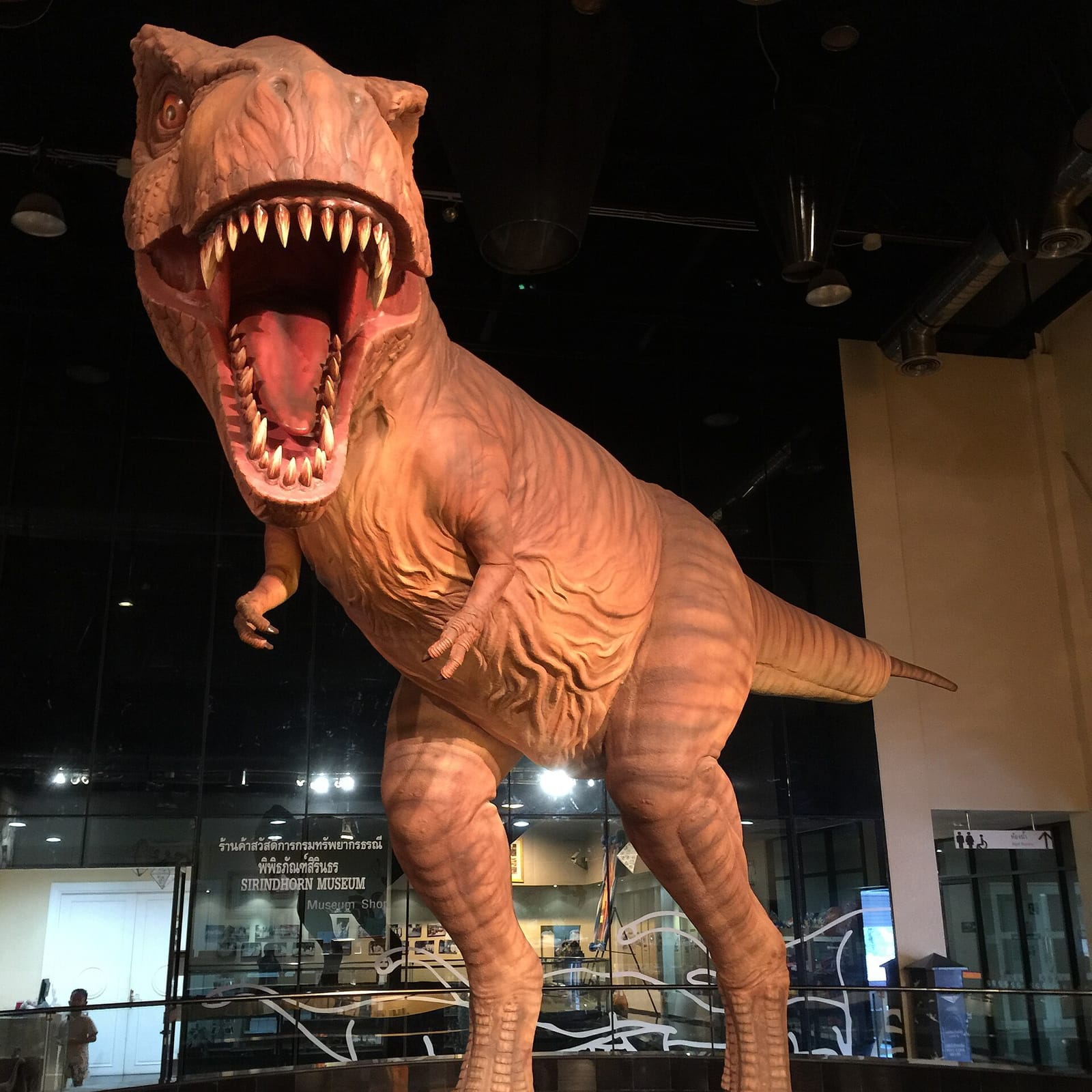
Sirindhorn Museum (Phu Kum Khao Dinosaur Research Center & Museum)
The most complete dinosaur museum in Thailand, opened in 2007. Life-size skeleton replicas, plus exhibits on the origins of the planet and life. You can easily spend the better part of a day here, and it's great for kids.
Phu Kum Khao dinosaur excavation pit
On the hillside behind the museum, this dig turned up the bones of more than seven plant-eating dinosaurs — over 700 pieces in all — laid out in rock around 130 million years old. It's just a short walk up the slope.
Wat Phutthanimit (Phu Khao) — the Phu Khao reclining Buddha
Near Sahatsakhan, this temple has a reclining Buddha carved into the rock without the usual flame-shaped crown — an unusual sight. Easy to tack on after Phu Kum Khao.
Check before you go
The Sirindhorn Museum normally opens Tuesday–Sunday, roughly 9am–5pm, and closes on Mondays (except public holidays). It gets very busy over New Year and long weekends, so mornings are more pleasant for walking around. There's a small admission fee for adults, and children and seniors usually get a discount. Prices can change, so check the official page before you travel.
Want more out of Kalasin? Book tours & activities
Booking online ahead on Klook or GetYourGuide is usually cheaper than the gate and skips the queue. Pick only the experiences you actually want — prices and availability are shown live on each site.
For nature lovers — Lam Pao Dam and Phu Phan
Once you're done with the dinosaurs, the other half of Kalasin is nature. Lam Pao Dam is one of the largest earthen dams in Isan, while the Phu Phan range runs into Somdet and Huai Phueng districts, with viewpoints, waterfalls and air that's cooler than down in town.
- Lam Pao Dam — an earthen dam more than 7 km long, holding back around 1,430 million cubic metres of water. There are riverside restaurants, photo spots along the crest, and boat or raft trips out onto the reservoir at certain times of year.
- Pha Sawoei (Phu Phan National Park) — a viewpoint on the Phu Phan range in Somdet district. The name comes from the time King Rama IX and the Queen stopped here for lunch. There's a wide valley view, and on early mornings you'll often catch a sea of mist.
- Kaeng Ka-am Waterfall — a stepped-rock waterfall with broad stone terraces, near Pha Sawoei. Good for a dip in the rainy and cool seasons; in the dry season the water can run low.
- Phu Sing / Suan Sa-on — viewpoints and photo spots around Sahatsakhan district, near Lam Pao Dam, with the reservoir and mountains as a backdrop.
When to go
Kalasin's nature looks best in the late rainy to early cool season, roughly November–February: the air is cool, the waterfalls still have water, and early mornings on Phu Phan have a good chance of mist. In the hot season (March–May) it's scorching and the waterfalls dry up.
For culture — Praewa silk and the Phu Thai people
Another side of Kalasin you won't find just anywhere is Phu Thai culture — an ethnic group that migrated and settled in this area, and who are especially skilled at silk weaving. That's particularly true of Praewa silk, hand-woven with such fine patterns that it's earned the nickname queen of silks.
Ban Phon Praewa silk weaving village
In Phon sub-district, Kham Muang district, this is the home of Praewa silk. Watch villagers weave for real and shop for cloth and souvenirs — from scarves in the hundreds of THB up to hand-woven pieces in the thousands or tens of thousands depending on how fine the work is.
Ban Phon Phu Thai Praewa Silk Cultural Center
A museum telling the story of the Phu Thai people and the start of the project to preserve Praewa silk, dating to the Queen's visit in 1977. There are traditional Phu Thai houses and viewpoints to wander and photograph.
Cultural center hours
The Ban Phon Phu Thai Cultural Center normally opens Tuesday–Sunday, roughly 8:30am–5pm, and closes on Mondays and public holidays. If you want to see villagers actually weaving, come during the daytime on a weekday, and you can call the center ahead to check.
Stops in Kalasin town
- Phraya Chaiyasunthon Monument — honoring the lord who founded Kalasin, this is a central landmark where people stop for photos.
- Wat Klang (royal temple) — an old temple in the middle of town with a calm feel, good for a morning visit.
- Kaeng Don Klang / Kut Nam Kin Park — a riverside spot in town to relax and take an evening stroll.
- Evening market and food streets in town — an easy place for dinner, with both Isan food and street food.
Kalasin town isn't big, but it works well as a base for the night, with a decent number of places to stay and eat. You can then drive out to the surrounding sights during the day.
How to plan a Kalasin trip that works
Dinosaurs + the dam
Phu Phan + Praewa silk
Getting around
Kalasin's sights are spread out across the outlying districts, and public transport between them is thin. The easiest way to get around is to drive yourself or rent a car. If you fly into Khon Kaen and rent a car, it's about an hour and a half's drive on to Kalasin town.
Want a well-located place to use as a base for exploring Kalasin?
See the Top 10 Kalasin hotels →