🔄 Updated 21 Jun 2026
If Kalasin only brings to mind dinosaurs and the Lam Pao Dam, look up toward Somdet district instead. That side is the Phu Phan range that separates Kalasin from Sakon Nakhon, where Highway 213 climbs through waterfalls, cliffs and thick forest, and the air is noticeably cooler than in town. We've set this trip up as a self-drive, because the sights sit outside the city and public transport doesn't reach them.
It's about 40 km from central Kalasin to Somdet district, then a bit more uphill. The three main spots are Kaeng Ka Am Waterfall (around 55 km from town), Pha Soei (around 58 km) and Phu Phan National Park, which straddles two provinces. All three line up along the same road, so you can comfortably do them one after another in a single day.
2-Day, 1-Night Trip at a Glance
- Day 1 — Leave town early, stop at Kaeng Ka Am Waterfall for a swim, head up to Pha Soei viewpoint in the afternoon, and overnight near Somdet district or at the Phu Phan campground.
- Day 2 — Wake up to the cool mountain morning, explore Phu Phan National Park's viewpoints and waterfalls, then drive down to wrap up at the Lam Pao Dam before heading home.
- Getting around — A private car or rental is best. Highway 213 is paved the whole way but it's a winding mountain climb, so daytime driving is safer.
- Rough budget — Kaeng Ka Am and Pha Soei are free; Phu Phan National Park is around 40 THB for Thai visitors. Lodging runs 600–1,200 THB/night, and with fuel and food, expect roughly 2,500–3,500 THB per person over the two days.
Book the activities in your Kalasin trip ahead
Booking online ahead on Klook or GetYourGuide is usually cheaper than the gate and skips the queue. Pick only the experiences you actually want — prices and availability are shown live on each site.
Day 1 — Kaeng Ka Am + Pha Soei
Rock Waterfall + Clifftop Viewpoint
What to Know About the Waterfall
Kaeng Ka Am is at its best and fullest from late rainy season into early winter, roughly September to November. In the dry season (March–May) the water can drop to little more than pools, so if you're coming specifically to swim, skip the dry months.
Day 2 — Phu Phan Park + Lam Pao Dam
Forest and Hills, Ending by the Dam
What Each Spot Has to Offer
Kaeng Ka Am Waterfall
Low, stepped rock falls on the Huai Luea stream, fed from Phu Tum high in the Phu Phan range. There are wide rock flats to rest on and good swimming when the water's high. Free entry.
Pha Soei
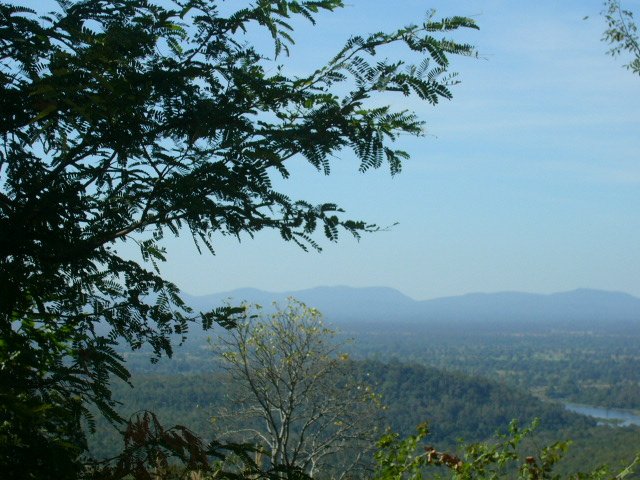
A clifftop viewpoint on Highway 213 at the Kalasin–Sakon Nakhon border, tied to a royal visit. Wide views over the Phu Phan forest, and only a short walk from the parking area to the lookout.
Phu Phan National Park
Forest straddling two provinces, with nature trails, clifftop viewpoints, forest waterfalls and a campground where you can sleep under the stars.
Lam Pao Dam
A large Isaan reservoir with the Thep Suda Bridge, raft restaurants out on the water, and Dok Ket Beach for a swim — a good place to finish with the sunset.
Before You Go
- Car — Driving yourself or renting is easiest. Highway 213 is a winding mountain climb, so check your brakes and tires beforehand.
- Timing — Late rainy season into winter (September–February) is best: the falls have water, the air is cool and the views are clear.
- Footwear — Wear sneakers or grippy rubber shoes; the rock flats at the falls get slippery when wet.
- Food & water — Keep drinking water and snacks in the car; there aren't many shops at the mountain sights.
- Star camping — If you want to camp at Phu Phan, book ahead and bring your own tent and sleeping bag — the nights are cold.
Straight Talk
This trip is about quiet nature, not hip cafes or trendy check-in spots. If you like calm, forest and hills and aren't fussy about fancy facilities, you'll enjoy this route. But if you want a luxury stay or a packed activity list, it's better to stay in town and drive out and back each day instead.
Want an easygoing plan by the water instead? Take a look at our laid-back Lam Pao Dam itinerary.
See the Lam Pao Dam chill plan →