🔄 Updated 11 Jun 2026
The Phu Thai are spread across Kalasin, Mukdahan, Sakon Nakhon and Nakhon Phanom, and in Kalasin they cluster densely along the foot of Phu Phan in the districts of Kham Muang, Kuchinarai, Na Khu and Khao Wong. Phu Thai food culture is tied to the nature around them — sticky rice as the staple, dishes built on forest greens, fish from the streams, and ferments kept to eat across the seasons. The flavor isn't sweet like central Thai food; it leans salty, spicy, and fragrant with local herbs like phak phaeo (Vietnamese coriander) and wild leaves that city folk rarely know.
How to read this list
This isn't a restaurant ranking — it's the local Phu Thai dishes ordered from the ones you'll come across most often and that feel most distinctive, through to seasonal dishes you need good timing to catch. We note the origin and where you can reasonably go try each one, but many of these are home-kitchen and merit-festival foods. To taste the full spread, come during a cultural event or a merit festival, or give a homestay advance notice.
Phu Thai dishes worth trying
Tom kai sai phak (Phu Thai herbal chicken soup)
The pot of free-range chicken soup at the heart of any Phu Thai spread. Free-range or Phu Phan black-bone chicken simmered with lemongrass, kaffir lime leaves, seasonal local greens, and phak phaeo for its signature fragrance. The broth is clear but rounded from real chicken — no seasoning powder. Some households add a dash of pla daek or a squeeze of lime for a gentle sourness. It's the dish that turns up most often at merit festivals and when welcoming guests.
Suwa kai / Phu Thai khua kai
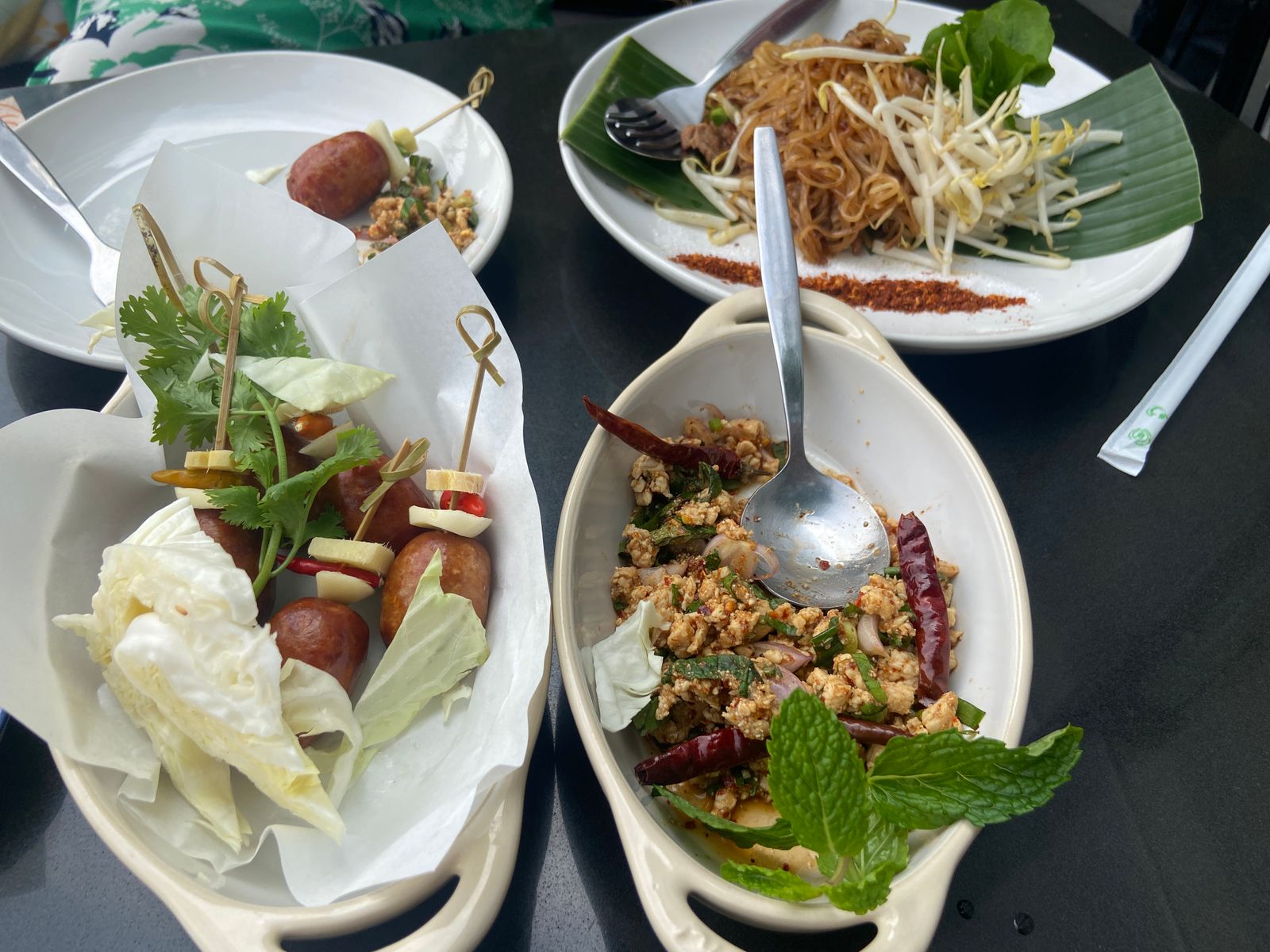
A half-toasted larb, Phu Thai style — minced free-range chicken tossed with larb seasoning, toasted rice powder, chili, and finely sliced phak phaeo. Bold and fragrant with spices; some recipes add blood for extra depth. It's an everyday companion to sticky rice for the Phu Thai, and what sets it apart from ordinary Isan larb is the heavier hand with local herbs. Eaten with fresh greens picked from the garden fence.
Jaew bong
The Isan stir-fried fermented-fish chili paste that the Phu Thai make especially rich and distinctive. Pla daek is boiled and pounded with dried chili, galangal, lemongrass, shallot and garlic, then cooked down until thick and fragrant — it keeps a long time and lives in every kitchen. Dip blanched or fresh greens in it, or mix it with sticky rice, and the meal is done. Salty-spicy forward, with a strong fermented-fish smell for the uninitiated, but it's a flavor people here can't do without.
Pla daek / Phu Thai fermented fish
The heart of Isan flavor. The Phu Thai ferment fish from the streams and the Lam Pao river with salt and rice bran until it develops its distinctive smell and umami. It goes into almost everything — som tam, vegetable curries, even the chicken soup. Many households still keep fermenting jars out back. It's a local ferment that shows the maker's skill; if you're buying it as a souvenir, choose the cooked (boiled) kind for a milder smell.
Som pla / som pla tong (local soured fish)
Fish fermented sour with sticky rice and garlic, left a few days until it picks up a natural tang, then fried or steamed and eaten with sticky rice. The flesh is firm with a balanced sour-salty taste. It's how the Phu Thai preserved fish left over from the catching season. You can find it at fresh markets and souvenir shops in the district towns.
Duckweed curry with mak fai leaves (kaeng khai pham)
One of Kalasin's signature local dishes, picked from Kham Muang district. Khai pham (water meal) is a tiny freshwater algae from the ponds, high in protein, cooked into a curry with mak fai leaves that lend a gentle sourness and a distinct aroma, seasoned with pla daek. The broth is deep green and homely in flavor — but it's a dish getting harder to find every year.
Phu Thai koi wai (rattan-shoot koi)
A koi made from tender rattan shoots — grilled or boiled until done, then sliced and tossed with koi seasoning, toasted rice powder, chili and local greens. The faint bitterness of the rattan cuts against the sour-spicy seasoning. It's a Phu Thai dish Na Khu district is known for (Krua Thi Rak is the spot people mention). If you're not used to bitter flavors it takes a leap of faith, but it's the real local thing.
Mam / fermented Isan sausage
Sour fermented sausage stuffed with offal and sticky rice, left to sour before grilling or frying. Firm-textured and sour-salty, eaten with ginger, fresh chili and peanuts. It's a common local ferment found in Isan markets generally, and an easy souvenir to grab on the way out. Pick a maker who ferments cleanly and sells through fast.
Pak wan curry with red ant eggs
A hot-season dish of the Phu Phan foothills — wild pak wan tips cooked into a curry with red ant eggs gathered from nests up in the trees. The ant eggs give a rich, savory roundness with a faint sourness, seasoned with pla daek. It's a seasonal dish available only in the dry season, around March to May. If you come at the right time you'll eat it fresh, straight from the forest.
Khao tom daek / sticky rice in banana leaf
Steamed sticky rice mixed, wrapped in banana leaf, then steamed again so it takes on the banana-leaf fragrance. It's a Phu Thai snack and merit-festival staple. Ban Lao Yai in Kuchinarai district is known for it — picked as a signature local dish. Fragrant plain, or pair it with jaew bong. A simple food that speaks to the self-reliant way of life here.
Want to taste deeper? Try a Kalasin food tour or cooking class
Half a day with a local who knows the lanes — or cooking a dish yourself — teaches you more than just eating. Book ahead on Klook or GetYourGuide.
Where to go eat Phu Thai food
A lot of Phu Thai food is home-kitchen and merit-festival cooking — there are no big-sign restaurants like in the city. The surest way to eat the full range is to visit a cultural village or stay at a homestay and order a spread in advance. For the ferments and souvenirs, head to the fresh markets in the district towns.
- Ban Khok Kong Phu Thai cultural village (Phu Phan foothills, around Kham Muang–Khao Wong) — a tourism village that lays out Phu Thai spreads and seasonal forest food. Contact the homestay group ahead of time so they can prepare the herbal chicken soup and local dishes.
- Ban Phon, Kham Muang district — the Phu Thai prae wa silk-weaving village famous for its textiles. Stop in to see the way of life and the local food in one go; there are local souvenirs for sale.
- Krua Thi Rak, Na Khu district — the originator of the Phu Thai rattan-shoot koi that was picked as a Kalasin signature dish in 2025. A good choice if you want to try Phu Thai dishes in a sit-down restaurant setting.
- Kham Muang / Kuchinarai fresh markets — where to buy jaew bong, pla daek, som pla and mam to take home. Pick the stalls that sell through fast and keep things clean.
Souvenirs to take home
If you want the Phu Thai flavor to take with you, a jar of jaew bong and som pla are the easiest to carry and keep the longest. Choose jaew bong that's cooked down thick and a bit dry — it keeps better. For pla daek, go with the boiled kind: the smell is milder and it's easier to bring along in the car than the raw version.
How to enjoy Phu Thai food without getting lost
- Sticky rice is the star — Phu Thai dishes are bold because they're built to eat with sticky rice. Roll a ball of rice, dip it in jaew bong or mix it with suwa kai, and you get the flavor as intended.
- Phak phaeo and wild greens are the signature aroma — don't pick them out, because the fragrance of the chicken soup and Phu Thai larb comes from these local herbs.
- Strong-smelling ferments are normal — jaew bong and pla daek smell strong if you're not used to them. Try a little at a time first; no need to force it.
- Seasonal dishes need good timing — red ant eggs, pak wan and wild mushrooms only show up at certain times. For the fresh stuff, come in the dry season through early rains and ask the locals.
- Order the spread in advance — if you want a full Phu Thai spread, call the homestay or village group ahead, because many dishes need preparation and fresh ingredients to source.
Eat the local Phu Thai food, then make the most of the rest of Kalasin
See the Kalasin travel guide →