🔄 Updated 21 Jun 2026
Kanchanaburi's attractions split roughly into three threads. The first is nature — the waterfalls and national parks spread across the west of the province. The second is World War II history, clustered around the town and along the Death Railway. The third is the River Kwai that ties it all together, from bamboo rafting to floating raft houses and riverside meals. This article walks you through all three threads first, then digs into each spot enough to show when it's worth going and how to prepare.
Waterfalls and nature
The west of the province is a long chain of national parks. Erawan Waterfall is the one most people think of first — emerald-green water falling over seven tiers, with a swimming spot at each level as you climb. If you want somewhere quieter, Sai Yok and several other waterfalls give you more options.
Erawan Waterfall
A seven-tier waterfall with emerald-green water in Erawan National Park, with a swimming spot at each level as you climb. Tiers 1–4 are an easy walk; tiers 5–7 get steeper and prettier. Little fish nibble at your feet in the pools. No plastic bottles allowed past tier 2. Go early, as the upper tiers close to climbers in the afternoon.
Sai Yok National Park (Sai Yok Noi / Sai Yok Yai)
Sai Yok Noi sits right by the road to Thong Pha Phum, so it's an easy stop for photos. Sai Yok Yai is deeper inside the park, where the falls drop straight into the Khwae Noi River — quiet forest, with bamboo rafting and park bungalows if you want to stay over.
Srinakarin Dam + Huai Mae Khamin Waterfall
A large dam set among the hills, with blue-green water. Take a boat in to reach Huai Mae Khamin Waterfall inside the reservoir — another seven-tier falls with far fewer people than Erawan. Good for anyone who likes boat rides and staying on a floating raft house out on the lake.
Caves and hot springs around Sai Yok
Along the route to the waterfalls there are stalactite caves and the Hin Dat hot springs to soak in. They make easy add-on stops along the way, no long walks needed, and give you a change of pace from cold waterfalls to warm water.
Tips for visiting Erawan Waterfall
Aim to arrive before 10am. Staff start turning people back from the upper tiers around 2pm so everyone has time to get down before closing. Wear shoes with good grip — the path up to tiers 5–7 is rock and tree roots — and bring a waterproof pouch for your phone, because several tiers are deep enough to swim in.
Want more out of Kanchanaburi? Book tours & activities
Booking online ahead on Klook or GetYourGuide is usually cheaper than the gate and skips the queue. Pick only the experiences you actually want — prices and availability are shown live on each site.
World War II history
Kanchanaburi is where the Death Railway was built by prisoners of war and forced laborers during World War II. These sites cluster around the town and along the railway line — places worth walking slowly and reading about, rather than just snapping a photo and moving on.
Bridge over the River Kwai
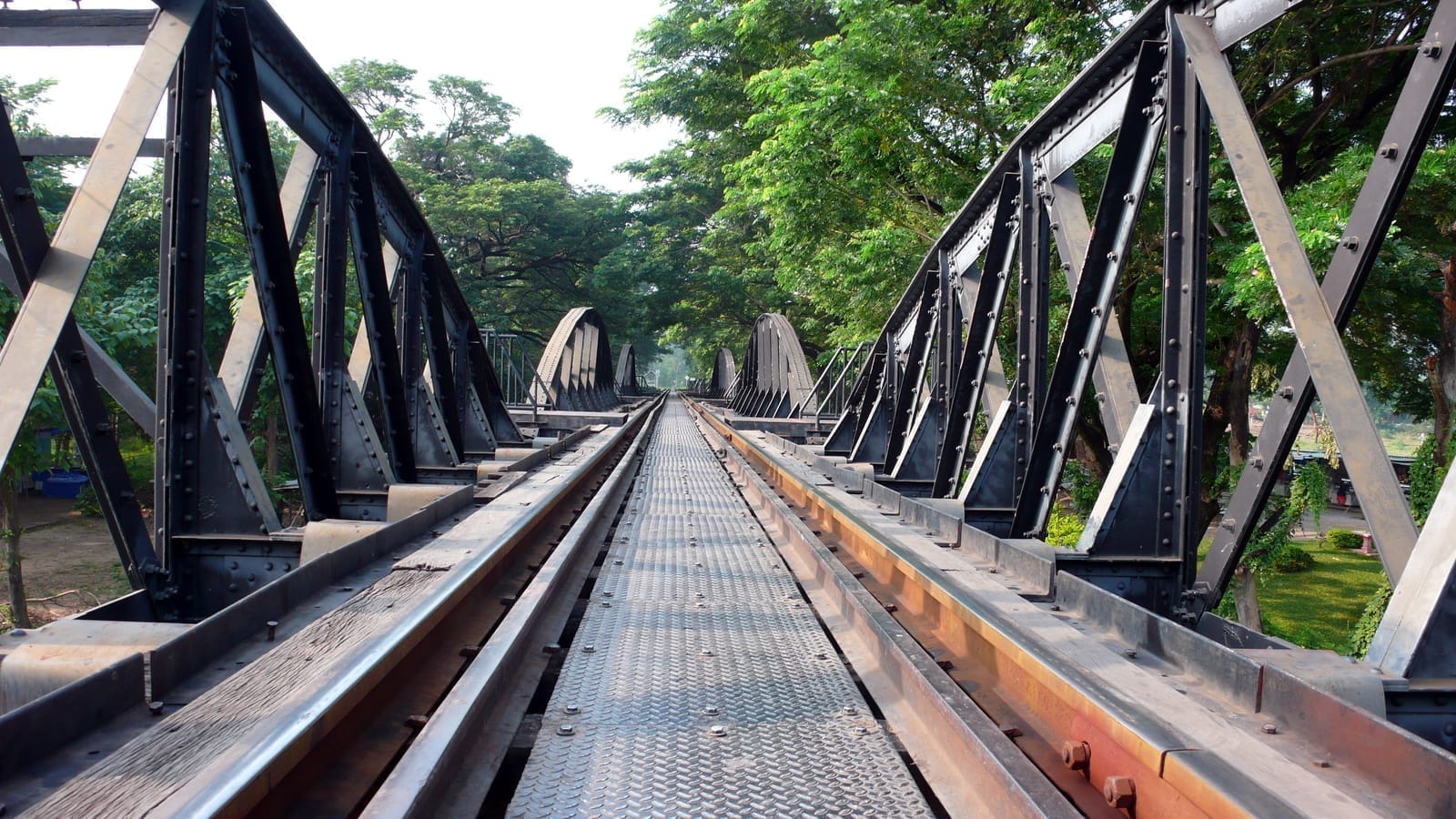
The black steel bridge in the middle of town that has become the symbol of the province. You can walk across it for free, with refuge platforms set along it for when trains pass. It's at its best in the early morning and evening — skip midday, when the sun is harsh and the crowds are thick.
Kanchanaburi War Cemetery (Don Rak)
A cemetery holding over six thousand POW graves, with clean, quiet gardens, in the center of town and within walking distance of the market. Entry is free. It's a place to keep a respectful manner and your voice down.
War museums / JEATH center
Museums telling the story of building the railway and the lives of the prisoners — there's one near the cemetery and another by the river. Entry runs a little over a hundred baht, and a visit helps you understand the bigger picture before walking the other sites.
Hellfire Pass
A rock cutting that prisoners dug by hand, with an information center run by Australia. You can walk the trail down to see the pass. Entry is free, with audio guides to borrow (THB 200 deposit, refunded when you return it). It's out of town toward Sai Yok.
Another vivid way to feel the history is to ride the Death Railway. The most striking stretch is where the train runs on the curving wooden trestle along the cliff at Tham Krasae — it slows right down so you get a full view of the Khwae Noi River. Local trains leave Kanchanaburi and Nam Tok stations only a few times a day. You can only buy tickets at the station — no advance booking — so it's worth arriving about half an hour early.
An honest word about the history sites
The cemetery and Hellfire Pass are memorials to people who died. Dress modestly, keep your voice down, and be careful about photo poses on the tracks or in the cemetery. The Bridge over the River Kwai gets very crowded at midday with no shade, so if you want good photos and atmosphere, go early or near sunset.
The river and Sangkhla Buri
The River Kwai is the lifeblood of a Kanchanaburi trip. Beyond riverside meals, you can stay on a floating raft house, ride a bamboo raft, and swim. If you have the time, it's worth driving north to Sangkhla Buri to walk the Mon Bridge and see the riverside Mon community's way of life.
Bamboo rafting / River Kwai raft houses
Floating raft houses are a Kanchanaburi signature — fall asleep to the sound of the water and wake to mist over the river. Some rafts run bamboo rafting and let you jump in for a swim. Best for an overnight by the river so you get the full atmosphere.
Mon Bridge, Sangkhla Buri
The longest wooden bridge in Thailand, crossing the reservoir to link the Mon community with the district town. It's free to walk across, and there's a morning alms-giving by the bridge around 6am. It's about 220 km from town, so plan to stay overnight.
The Underwater Temple (Old Wat Wang Wiwekaram)
The ruins of an old temple submerged in the reservoir, clearly visible when the water drops around March to May. You can take a boat out to see it — a striking photo spot to pair with the Mon Bridge.
Three Pagodas Pass
The Thai–Myanmar border at the far north of Sangkhla Buri, with a border market selling local goods and gemstones. A good stop to add after the Mon Bridge to round out the route.
The best time to go
Waterfalls are prettiest and fullest from late rainy season into early winter, around October to January. The Underwater Temple, on the other hand, shows clearly in the dry season around March to May when the reservoir is low. If you're heading up to Sangkhla Buri, don't try to do it as a day trip — the road is long and winding. Staying a night is far more worth it, and you get the morning mist on the Mon Bridge.
Planning your Kanchanaburi trip by how many days you have
- One day — focus on town: the Bridge over the River Kwai, the War Cemetery, and a war museum, then take a short train ride and finish with a riverside dinner in the evening.
- Two days, one night — spend day one on the history sites in town and stay on a raft house; on day two head out to Erawan Waterfall early and make the most of the swimming.
- Three days or more — add the Sai Yok route and Hellfire Pass, then drive up to Sangkhla Buri for a night, waking early to walk the Mon Bridge and take a boat out to the Underwater Temple.
Plan a full Kanchanaburi trip
See the Kanchanaburi guide →