🔄 Updated 21 Jun 2026
Kantharalak and Khun Han are two neighbouring districts at the far south of Sisaket, on the foothills of the Phanom Dong Rak range that forms the Thai-Cambodian border. What makes this route work is how much it packs into a fairly tight driving loop — volcanic durian orchards, waterfalls inside the forest reserve, oddly designed temples, and cool hillside views. Come during durian season and you'll get the full set, but at other times you can still do the waterfalls and temples easily. We'll walk through where each spot sits and how they connect, then build it into a plan based on how many days you have.
Who this route suits, and how to get there
This route is built for anyone with their own car or a rental, because the orchards and waterfalls are scattered across the foothills and public transport doesn't reach a lot of them. From Sisaket town to Kantharalak district centre is about 60-65 km, roughly an hour's drive, then you continue into Khun Han or up the hills from there. If you fly into Ubon Ratchathani and rent a car, driving in is just as easy — the distance is similar.
- Your own car is by far the easiest — orchards and waterfalls are spread across the foothills, so driving yourself lets you stop wherever you like without waiting on a bus.
- Fill up before heading into the hills — petrol stations are sparse up there, so top off in Kantharalak or Khun Han town to be safe.
- Leave buffer time between stops — some stretches are winding mountain roads, slower than flat ground, so don't cram the schedule too tight.
- Durian season gets busy — mid-June brings crowds out to taste at the orchards, and parking and the roads in front of the popular ones can clog up, so brace for queues.
Want more out of Sisaket? Book tours & activities
Booking online ahead on Klook or GetYourGuide is usually cheaper than the gate and skips the queue. Pick only the experiences you actually want — prices and availability are shown live on each site.
Volcanic durian orchards that welcome visitors
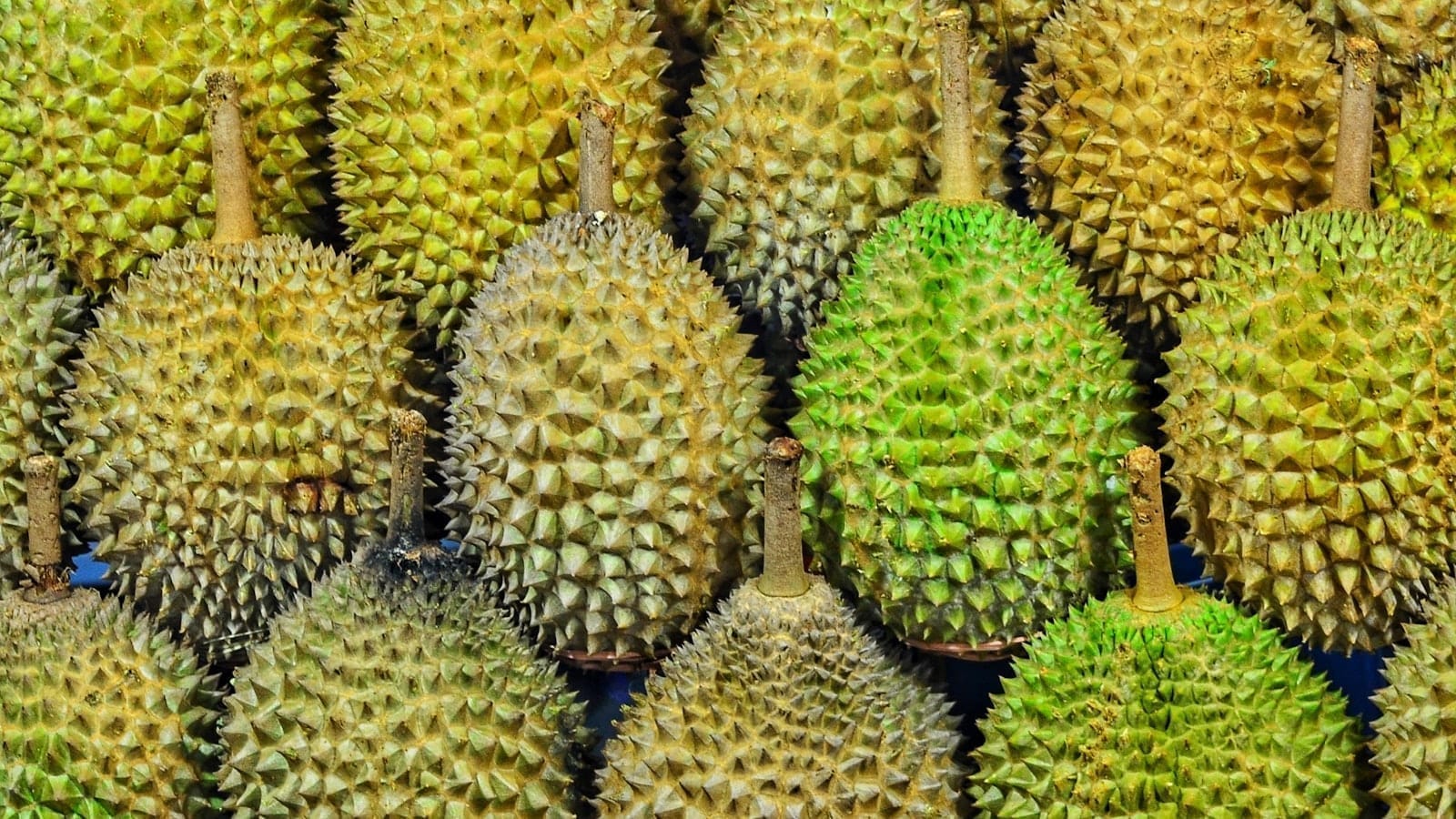
In season, the orchards are the heart of this route. Some run a café in the orchard where you sit and eat fresh durian, some are roadside shopfronts selling cut-to-order, and some put on a durian buffet. The prices below are rough ranges that depend on grade and time of season — early season is pricier, mid-season cheaper. Durian is a natural product, so before driving out of your way, message the orchard's page or call ahead to ask whether they have fruit that day and whether they're open to visitors.
Ban Suan Win Ka Va (Win Ka Va Farmhouse & Café)
A volcanic durian orchard that doubles as an in-orchard café — walk among the trees and sit down to fresh durian with a drink, all in one place. Good if you want a real orchard atmosphere rather than just buying to take away. It gets busy in season, so message the page about timings before you go.
Suan Salete Labeu
A Kantharalak orchard just off Route 24, not far in, with roadside parking. It grows durian, mangosteen and rambutan, and you can order and eat right in the orchard — handy for a stop along the way without detouring deep into the back lanes.
Ban Suan Rueangrot
A Kantharalak orchard that runs a volcanic durian buffet during fruit season — sit in the orchard and eat your fill. Good for groups of friends or families who want to go all in. Buffet sessions change with what's ripe in the orchard, so always check the page first.
Mae Si Chan Volcanic Durian Orchard
A Kantharalak orchard with both volcanic durian and rambutan, selling at the gate in season — good for grabbing a few different things in one stop. The rambutan here is grown on the same volcanic soil.
Suan Wiang Volcanic Durian
An agritourism orchard at Ban Sam Khi Lek, Phran subdistrict, Khun Han district, open for orchard visits, with seasonal fruit-buffet sessions and GAP-certified produce for sale. Good if you want a bit of learning alongside the eating.
Suan Ta Toem
A small orchard reviewers stop by often, with a genuine village-orchard feel — the owner walks you among the trees and tells you about the volcanic soil. There isn't a lot of fruit, so go when they actually have some.
Suan Lung Khammi
Another small orchard often paired with Suan Ta Toem in reviews, focused on selling its own fruit — you can chat with the owner, prices follow the season. Good if you like supporting smaller growers.
Lava Durian member orchards (GI registered)
Lava Durian is a network of Sisaket volcanic durian farmers under the GI scheme, with plenty of member orchards across Kantharalak and Khun Han to choose from. If you want fruit with a clearly certified origin, check the list of local sellers before you go.
Roadside stalls on the Khun Han-Kantharalak road
In season, farmer stalls line the main roads in and out of the growing area — prices are negotiable and the selection is varied, but you need to know what you're doing. Pick a seller who can tell you which orchard the fruit came from, and ask to taste before buying.
How to buy durian without getting burned
Always ask to taste first — ripe-just-right durian is soft but not mushy, sweet and rich without bitterness, and if a seller won't let you taste at all, be wary. · Ask how many days ago it was cut; if you want to eat it that same day, pick one that's starting to smell. · If you're carrying it a long way home, choose fruit that's fully mature but not yet fully ripe, then let it finish ripening yourself.
Waterfalls and nature in the foothills
Beyond durian, this route has waterfalls in the Phanom Dong Rak forest to stop at. They run strongest and look their best in late rainy season (roughly September to November); in the dry months the flow drops off a lot. If you're specifically here for waterfalls, aim for the post-rain window.
Samrong Kiat Waterfall
Also known as Pisat (Demon) Waterfall, in the Phanom Dong Rak Wildlife Sanctuary, Bak Dong subdistrict, Khun Han district. The water drops about 8 metres off a cliff, with a broad sheet of rock and flowing stream above it — at its best when the water's high, roughly September to February. Open around 08:30-16:30.
Huai Chan Waterfall
At Ban Nam Tok Huai Chan, Huai Chan subdistrict, Khun Han district, about 24 km from the district centre. There's a suspension bridge to cross when the water's high, a shady setting good for sitting by the water, and restrooms on site.
Huai Wang Yai Waterfall
Another waterfall in the Khun Han-Kantharalak zone that locals stop by, with clear water running over the rocks — good if you want a waterfall that isn't crowded. It looks best after the rains.
Phanom Dong Rak hillside views
The drive up into the hills around Kantharalak has pullouts looking out over the fields and the long line of the range, with cooler air than in town. Good for a photo stop on the way to an orchard or waterfall.
Honest talk about the waterfalls
The waterfalls here depend heavily on the rains. In the dry season (roughly March-May) the water drops so low that some spots are reduced to a thin trickle. If you're set on swimming or photographing a full waterfall, come after the rains, around September to November — it's far more worth it. And the rocks at the water's edge are slippery, so wear shoes with good grip.
Temples and offbeat stops in Khun Han
If you're in Khun Han and want a stop that isn't nature, the Million Bottle Temple is the one most people think of first — a temple decorated throughout with glass bottles, unusual and good for photos, and worth a visit any time of year regardless of the season.
- Wat Lan Khuat (Wat Pa Maha Chedi Kaew, the Million Bottle Temple) — in Khun Han district, with over a million glass bottles set into the ordination hall, pavilion, bell tower, monks' quarters, even the crematorium. It's unlike any ordinary temple, open year-round, and pairs well with Samrong Kiat Waterfall in the same area.
- Markets and local goods in Khun Han-Kantharalak town — stop for local produce and souvenirs: durian, rambutan and mangosteen in fruit season, plus the province's dried goods, before you loop back to town.
- Cafés in Kantharalak — there are small, laid-back cafés to break up the drive, good for a rest before or after coming down from the hills.
The border situation — always check first
Kantharalak is a district right on the Thai-Cambodian border. Attractions like Pha Mo I Daeng and Khao Phra Wihan National Park are in this area, and it's a zone that opens and closes depending on the border situation. At times the park has announced temporary closures, or closures with no set reopening date, for safety reasons — in the past it has stayed shut for long stretches after clashes along the border.
Before you plan a border-side stop
If you want to fold Pha Mo I Daeng or Khao Phra Wihan National Park into your route, call the park office (0 4582 6045) or check the park's Facebook page before you set out, every single time. And always keep a backup plan in parts of the province away from the border — durian orchards, the Khun Han waterfalls, the Million Bottle Temple. Safety comes before a good view, always.
A road-trip plan that won't wear you out
The orchards, waterfalls and temples on this route are spread across several subdistricts, and crisscrossing all day gets tiring. Better to take it one zone per day — orchards in durian season, waterfalls in rainy season — and tie together the spots that are close to each other. Below is a three-day plan you can trim down to fit however many days you have.
Into Kantharalak, the durian run
Up to Khun Han, waterfalls and temple
Mopping up before heading home
Got just one day? You can still do it — take only Day 1 or only Day 2 and you'll have a tidy trip. In durian season go for the orchard run, in rainy season the waterfall run. But if you want both orchards and waterfalls without rushing, an overnight around Kantharalak or Khun Han works better than a same-day round trip.
Getting ready before you set out
- Carry your ID — this is a border zone, and there may be checkpoints manned by officials.
- Fill up before heading into the hills; petrol stations and shops up there are few.
- In durian season, message or call the orchards first to check they have fruit and are open, so you don't make a wasted trip.
- If you're including border-side stops, call the park office (0 4582 6045) and have a backup plan elsewhere in the province.
- In the rainy season the hill roads are slick and the rocks at the waterfalls are slippery — drive slowly and wear shoes with good grip.
Plan your whole Sisaket trip with the full route guide
See the Sisaket travel guide →