🔄 Updated 21 Jun 2026
When people talk about Isan's spiritual and faith-driven sites, Kham Chanot is one of the first names that comes up. What makes it interesting isn't only the belief — it's the place itself. The island is a dense grove of chanot palms (a palm species similar to the sugar palm) growing in a tight circle on top of a marsh. No matter how high the surrounding water rises, the island floats up and down with it and never sinks. Locals believe what lies beneath the island is a passage to the underwater realm of the Naga.
The legend of Pu Sri Suttho and the underwater city
Legend says Kham Chanot is the dwelling place of Phaya Sri Suttho Nakaraj — known affectionately as "Pu Sri Suttho" — and his consort Ya Sri Pathumma. Pu Sri Suttho rules over the underwater city on one side of the Mekong, and the island of Kham Chanot is the gateway the Naga use to pass between the human world and that realm. One old tale every Isan local knows is the story of the "ghosts who hired the film" — the people of Kham Chanot were said to have hired an open-air cinema to come and screen a movie, only for the money they paid to turn into leaves afterward. Stories like this have kept Kham Chanot's name alive to this day.
Believe it or not, that's up to you — but what's undeniable is the faith that brings hundreds of thousands of people here every year. Some come to ask for lucky lottery numbers, others for help with work or health, and many return to give thanks after a wish came true. The atmosphere here is quiet, solemn, and full of the intent of the people who make the trip.
Want more out of Udon Thani? Book tours & activities
Booking online ahead on Klook or GetYourGuide is usually cheaper than the gate and skips the queue. Pick only the experiences you actually want — prices and availability are shown live on each site.
What it's actually like inside Kham Chanot
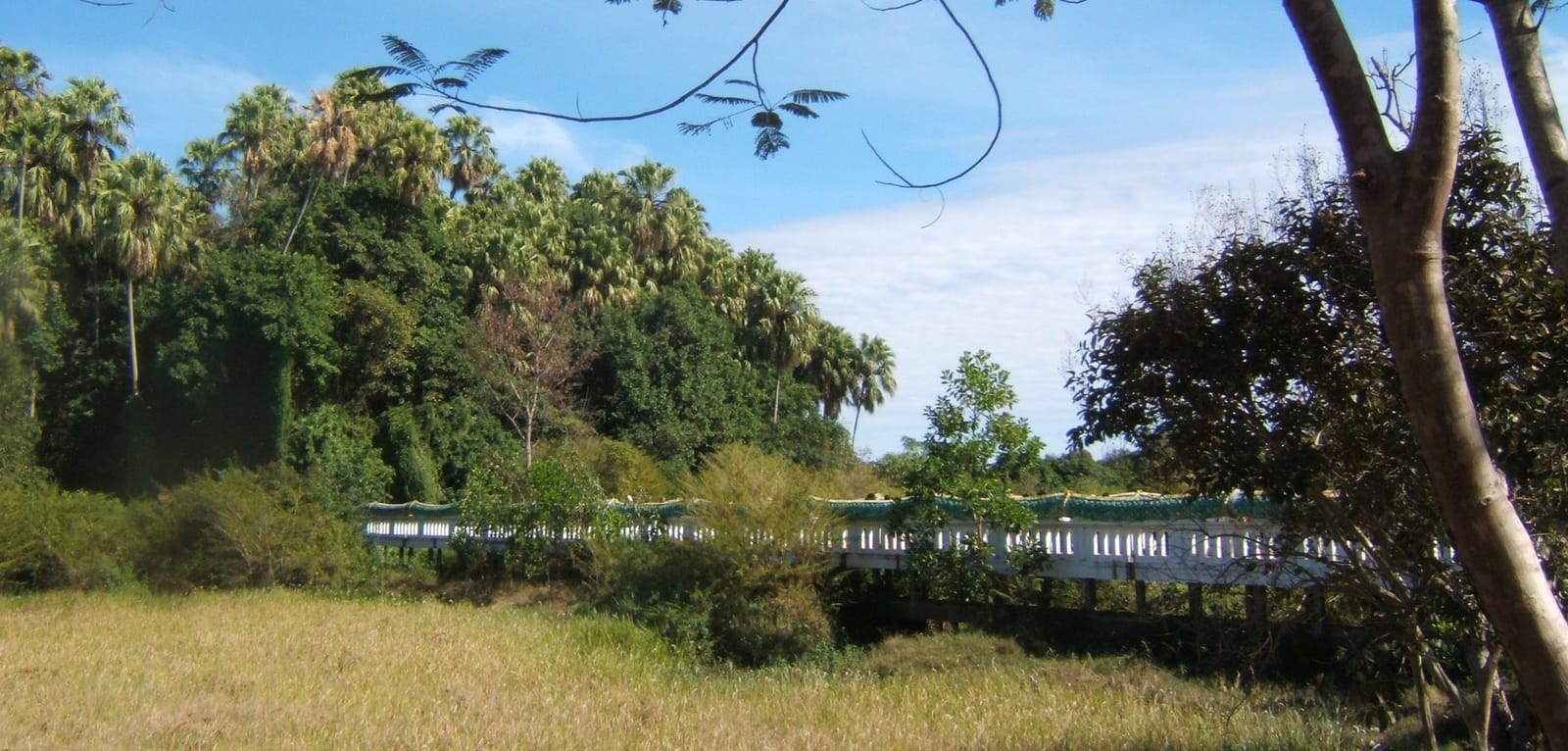
The entrance is a concrete bridge stretching across the marsh, with seven-headed Naga statues standing guard on either side. People believe the middle of the bridge marks the line between the human world and the Naga's domain. Once you cross over, you reach the grove of tall chanot palms, shady and dense, with sunlight slipping through in shafts — the air is noticeably cooler than outside. Walk along the wooden path and at certain spots you'll feel the ground go soft and rock gently, because this really is an island floating on water.
- The shrine of Pu Sri Suttho and Ya Sri Pathumma — the main spot everyone comes to pay respects, set in the heart of the chanot grove.
- The sacred well — groundwater that wells up constantly and never dries, believed to be a mouth of the passage to the underwater realm. Visitors often take holy water home to keep.
- The twin chanot palms / the giant fig tree — old trees that people pray to. Scratching, marking, or rubbing powder on them to read lucky numbers is strictly forbidden.
When it gets crowded
Saturdays and Sundays, lottery-draw days (the 1st and 16th), and long holidays get packed, with long queues to pay respects. If you want a calm atmosphere, a weekday morning right after opening is the most comfortable time to go.
How to pay respects and what to offer
Before you enter the island, the parking area and market by the entrance have stalls selling complete offering sets. You can bring your own or buy on the spot. The basic offering is a flower tray, lotus blossoms, betel nut, a shoulder sash (sabai), and fruit. Offering sets start at around 50–150 THB depending on size, while larger flower trays run about 200–500 THB. Once you carry your offerings in, staff or the resident chant leader at each shrine will guide you through the words of the offering, so don't worry if you don't know the ritual.
- Take off your shoes before stepping into the shrine area — everyone does it, and it's basic etiquette.
- Settle your mind, then clearly state your name, address, and what you wish to ask for.
- Don't light incense or candles in the forest — the temple bans it to prevent fires in the chanot grove. Pay respects with flowers and offering trays instead.
- If you made a vow and your wish came true, don't forget to come back and fulfill it as you promised.
About lucky numbers
Plenty of people come looking for numbers in the trees, the well, or candle drippings. Let's be honest: this is pure belief. Enjoy the faith, but don't get carried away and waste your money — and never scratch trees or rub powder on them to find numbers, since it's against the rules and damages the chanot palms.
Rules and etiquette you should know
Kham Chanot is both a sacred site and a fragile floating-forest ecosystem, so the temple and the community have set clear rules. Following all of them keeps everyone happy and helps preserve the place.
- Dress modestly — trousers or skirts that cover the knees, no spaghetti straps or bare shoulders.
- Don't throw coins or objects into the sacred well.
- Don't release fish or aquatic animals into the marsh.
- Don't tie seven-colored cloth to the trees, and don't rub powder on or scrape the bark.
- Take your offerings and bai sri trays back with you after paying respects, to help cut down on waste in the forest.
Getting to Kham Chanot
Kham Chanot is in Ban Muang sub-district, Ban Dung district, about 100 km from Udon Thani city — roughly 1.5–2 hours by car. The main route is to leave the city on Route 2, then continue on Highway 22 (Udon Thani–Sakon Nakhon) before turning off toward Ban Dung, following the signs, which are clear the whole way. There's a large parking area that handles both cars and tour buses.
Drive / rent a car
The most convenient option, since it's far out and public transport is limited. You can rent a car at Udon Thani airport and drive yourself, park at the lot by the entrance, then walk in to the island.
Van / faith-tour package
There are day tours from Udon Thani city or Nong Khai combining Kham Chanot with the Red Lotus Sea — good if you'd rather not drive yourself.
Public bus
Take a bus from Udon Thani bus terminal to Ban Dung, then a hired ride for the last stretch to Kham Chanot. It takes longer and you'll need to leave plenty of buffer time.
Pair it with
Most people combine Kham Chanot with the Red Lotus Sea (Nong Han Kumphawapi) in one trip, but the Red Lotus Sea is in a different direction — check the map and plan your order carefully, or stay overnight in Udon Thani and do each on a separate day so it doesn't feel rushed.
The best time to go
Open daily, roughly 06:00–18:00, with no entry fee (there are donation boxes if you wish to give). Early in the morning right after opening, the air is cool and crowds are still thin — ideal for walking around and paying respects without fighting the queues. During the rainy season (June–October), the chanot palms are lush green and the marsh is full, which is when the "floating island" effect is most obvious — but the walkways can get damp and slippery, so wear shoes that are easy to slip off and won't slide.
Plan a faith-and-nature trip in Udon Thani with the Red Lotus Sea
See the Udon Thani travel guide →