🔄 Updated 21 Jun 2026
When people think of Prachinburi, a lot of them picture this side of Khao Yai, or the Chao Phraya Abhaibhubejhr Hospital. But ask people in town where they go on a slow morning off and one answer comes up again and again: Khao Ito. It's close — under half an hour's drive gets you to the foothills — and the air turns shady and cool the moment you arrive.
There are three things to do in the same area: Khao Ito Waterfall, where the stream runs over rocks in low steps; Chakkraphong Reservoir, a wide lake that catches the breeze; and the cycling loop around the hill that Prachinburi riders love to train on. Here's how each spot actually is, how to get there, and when to go to make it worth the trip.
Khao Ito Waterfall — a low stream to soak your feet, not a towering cascade
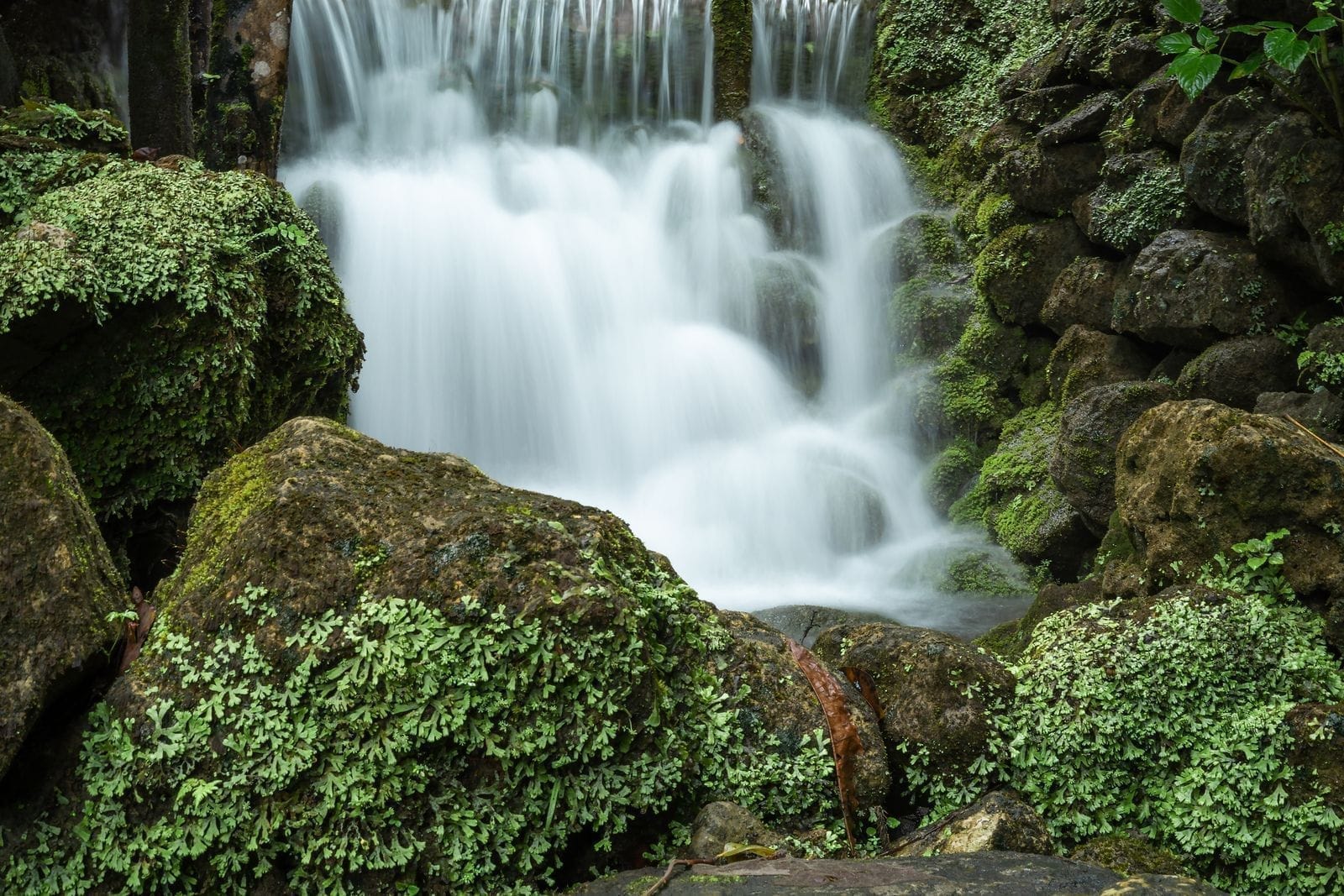
Let's be straight up front so you're not disappointed — Khao Ito Waterfall isn't a tall curtain of water you stand and pose in front of. It's a stream that tumbles over rocks in low steps, with small pools alternating with flat rock you can sit on and dip your feet in. The water isn't deep and doesn't run hard, so kids can play in it and adults can dangle their legs and cool off easily.
The waterfall sits inside Khao Ito Waterfall Forest Park, an "urban forest" area managed by the Royal Forest Department. Its source comes from the Khao Ito range, so there's usually some water to see nearly year round. But the time it looks best and runs nicely cool is the rainy season into early winter, roughly July to January. In the dry season the water thins out to barely a trickle.
- Open around 8:00 AM–4:30 PM daily — it's a forest park, not a national park, so the entry fee is modest and at times barely charged. Bring some cash for a small maintenance or parking fee just in case.
- The rock is slippery — wear closed-heel shoes or rubber water shoes for the stream, and don't go onto the rocks in flip-flops.
- There aren't many shops at the waterfall itself — bring your own drinking water and snacks, and pack your rubbish back out. This area relies entirely on visitors cooperating.
Going early pays off
Mid-morning before noon there are still few people, the rock is open, and the sun isn't harsh yet — perfect for a long soak. Come on a long-weekend afternoon and it starts filling up, and the parking near the waterfall goes fast.
Want more out of Prachinburi? Book tours & activities
Booking online ahead on Klook or GetYourGuide is usually cheaper than the gate and skips the queue. Pick only the experiences you actually want — prices and availability are shown live on each site.
Chakkraphong Reservoir — a wide lake, a cool breeze, mountains all around
Not far from the waterfall is Chakkraphong Reservoir (some locals just call it Khao Ito Reservoir), a royal-initiative reservoir built to store water for local farmers to use in the dry season. But from a visitor's point of view, it's a wide lake ringed by mountains with a cool breeze almost all day.
The spot people like to stand at is the dam crest and the viewing deck, looking out over water that reflects the light against a backdrop of hills. From some angles you can see a large Buddha image up on the hill too. Just pulling up, opening the car doors to the breeze, and sitting with a coffee is already worth the petrol.
Dam crest + viewing deck
Stroll the dam crest in the breeze, with a viewpoint to photograph the lake against the hills. The light is best in the late afternoon.
Lakeside camping ground
A wide grass field by the lake where you can pitch a tent overnight. Quiet, clear skies, plenty of stars — bring your own gear.
Large Naga-sheltered Buddha image
A large Buddha image sheltered by the Naga on the hillside. Stop in to pay respects and take photos along the way.
Bring your own camping gear
The camping ground here is about the natural setting, not a full-service campsite. Facilities are limited, so bring your own tent, water, torch, and food, and pack all your rubbish back out.
The cycling loop around the hill — why Prachinburi riders love it here
A good thing many people don't know about is that Khao Ito has a cycling loop around the hill that's quiet, shady, and keeps changing scenery. Prachinburi riders often drive in with their bikes, drop them, and ride the full loop past bamboo groves, rice fields, the waterfall, the reservoir, and the temple stops.
- The full loop is about 25 km — passing rural life, bamboo groves, Khao Ito Waterfall, Chakkraphong Reservoir, the Magnetic Hill, and temple stops along the way.
- Best for riders with some base fitness — there are short climbs to work for, but nothing brutal; beginners taking it slow can manage.
- There's a Magnetic Hill along the way — an optical illusion where a car seems to roll uphill on its own, a fun photo stop.
- Set off early — the air is cooler and there's less traffic, so it's safer than later in the morning when the sun starts to bite.
If you didn't bring a bike, you can still have a great time by car — drive the same loop, stopping at each point: the waterfall, the reservoir, and the temple. Half a day is plenty.
A half-day Khao Ito trip — starting from downtown Prachinburi
Waterfall + reservoir + temple
If you want to stay over
If you're not rushing back, you can camp by the reservoir, then wake up to a cool morning breeze and thin mist over the water — an atmosphere you won't find in town.
How to get there, where to park, what to bring
- Location: Ban Phra subdistrict, Mueang Prachinburi district, inside Khao Ito Waterfall Forest Park, with Suwannason Road as the main route.
- From downtown Prachinburi: about 10–15 km, a 20–25 min drive — the entrance is fairly clear and signposted.
- Public transport is scarce: coming by car or motorbike is by far the easiest; there's no convenient bus access.
- Bring cash for a possible maintenance or parking fee, plus drinking water, water shoes, and a rubbish bag.
- Best time: rainy season into early winter (Jul–Jan) for more water and cooler air — in the dry season the waterfall dries up a lot.
See all of Prachinburi — the foothills, the herb gardens, and the standout local food
See the Prachinburi travel guide →