🔄 Updated 21 Jun 2026
Ask anyone about the most intact rainforest in southern Thailand and most people will name Khao Sok first. It covers more than 700 square kilometres and connects to the Khlong Saeng and Khlong Nakha wildlife sanctuaries, forming one big forest that still has wild elephants, tigers, and hornbills living in it. The visitor areas split into two main zones: the park headquarters and Khao Sok village along the Sok River, which is all about trekking and tubing, and the Cheow Lan Lake zone, roughly 60 kilometres deeper in, where you take a longtail boat to stay on a floating raft house.
This article focuses mainly on the Khao Sok village zone and trekking, since that's the spot most people stop at and the easiest to reach off the Phetkasem highway. Cheow Lan Lake, where you stay overnight on a raft, we cover in full in its own dedicated guide.
Why Khao Sok is special — is it really an ancient rainforest?
The line you'll see on a lot of sites — that Khao Sok is "older than the Amazon" — isn't entirely an exaggeration. This forest is a tropical rainforest that's been here since before the last ice age, and it wasn't scraped away by glaciers like a lot of forests around the world were, so some plants and animals have survived here to the present day. The headline find people come looking for is the Rafflesia, the largest parasitic flower on Earth, up to 70–80 centimetres across, which only blooms in certain seasons and certain spots — you need a guide to walk you in to see it.
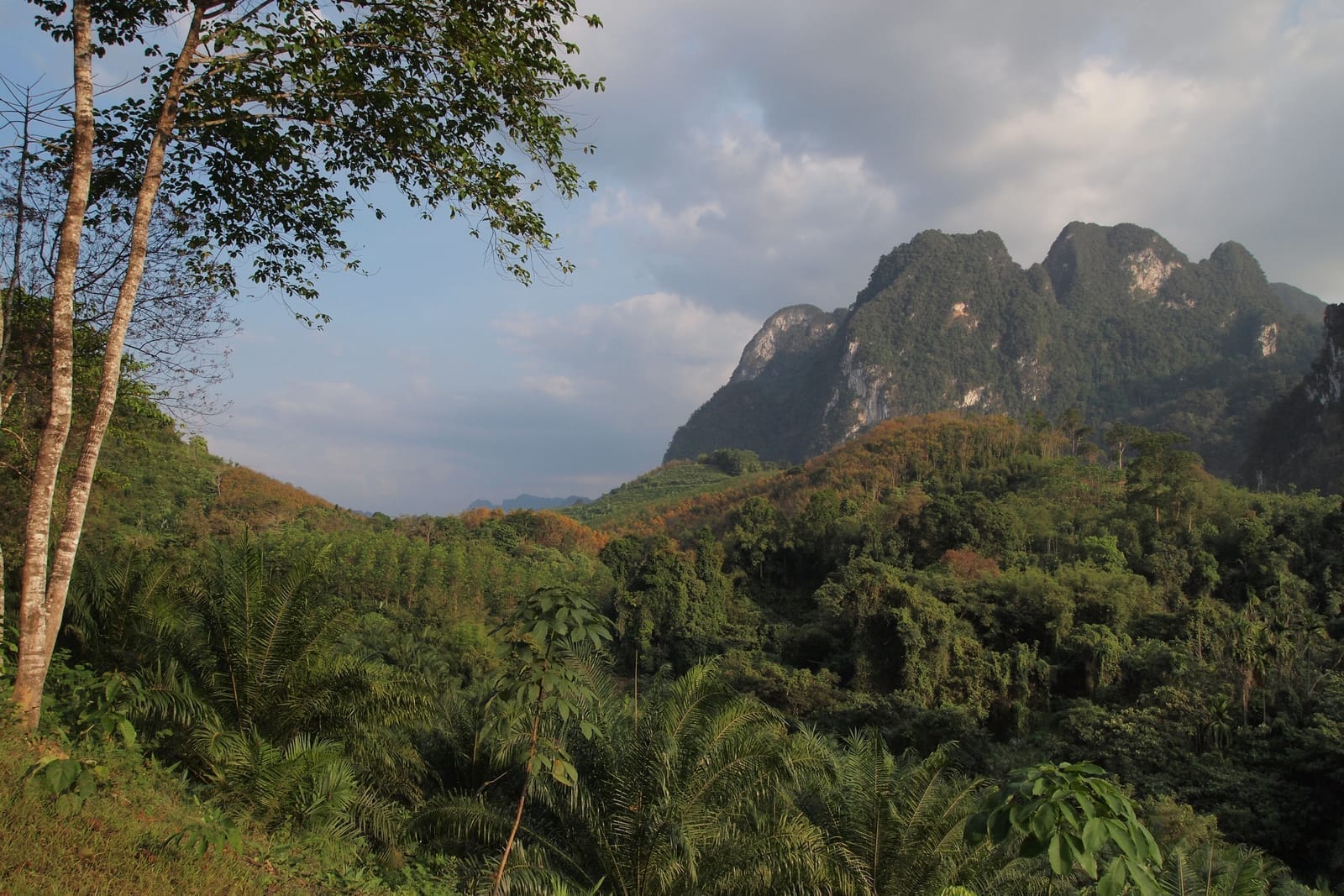
The classic Khao Sok image is the steep limestone peaks shooting up vertically from the forest floor, with mist often hanging around their bases in the morning. It's a view you can shoot from the riverbank along the Sok or right from your accommodation without having to hike anywhere.
Want more out of Surat Thani? Book tours & activities
Booking online ahead on Klook or GetYourGuide is usually cheaper than the gate and skips the queue. Pick only the experiences you actually want — prices and availability are shown live on each site.
The main trekking trail — Bang Hua Raet to Ton Kloi waterfall
Khao Sok's main trekking trail starts from the park headquarters and follows the stream into the forest — a single route that runs past several tiers of waterfalls. The park rule is that you can walk the first stretches on your own, but to go deeper you have to hire a guide. We've listed the stops in order, nearest to farthest.
Bang Hua Raet Waterfall (Bang Hua Raet)
The first waterfall on the trail, about 4–4.5 kilometres from the headquarters. The path is fairly level and easy, and you can stop for a swim in the pool. This is as far as you can walk on your own without a guide — good for a morning half-day.
Tham Nam Talu (Tham Nam Talu)
A through-cave with a stream running right through the middle of it — you wade through water and scramble over rocks with a guide. Exciting and fun, but it closes in the rainy season because flash flooding makes it dangerous. Tourists have been trapped inside before, so always check the weather first.
Ton Kloi Waterfall (Ton Kloi)
The waterfall at the far end of the main trail, roughly 7 kilometres from the headquarters. The last stretch means wading up the stream on a faint path, so a guide is required, and the round trip takes nearly a full day. It's a quieter spot where the forest still feels untouched.
Rafflesia hunting spot (Rafflesia)
Tracking down a Rafflesia bloom is a separate trek that local guides run, climbing up the slope into the forest to wherever a flower is blooming. It's only around in certain seasons (usually late rainy season into early cool season), so ask the guide beforehand whether anything is in bloom at the time.
Straight talk
Don't plan on walking all the way to Ton Kloi if you set out late — it's nearly 14 kilometres round trip, and the final stretch is walking in a slippery stream on a faint path. The southern forest gets dark fast, so starting after midday risks walking back in low light. Just reaching Bang Hua Raet is beautiful and well worth it if you only have a half day.
Tubing and kayaking on the Sok River
Another favourite is tubing down the Sok River where it runs through the village — an easy float past forest and limestone cliffs on both sides. The water is clear and not too fast in the dry season, perfect for cooling off in the afternoon. If you want to put in a bit more effort, there's kayaking with mountain views too. Operators in the village arrange both, and the price per person usually runs a few hundred baht per trip.
About the water
Tubing is most fun when there's a moderate amount of water — late rainy season into early cool season. Come at the peak of the dry season and the water can be so shallow you'll have to walk and drag the tube in places. But if it rains hard and the river floods, they close it for safety. Ask your accommodation before booking whether it's runnable that day.
Staying around Khao Sok village — which type to pick
Most accommodation is clustered in Khlong Sok village along the Phetkasem highway, within walking distance of the park entrance. It ranges from budget guesthouses and wooden bungalows to treehouses and mountain-view stays. We've picked places that are still open and consistently well reviewed to give you a starting point.
Art's Riverview Lodge
Khao Sok's legendary wooden riverside lodge on the Sok, with both bungalows and treehouses. Wake up early and you'll often see monkeys and otters by the water. They arrange trekking and lake tours, and it's about 1.5 km from the park entrance.
Treehouses in the village
Several owners build raised stays among the gardens or in the trees, with a deep-in-the-jungle feel — good if you want to wake up to a mountain view. Mid-range prices; book ahead in high season.
Budget guesthouses / bungalows
The village has light-on-the-wallet stays within walking distance of restaurants and tour desks — good for backpackers trekking here before heading on to Cheow Lan Lake.
Is a raft-house night worth it?
If you want to sleep out in the middle of Cheow Lan Lake you have to head to the other zone, taking a longtail boat from the Ratchaprapha Dam pier in to a floating raft house. These are mostly sold as overnight packages that bundle boat, meals, and activities — roughly 2,500–4,000 THB per person and up. Plan it as a separate trip from staying in Khao Sok village.
Entry fees and opening hours
- Park entry (foreigners) — 300 THB for adults, 150 THB for children
- Park entry (Thai nationals) — roughly 100 THB for adults, 50 THB for children (bring your ID card)
- Trekking guide fee — a half-day tour runs about 800–1,000 THB, while a full day or going deep to Ton Kloi runs about 1,200–1,500 THB per person, depending on the route
- Tickets are valid all day — keep your ticket; if you leave and come back the same day, the same one works
- Opening hours — the headquarters is open daily, roughly 08:00–17:00. Start treks early so you have enough time
A 2-day, 1-night Khao Sok plan
Khao Sok is most fun if you stay at least one night, since trekking and river activities each eat up half a day. Here's a tight plan for anyone coming from Surat Thani town or the airport.
Travel into Khao Sok + a half-day trek
Tubing / caves, then move on
Getting there from Surat Thani
Khao Sok is about 100–110 kilometres from Surat Thani airport, and roughly the same distance west of Surat Thani town. The route follows the Phetkasem highway toward Phanom district, with good road the whole way.
- Phantip Travel minivans — there are several daily departures from Surat Thani airport and town to Khao Sok, around 250–300 THB per person, taking about 2–2.5 hours. The most convenient and cheapest option.
- Taxi/private charter — faster, about 1.5–2 hours, with a charter running around 1,500 THB and up. Good if you're in a group or have a lot of luggage.
- Self-drive rental — the most freedom; you can stop off along the way and carry on easily to Cheow Lan Lake or Phang Nga–Phuket.
- Connecting from elsewhere — Khao Sok sits along the Surat Thani–Phuket/Phang Nga/Krabi route, so a lot of people stop here while moving between towns, and there are plenty of minivans on this line.
Best season — when to go to Khao Sok
Khao Sok is good year-round, but each season gives you something different, depending on whether you'd rather trek comfortably or see the forest green and the rivers full.
- Dry season (December–April) — little rain, easy trekking, non-slippery trails, caves open, and clear skies for shooting the peaks. This is the high season with the biggest crowds, but some waterfalls may run low.
- Green/late rainy season (May–November) — deep green forest, strong waterfalls, and fun tubing, with a better chance of catching the Rafflesia in bloom. But it rains often, the trails get slippery, and caves may close during floods.
- Avoid the storm windows — this side of the south can get heavy rain in bursts, so if you're planning to trek or duck into caves, always check the forecast and ask your accommodation/guide first.
The sweet spot
If you had to pick one window, late rainy season into early cool season — roughly November into early December — hits it just right. The forest is still green, there's enough water for tubing, the air is starting to dry out for trekking, and the crowds aren't as heavy as the full dry season.
Plan the full nature trip and a Cheow Lan Lake follow-on
See the Surat Thani travel guide →