🔄 Updated 21 Jun 2026
Khao Yai is Thailand's first national park and part of the Dong Phaya Yen–Khao Yai forest complex, which is listed as a natural World Heritage Site. The park spreads across four provinces, but the most popular main entrance is on the Pak Chong side in Nakhon Ratchasima. What makes this place special is that you can do so many different things in one trip: stroll to waterfalls, drive up to viewpoints, walk the nature trails, and ride out to spot wildlife in the evening. It works just as well for a day trip as for an overnight stay.
Heo Suwat and the Waterfalls of Khao Yai
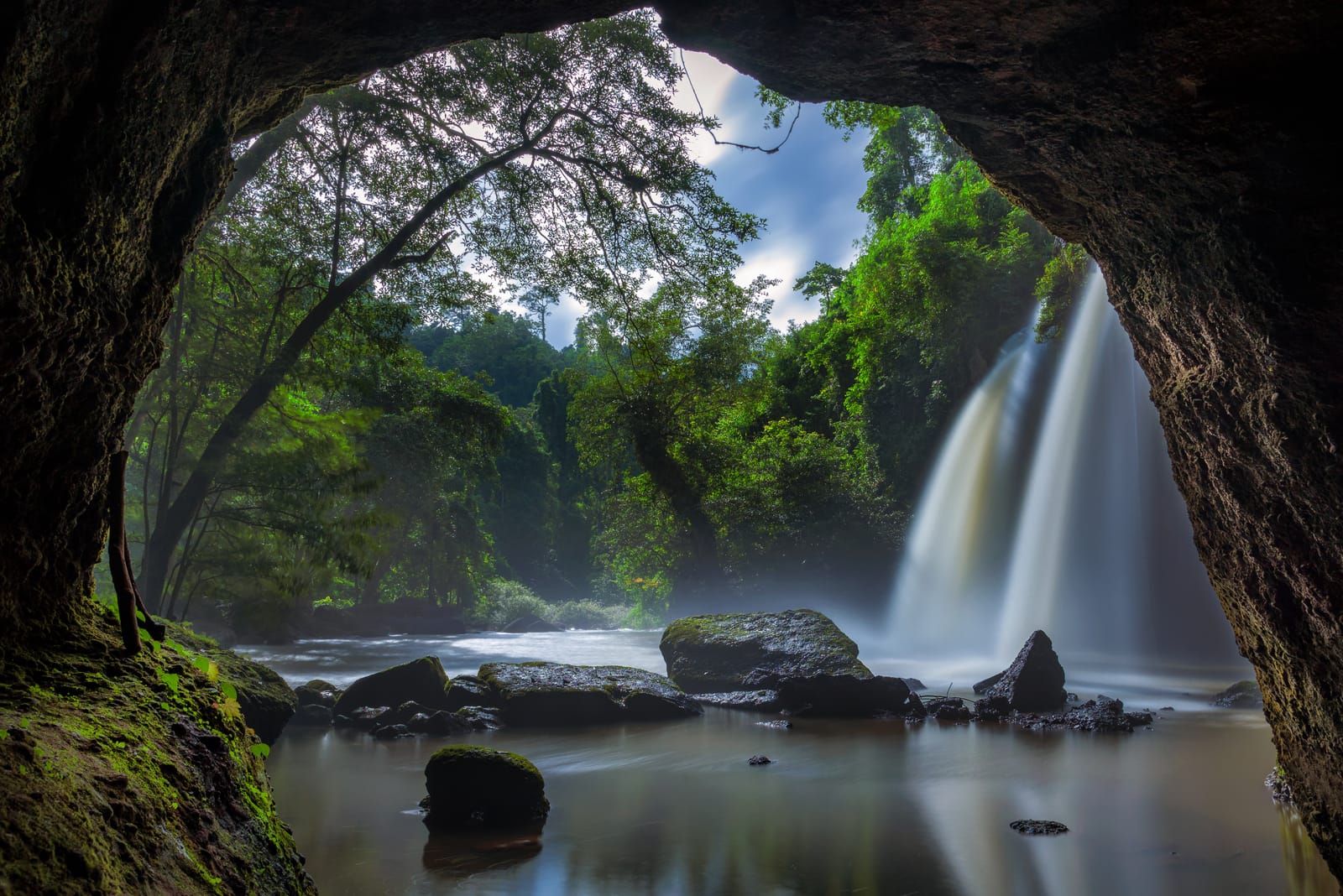
Waterfalls are the reason a lot of people come to Khao Yai, and Heo Suwat is the best known of them. It's a single-tier waterfall dropping about 20 metres from the cliff into a wide pool, and it's a short walk down from the car park. During the rainy season (June–October) the water is strongest and at its fullest, while in the dry season the flow drops but it's easier to wade in.
Heo Suwat Waterfall
A single-tier waterfall about 20 metres high, an easy walk down from the car park. There's a pool you can wade into when the flow is gentle, and it's the most popular photo spot in Khao Yai.
Heo Narok Waterfall
The tallest and most dramatic waterfall in Khao Yai, three tiers totalling over 150 metres. It's about a 1 km walk from the car park to the viewing platform. You can't swim here, but the view more than makes up for it.
Pha Kluai Mai Waterfall
A small, pretty waterfall along the hiking trail and one of the better birdwatching spots in the park. You can continue here from Heo Suwat along the nature trail.
What to know about swimming
You can only swim at Heo Suwat when the flow is gentle, but during the rainy season the water surges faster and harder than it looks. Always watch the warning signs and trust the rangers. At Heo Narok, swimming is strictly off-limits because the cliffs are high and slippery.
Want more out of Nakhon Ratchasima? Book tours & activities
Booking online ahead on Klook or GetYourGuide is usually cheaper than the gate and skips the queue. Pick only the experiences you actually want — prices and availability are shown live on each site.
Viewpoints Worth Stopping For
Another charm of Khao Yai is the road that winds along the ridges, with viewpoints dotted along the way where you can pull over and photograph the lush green mountains. Some take a short walk to reach, but the view you get is worth the effort.
- Pha Diao Dai — one of the most beautiful panoramic mountain viewpoints in the park. It's a fair walk in from the car park, and on cool-season mornings you often get a sea of mist at dawn.
- Pha Trom Jai — an open viewpoint looking out over a long ridgeline, great for photos in the morning and evening light.
- Km30 Viewpoint — pull over by the road for an easy mountain shot, ideal if you'd rather not walk far.
- Nong Phak Chi Wildlife Tower — a tall tower overlooking a wide grassland, where you've got a chance to see gaur and wild elephants come out to feed in the evening.
Hiking and Wildlife Spotting
Khao Yai is home to wild elephants, gaur, deer, barking deer, gibbons, mouse-deer, and the hornbills that are a symbol of the deep forest. Spotting wildlife in its natural habitat is the highlight that keeps people coming back. There are self-guided nature trails as well as the evening wildlife-spotting drives run by the park.
- Km33 – Nong Phak Chi trail — about 3.3–3.5 km, an easy walk taking 2–3 hours, passing grasslands and a wildlife tower. You've got a chance of seeing wild elephants, gaur, deer, barking deer, and animal tracks.
- Heo Suwat – Pha Kluai Mai trail — combine a waterfall walk with birdwatching. It's a gentle route, good for beginners.
- Night Safari — ride the park's truck and spotlight for wildlife after dark, in rounds of about 1–2 hours. Book at the visitor centre. You'll commonly see deer and barking deer, and sometimes wild elephants.
- Longer hikes — some of the deeper routes require a ranger guide, so you'll need to arrange it in advance with the park.
What to do if you meet a wild elephant on the road
Khao Yai's wild elephants often come out onto the roads, especially from evening into the night. If you meet one, switch off your high beams, slow down, keep at least 30 metres back, don't honk or rev your engine, and never feed it. Wait calmly for the elephant to move on by itself.
Entry Fees and Opening Hours
The park is open every day, roughly 06:00–18:00 (the gate stops admitting cars in the late afternoon, so leave yourself time to get out). Tickets are valid for entry and exit within a single day. You pay at the Pak Chong gate (Chao Pho shrine) or the Noen Hom gate, and you can also book ahead through the QueQ app to cut down the queue.
- Thai entry fee — adults 40 THB, children (14 and under) 20 THB · seniors 60+ and people with disabilities enter free.
- Foreigner entry fee — adults around 200–400 THB, children around 100–200 THB (depending on the gate).
- Vehicle fee — motorbike 20 THB · 4-wheel car 30 THB · 6-wheel vehicle 100 THB.
- Vehicle limits — vehicles with more than 6 wheels, double-decker buses, or anything over 3.50 m tall are not allowed in.
- Opening hours — daily, roughly 06:00–18:00. Tickets valid for one day only.
Prices may change
Entry rates and opening hours can change according to announcements from the Department of National Parks and the season. Before you go, it's worth checking the park's page or calling the visitor centre again, especially for the wildlife-spotting rounds and hiking trails that need booking ahead.
Getting to Khao Yai
The most-used main entrance is the Pak Chong gate on the Nakhon Ratchasima side. From Bangkok it's about 2.5 to 3 hours' drive via the motorway and Mittraphap Road. The other gate is Noen Hom on the Prachinburi side, which suits people coming from the east.
- Self-drive (most recommended) — by far the most convenient, since the attractions inside the park are spread far apart. From Bangkok take the motorway, then Mittraphap Road into Pak Chong, then turn onto Route 2090 (Thanarat Road) up to the Pak Chong gate.
- Bus/van + chartered ride — take a bus from Mo Chit or the northern line down to Pak Chong, then charter a songthaew or van up to the park. This is the popular option for people without a car.
- Train — take the northeastern line down to Pak Chong station, then catch onward transport up to the park.
- Rent a car in Pak Chong — there are car-rental and chauffeured charter services, good for people flying in or arriving by public transport.
One thing to know is that there's no public transport running between the attractions inside the park, so it's very hard going without your own vehicle. The distance from the gate to Heo Suwat or the viewpoints is several dozen kilometres, so having your own car or chartering one is by far the most comfortable way.
Khao Yai in 1 Day vs 2 Days
If you've only got one day, you can still hit all the highlights, but staying overnight means you get the evening wildlife spotting and an early start for the sea of mist at the viewpoints. Here's a plan laid out along the actual route so you're not driving back and forth.
Up the mountain, waterfalls, viewpoints, evening wildlife
Morning hike, sea of mist, finishing at a Pak Chong cafe
A Few Honest Things Before You Go
- The rainy season (Jun–Oct) has the prettiest, fullest waterfalls, but also mist, afternoon rain, plenty of leeches, and slippery roads. The cool season (Nov–Feb) has the best weather but draws big crowds.
- On long weekends, traffic backs up from the gate and the popular spots get packed. If you can avoid it, going on a weekday is far more relaxed.
- There's no public transport between attractions inside the park, so you need your own car or a chartered ride, otherwise getting around is a struggle.
- Phone signal is missing in some spots, so download an offline map and fill up on fuel before heading up the mountain.
- Don't feed any wild animals, monkeys or elephants alike, since it's dangerous and against park rules. Take your rubbish back down with you.
Plan a full Khao Yai–Korat trip with where to stay, eat, and go
See the Nakhon Ratchasima travel guide →