🔄 Updated 21 Jun 2026
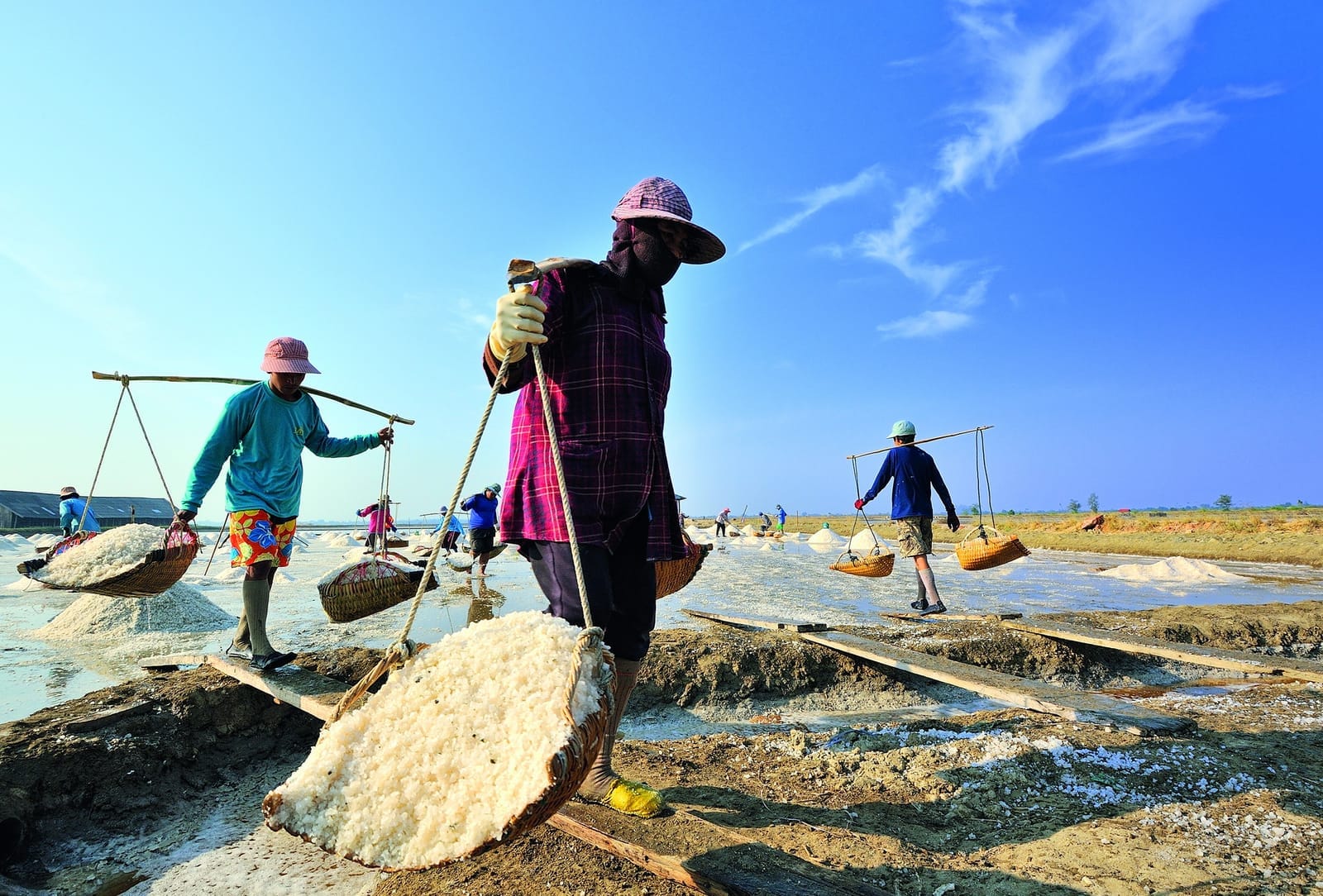
Khok Kham is a subdistrict on the inner Gulf of Thailand in Mueang Samut Sakhon district. Most of the land is salt pans, aquaculture ponds, and mangrove forest that all connect into one large stretch. What brings people from far away is that it's a key stopover on the East Asian–Australasian Flyway (EAAF). Surveys here have recorded close to 190 species, and the Khok Kham wetlands are registered with an international network for the conservation of migratory birds.
What you come here to see
Even without the birds, Khok Kham is a fine place for a walk and some photos, because this kind of salt-pan-and-mangrove landscape is hard to find this close to Bangkok. But the real heart of the place is the migratory winter shorebirds. From roughly November to April, flocks drop down to feed on the mudflats and salt ponds by the thousand.
- Spoon-billed Sandpiper — the star of the show. A critically endangered bird with maybe 400 left in the world, it has a flat, spoon-shaped bill. Khok Kham is one of the few places in Thailand where it still turns up almost every year.
- Terek Sandpiper, Nordmann's Greenshank, Asian Dowitcher — a group of rare shorebirds that come through around the same time.
- Red-necked Stint, Lesser Sand Plover, Whimbrel — birds seen in big flocks, easier for beginners to spot simply because there are so many of them.
- Egrets, herons, cormorants — resident birds you can see all year, no need to wait for winter.
Straight talk before you go
The Spoon-billed Sandpiper is tiny and usually mixed in among flocks of stints that look much the same. Without a high-powered spotting scope or someone to guide you, actually finding one is pretty tough. Plenty of first-timers only see distant flocks, and that's completely normal — don't set out expecting to spot the headline bird every time.
Want more out of Samut Sakhon? Book tours & activities
Booking online ahead on Klook or GetYourGuide is usually cheaper than the gate and skips the queue. Pick only the experiences you actually want — prices and availability are shown live on each site.
The nature boardwalk
Around Khok Kham and Phanthai Norasing there's a mangrove nature trail built as a long concrete boardwalk that runs into the mangrove thickets. It's an easy walk with no wading through mud. On both sides you'll see mangrove roots poking up out of the mud, with mudskippers, fiddler crabs, and sesarmid crabs scurrying everywhere. Some stretches have a suspension bridge across the canal that photographs nicely. It's a good fit for kids or for adults who'd rather not slog through the mud but still want to learn about the mangrove ecosystem up close.
Phanthai Norasing mangrove trail
A long concrete boardwalk along the canal, with a suspension bridge crossing over it. Clear views of mudskippers, crabs, and mangrove roots. Easy walking, good for families.
Mangrove Learning Centre (Maha Chai)
Open daily 9:00–17:00, free entry. Has a nature walk and a crab-release activity that returns crabs to the mangroves.
Salt-pan flats — birdwatching spot
An open area along the road beside the salt pans. This is where birders set up their scopes to scan shorebird flocks at low tide.
When to go to actually see birds
The migratory birds start arriving from late rainy season into winter, and stay on through the start of the hot season. If you're coming specifically to see birds, the timing matters far more than which day of the week you pick.
- November–February — peak season. The most birds are down feeding and the weather is pleasantly cool. This is the window birders recommend most.
- March–April — you can still see birds, and some start coming into breeding plumage before they fly back, but the weather is turning hot.
- May–October — the migratory birds have gone, leaving only resident species. Better suited to a mangrove walk and salt-pan photos than to hunting for rare birds.
Timing and tide tips
Shorebirds feed on the mudflats at low tide. Check the tide table for the inner Gulf of Thailand before you set out — going when the tide is dropping means more birds down feeding. The best light is at dawn and in the evening just before sunset.
Getting there
Khok Kham is easy to reach by car. From Bangkok it's about an hour via Rama II Road, then you turn off onto the Phanthai Norasing–Khok Kham route. From the town of Maha Chai it's another 20–30 minutes' drive. In your map app, just search for the Mangrove Learning Centre or the Phanthai Norasing nature trail.
- Private car — by far the most convenient, since the birdwatching spots are spread along the roads beside the salt pans and you'll need to drive around to find where the birds have landed.
- No car — take public transport to Maha Chai first, then hop on a motorcycle taxi or charter a vehicle into Khok Kham, as public transport barely reaches the inner area.
- Guided birding trips — in winter, birding groups and specialist tours run trips into the area with scopes and a guide, ideal for beginners who want to actually find the real thing.
What to bring and birdwatching etiquette
- Bring binoculars or a telephoto lens, otherwise the birds will just be tiny dots in the distance.
- Wear muted colours, avoid anything loud, and don't make noise or get too close to the flocks, or the birds will spook and fly off.
- Pack sunscreen, a hat, and drinking water, because the salt pans are wide open with no shade and the sun is fierce.
- Never flush the birds into flight just to get a photo. Conservationists ask for real cooperation on this, since it disturbs the resting and feeding of migratory birds.
Pair it up to make the trip worthwhile
Once you're at Khok Kham you can carry on to several other spots in the same area — the nearby Phanthai Norasing Shrine, the salt pans of Ban Laem, and the Maha Chai seafood market on the way back. It all packs neatly into a single day trip.
Plan a full day in Samut Sakhon — the sea, the markets, and the food
See the Samut Sakhon guide →