🔄 Updated 21 Jun 2026
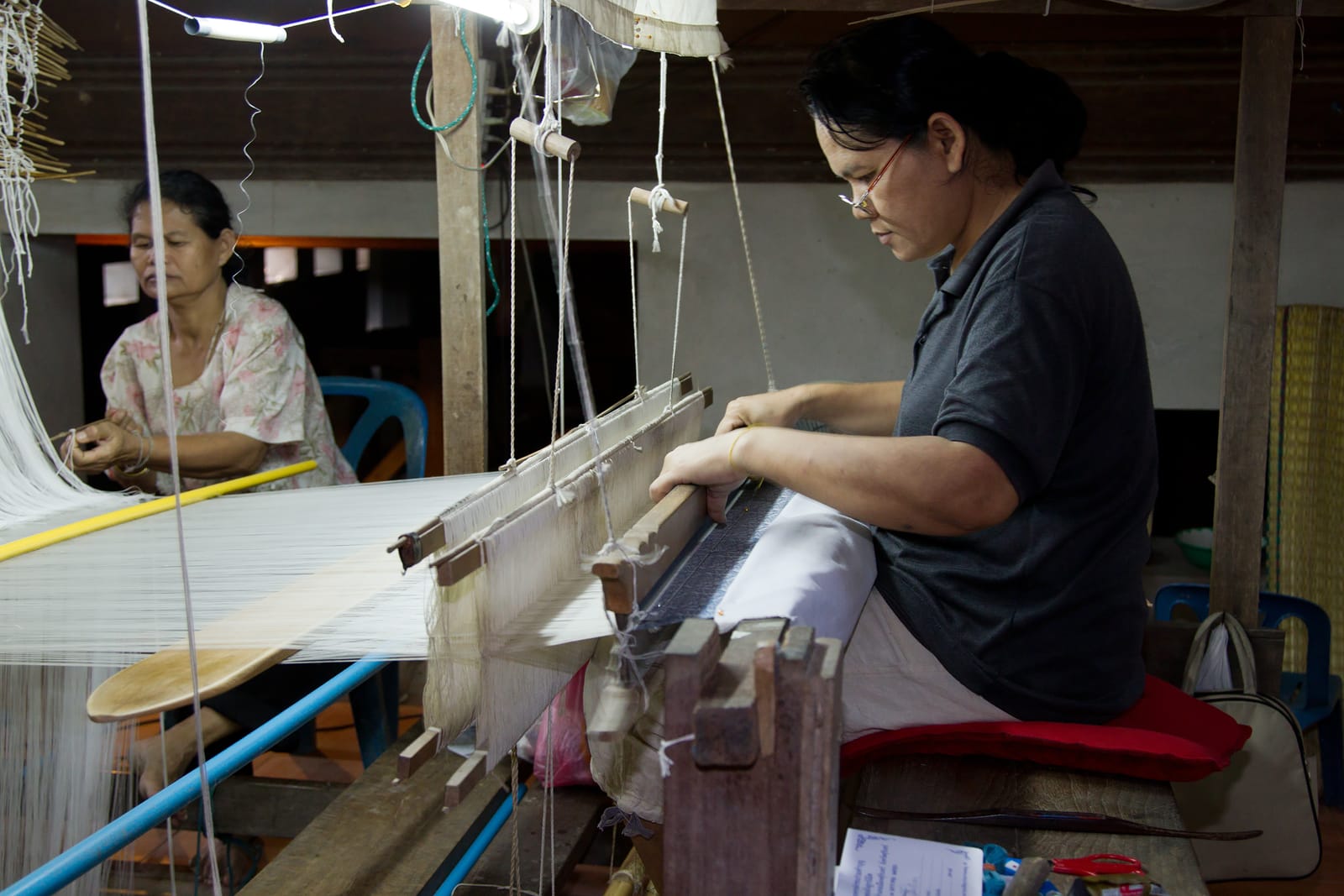
If you think Khon Kaen is just food and temples, set aside half a day and drive out toward Chonnabot district — you'll quickly see why the mudmee silk here is famous across the country. Villages in this area have been weaving for over a hundred years; some say it goes back to when the town of Chonnabot was founded more than two centuries ago. The appeal is that you can still walk in and watch real weavers at work, not just browse a showroom, and silk bought straight from the weaving groups runs cheaper than the shops in town.
In 2018 the World Crafts Council named Khon Kaen a World Craft City for mudmee silk, and in 2023 the province hosted the World Craft Cities conference. "Chonnabot mudmee silk" has also been registered as a Geographical Indication (GI) product, which means the cloth woven in this district has a distinct identity the whole trade recognizes — it isn't just ordinary handwoven fabric.
Silk villages you can actually visit
Chonnabot and the nearby districts have several weaving groups that welcome visitors. These are the places people really go to, and they're still open.
Ban Hua Fai Mudmee Silk Community Enterprise (Po Daeng, Chonnabot)
The most organized group when it comes to visitors. They do the full cycle — raising mulberry and silkworms, tying the mudmee patterns, dyeing, and weaving — with a learning center where you can walk through every step. The group's head is Khun Suphani Phulaenthi; it's an OTOP Village and the cloth meets the community-product (mor.por.chor.) standard. A good first stop if you want to understand the whole process.
Sala Mai (Thai Silk Pavilion), Chonnabot
A silk display-and-sales hall in the center of Chonnabot, and a good place to start if it's your first visit. Cloth from several groups is gathered here, so patterns are easy to compare, and the staff can explain the designs and how to tell real silk. Handy if you're short on time but want an overview of Chonnabot silk in one spot.
Den Mai Thai, Chonnabot
A long-running silk shop the locals know well, with traditional mudmee patterns plus finished pieces like shirts, scarves, and bags. Good if you want something you can actually use rather than just lengths of cloth, with prices across several tiers.
Ban Nong Bua Noi (Sok Nok Ten, Phon district)
An OTOP Nawatwithi tourism village known for its Heet Sip Song (twelve-month tradition) patterns, with a quiet community feel. At certain times they offer rides around the village on a converted motor-trike to see weaving in people's homes. Better for travelers who want a taste of village life than for shopping — call ahead.
Small home weaving groups along the Chonnabot roads
Drive into the villages around Chonnabot and you'll spot signs for plenty of small home-based weaving groups — places like Mae Tae Silk and Jintana Silk. Many are happy to let you watch the loom and sell direct, with prices you can talk over. The upside is one-of-a-kind cloth and patterns the bigger shops don't carry.
Calling ahead makes it surer
Many of the weaving groups are private homes, not shops open all day. During rice-planting season or local merit festivals people may not be around. If you really want to watch the weaving, call or message the page a day ahead so you can see every step and have someone to explain it.
Want more out of Khon Kaen? Book tours & activities
Booking online ahead on Klook or GetYourGuide is usually cheaper than the gate and skips the queue. Pick only the experiences you actually want — prices and availability are shown live on each site.
The weaving steps you'll get to see
What makes mudmee silk expensive and special is that every step is done by hand. Walking through a village, you'll see roughly this process.
- Mulberry and silkworms — mulberry leaves feed the worms until they spin their cocoons, and the silk is then reeled off into long threads.
- Mudmee tying — the step the cloth is named for. The weaver lays out the silk threads and ties them into bundles following a planned design before dyeing; the tied sections resist the dye, creating the pattern.
- Dyeing — both chemical dyes and natural ones from tree bark, lac, and indigo. A multi-color pattern means tying and dyeing over and over.
- Weaving — threaded onto the loom and woven one line at a time. A single full-pattern piece takes a week to a month; the finer the pattern, the longer it takes.
- Finishing — trimming the edges, tidying the ends, and pressing, and then it's ready to sell.
Once you see how long a single piece takes, prices in the thousands to tens of thousands of baht make immediate sense — especially full-pattern mudmee cloth, where every thread has to be tied and dyed to line up with the design.
Signature Chonnabot patterns
The charm of Chonnabot mudmee is the sheer number of patterns, often woven across the whole piece. These are the ones you'll come across most and that are most popular.
Khaen Kaen Khun pattern
Khon Kaen's provincial pattern, combining the khaen (reed mouth organ), khun flowers, and the golden shower tree. If you want cloth that clearly says Khon Kaen, this is the one.
Kho Phra Thep pattern
A very popular mudmee design with a continuous angular hook motif. It looks formal and works for dressier occasions.
Mak Chap / Kong pattern
Traditional Isan designs with a repeating geometric motif across the whole piece — a foundational pattern that skilled weavers turn out beautifully.
Heet Sip Song pattern
The signature pattern of Ban Nong Bua Noi, telling the story of Isan's twelve-month traditions in cloth — meaningful in itself.
Silk prices and how to buy without getting fooled
Prices depend on whether it's pure silk or a blend, how fine the pattern is, and which dyes are used. Here are the rough figures you'll see buying straight from the weaving groups at source.
- Pure silk scarf / shawl — around 500–1,500 THB, the easiest souvenir to pick up.
- Pure silk mudmee, common pattern (a ~2-meter length for a garment) — around 1,500–3,500 THB.
- Full-pattern mudmee, fine detail / natural dyes — 4,000 THB and up, with some special patterns reaching the tens of thousands because of the long weaving time and high skill involved.
- Synthetic silk / silk blend — clearly cheaper, from the low hundreds to around a thousand THB. Fine if you want a pretty pattern on a tight budget, but ask clearly so you know it isn't pure silk.
A simple way to check for real silk
Real silk has weight, a soft hand, and a muted sheen — not the glossy shine of plastic. If it feels too cold, too slippery, or unusually light, be careful. The test locals use is to pull a thread and burn it: real silk shrinks into a black bead and smells like burning hair, while synthetic fiber melts into a hard plastic-like bead. Buying from a weaving group with a GI label or the royal Peacock (Nok Yung) certification gives you more peace of mind.
Honestly, if you bargain, only haggle a little for form's sake — don't push hard, because this is handwork that takes a month. The price the weaving groups set is fair compared with the mall shops in town, which add several times the markup.
A silk-route day plan
Chonnabot is a fair drive from the city, so plan a full-day trip or tack it onto a tour of the province's southern districts. Here are two options depending on how much time you have.
Watch the weaving + a quick shop
Chonnabot + village life
The annual silk festival, the liveliest time of year
If you want to see silk from across the whole province gathered in one place, come at the end of the year for the Khon Kaen International Silk Festival, Phuk Siao Tradition, and Red Cross Fair, held every year roughly 29 November–10 December on the grounds in front of the provincial hall. The fair has silk and OTOP stalls from all 26 districts, a silk parade, cloth competitions, folk performances, and the phuk siao friendship-tying ceremony from Isan tradition — it's the most varied time of year to buy silk.
If you come during the silk festival
Hotels in town fill up fast and prices climb, so book your stay several weeks ahead. As for the cloth at the fair, some pieces come from the same weaving groups out in Chonnabot, at prices close to source — no need to worry it'll be pricier than buying in the village itself.
Plan a full Khon Kaen culture-and-silk trip
See the culture-silk plan →