🔄 Updated 21 Jun 2026
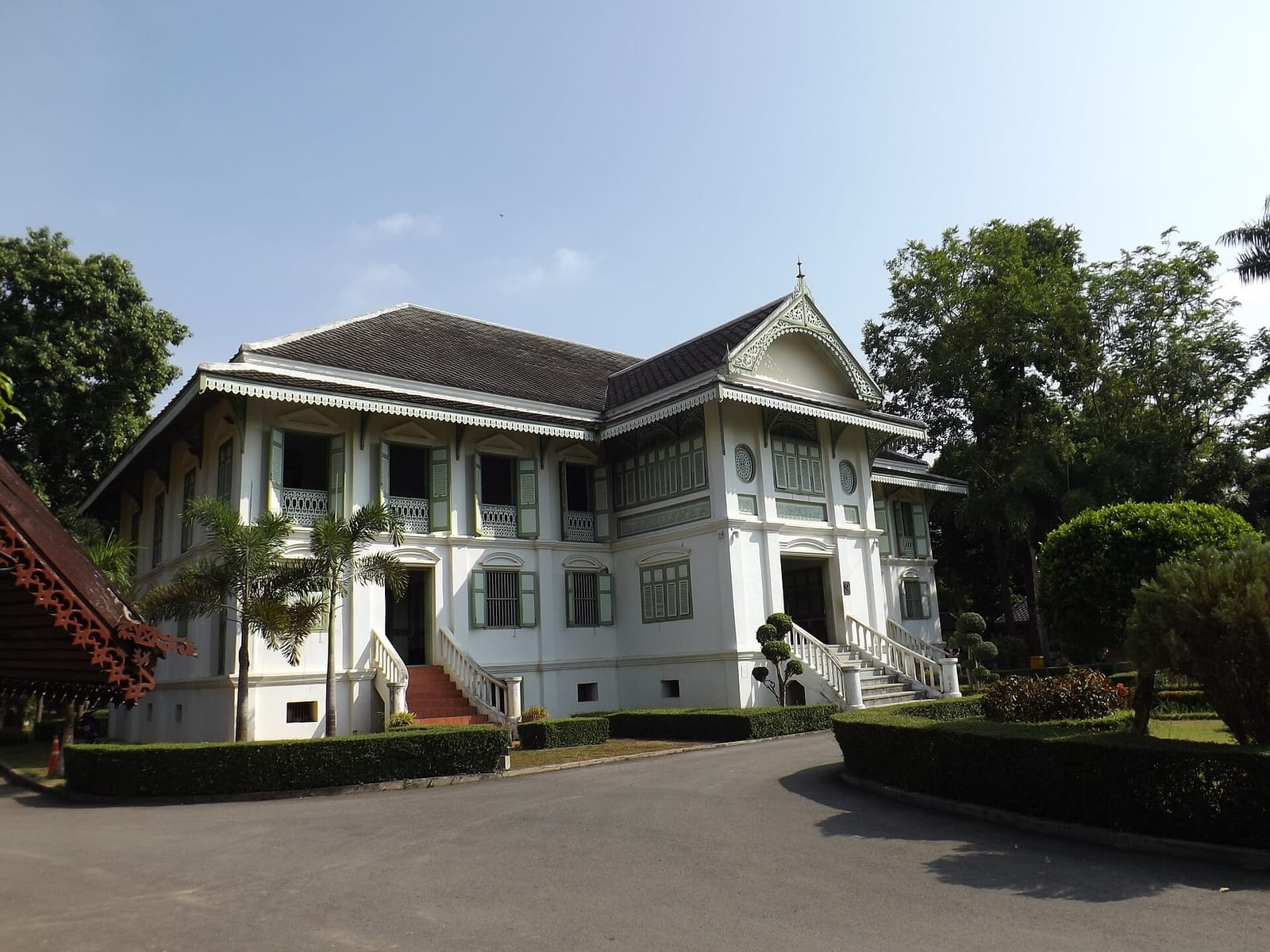
Phrae has long been famous for its teak forests, so older generations here liked to build houses that showed off the timber and big posts. Khum Chao Luang is the teak mansion that became the face of the town. It was built around 1892 (about 10 years before the Ngiao raid on Phrae) by Chao Phiriya Thepwong, the last ruling prince of the city. What people tend to love is that it isn't just an old building to photograph: walk inside and you can still genuinely feel what a northern Thai noble's life was like more than a century ago.
A gingerbread-style teak house — architecture worth a close look
The mansion is a two-storey building, a mix of brick-and-mortar structure and teak rooms, raised up on tall posts in the stilted style. It's an early Rama V-era piece that takes a European design and blends it with a Lanna house. The detail people love most is the fretwork timber along the eaves, the gables, and the verandahs — what foreigners call gingerbread trim. At a glance it looks like wooden lace cut into repeating patterns all the way around the house.
- 72 doors and windows — the whole house has 72 doors and windows combined, each topped with carved fretwork that lets air and light pass through all day. It's hot-climate house wisdom from before air conditioning.
- Solid teak throughout — the floors, walls, stairs, and posts all use Phrae teak. You hear the timber floor as you walk and catch the smell of old wood — a completely different feel from a concrete museum.
- Verandahs and a curved staircase — the staircase up to the second floor and the verandah wrapping the house are the spots people love photographing most. Morning light and afternoon light give the wood two different moods.
- No nails in much of the joinery — northern-style carpentry. Look closely at the timber joints and you can see the craftsmanship of the builders from that era.
Where to start
If you're short on time, head up to the second floor first — the reception room and the front verandah are the highlight of the fretwork. Then come back down and see the under-house area afterwards.
Want more out of Phrae? Book tours & activities
Booking online ahead on Klook or GetYourGuide is usually cheaper than the gate and skips the queue. Pick only the experiences you actually want — prices and availability are shown live on each site.
The story of the last ruling prince — why this mansion matters
Chao Phiriya Thepwong was the last ruling prince of Phrae, and he lived in this mansion until 1902, when the Ngiao (Shan) uprising broke out in the city. After that event the prince had to flee into exile in Luang Prabang in Laos, and he never returned. The mansion then served as a base for military and government units across several later eras, until today, when the Phrae Provincial Administrative Organization looks after it and runs it as the Phrae city museum.
Inside, there are displays of everyday objects, old photographs, and the stories of Phrae's nobility, which help you understand why the town has so many old mansions and teak houses. To be straight with you, some of the information signs are mainly in Thai, so if you come with friends from abroad you may need to do a bit of explaining along the way.
Three cells under the house — the spot people talk about most
Under the mansion there are three windowless rooms believed to have been used as a holding place in the old days. In the second-floor floorboards above, there's a small hatch for passing food down to them. It's a spot a lot of visitors feel they have to go down and see, partly because there are eerie legends tied to it that get shared around a lot. In practical terms, the under-house area is cool and dimly lit, which suits anyone who likes the darker side of history. If you bring small children, keep them close.
Straight talk
The ghost and haunting stories are folklore and local belief, not historical fact. If that side of things isn't your thing, you can still visit perfectly happily — look at it as a historical site instead and it's enjoyable in its own way.
Photo spots and how to make the visit worthwhile
Straight-on, from the front
Stand back and shoot the whole house so you catch the front staircase and the fretwork. Come early when the sun is still gentle for the nicest wood tones.
Second-floor verandah
The carved timber and verandah posts make a natural frame. People love shooting portraits here.
The cells below
Low light and dark tones, good for anyone who likes moodier shots — but be respectful of the place.
- Allow about 45 minutes to an hour to walk through — that's a comfortable amount of time.
- Take your shoes off before going up into the timber rooms; it helps protect the old teak floors.
- Dress a little modestly, since it's both a government property and a historical site.
- Pair it with Ban Wongburi (the pink mansion) in the same neighbourhood — just a few minutes on foot or by car.
Opening hours, entry fee, and how to get there
- Opening hours — daily, 8:30 a.m. to 4:30 p.m., open on public holidays too.
- Entry fee — free, no admission charge (there's a donation box to help maintain the site).
- Location — Khum Doem Road, Nai Wiang sub-district, Mueang district, Phrae province, opposite Nareerat School.
- Getting there — it's inside the old walled town. Drive in from Charoen Mueang Road and turn onto Khum Doem Road for about 100 metres; there's parking. If you're staying in Phrae town, you can cycle or walk there.
Khum Chao Luang sits in the old-town quarter, which is easy to keep exploring on foot. Nearby you'll find Ban Wongburi, several more old mansions and teak houses, plus Wat Phra Bat Ming Muang and a few old-town cafés. A morning half-day walking this area works out just about right.
Want to see Phrae's old town all in one day on foot?
See the Phrae old-town walking route →