🔄 Updated 21 Jun 2026
Plenty of people come to Amphawa for the evening floating market and the firefly boats, but if you arrive in the middle of the day with nowhere to be yet, Rama II Memorial Park is the answer — a short walk from the floating-market car park. It's a large riverside garden of Thai houses on the Amphawa canal, built on land believed to be the original residence of the Bang Chang family, the line King Rama II was born into. It's looked after by the King Rama II Memorial Foundation under royal patronage.
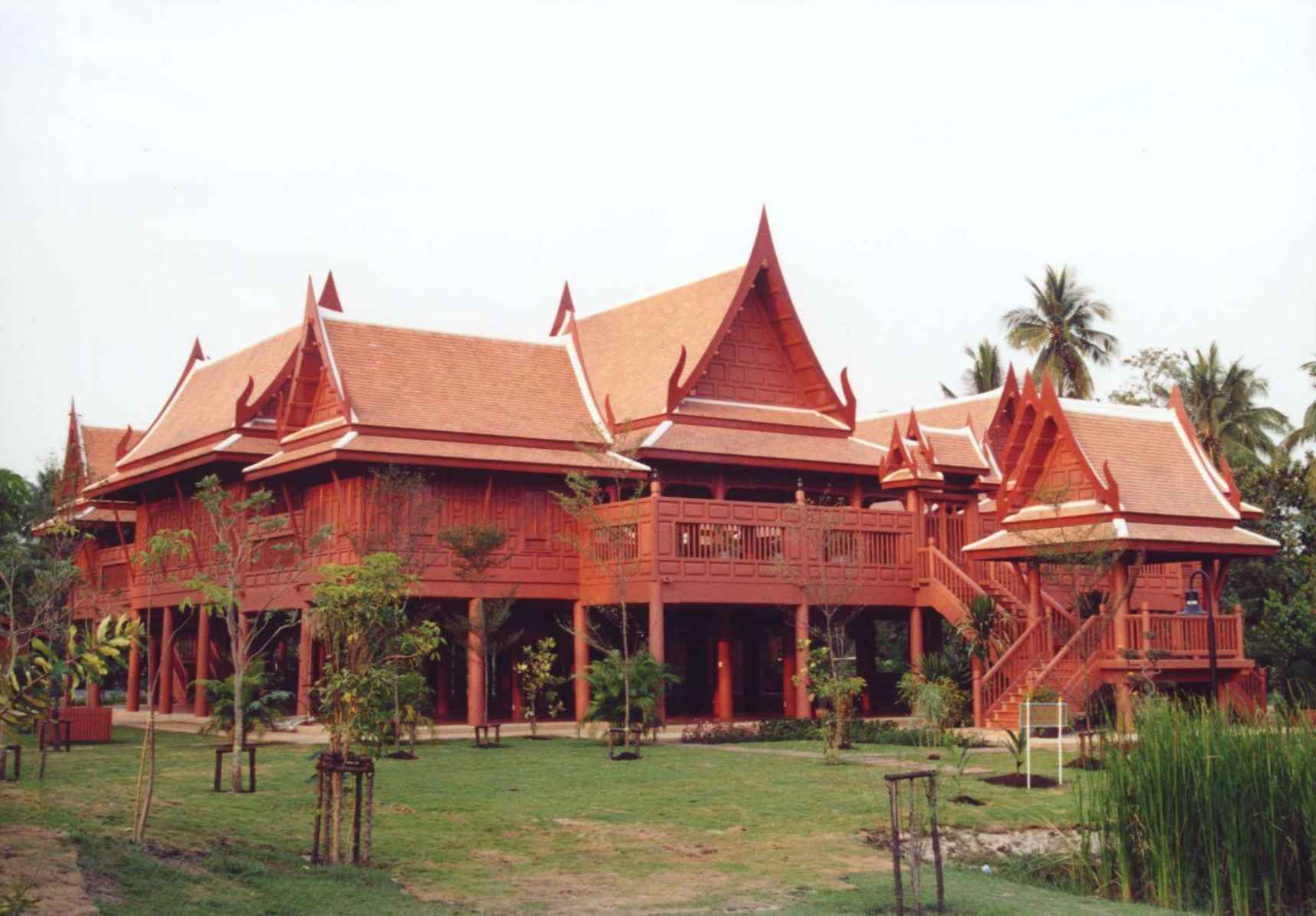
What stands out here is the atmosphere: big shade trees and several teak Thai houses arranged in a cluster, with canals and bridges threading between them. You can wander for a good hour without rushing. It suits history buffs, families bringing kids to learn something, and anyone after a pretty Thai-house photo without driving all the way to the old capital.
Why this place matters — the birthplace of King Rama II
King Phra Phutthaloetla Naphalai, Rama II, was born in Amphawa during the Thonburi period. He's remembered as a poet-king, and his reign is regarded as a golden age of Thai literature — the dramatic works Inao, Ramakien, Sang Thong and Krai Thong, and the boat-song verses praising royal cuisine. He was also skilled in music and craftsmanship, and UNESCO once honoured him as a world figure in literature.
So this park isn't just a handsome garden — it sets out to show later generations the way of life and the craftsmanship of his era for real. Right next door is Wat Amphawan Chetiyaram, the family temple believed to mark the spot where he was born. If you come, it's worth stopping in to pay respects and look at the murals inside the ordination hall.
Want more out of Samut Songkhram? Book tours & activities
Booking online ahead on Klook or GetYourGuide is usually cheaper than the gate and skips the queue. Pick only the experiences you actually want — prices and availability are shown live on each site.
What there is to see inside Rama II Memorial Park
The main grounds break down into the Thai-house museum zone, an open-air theatre and the plant garden, and you can loop through the lot in one go. These are the bits not to miss.
- Cluster of Thai houses (the museum) — a group of teak Thai houses arranged in the style of a well-to-do central-Thai household from the early Rattanakosin period. Inside they display household objects, musical instruments, craftwork and the Thai way of life from that era.
- Thai-life wax figures — scenes recreating Thai life in the reign of Rama II, from cooking and games to craftwork. It paints a far clearer picture than reading it in a book, and kids usually love this zone.
- Exhibition on Rama II and Amphawa's culture — covering his royal biography, his literary works, and the riverside community life of the Amphawa locals.
- Open-air theatre — a stage for khon masked drama, classical theatre and dance performances drawn from his royal works, especially lively during the annual festival.
- Garden of plants from Thai literature — a garden gathering the trees and flowers named in his royal poetry, with labels telling you which plant appears in which work. An easy, enjoyable read that teaches you something as you go.
A useful tip
The park has bicycles for rent at around 40 THB an hour. The grounds are wide and shady, so if you've come with a group or are bringing older relatives, cycling round the garden is easier than walking. There are also wheelchairs to borrow free of charge.
The best time to go, and the annual festival
From morning to late morning the air isn't too hot and the light is lovely — the best time for photographing the Thai houses. In the afternoon the sun gets strong, though it's still walkable under the trees in the garden. If you're planning a full day in Amphawa, go into the park around midday before the floating market gets busy in the evening.
The yearly highlight is the Rama II Festival, the celebration honouring King Phra Phutthaloetla Naphalai, held around early February each year. It features khon masked drama, court theatre and dance from his royal works, demonstrations of craftsmanship and royal cuisine, plus a market of local goods and Mae Klong souvenirs. Come during this stretch and the place feels far more alive than on an ordinary day.
Entry fees, opening hours and getting there
- Opening hours — 08:30–16:30 (tickets sold until 16:00), open daily except Wednesdays. Check first if you're set on coming on a Wednesday.
- Entry fee — Thai adults 40 THB, children 20 THB (over 135 cm counts as an adult); foreigners 60 THB. That's very cheap for what you get to see.
- Location — on Amphawa Road, Amphawa district, next to Wat Amphawan Chetiyaram and right beside the Amphawa Floating Market car park, all within walking distance.
- Getting there from Bangkok — about a 1.5-hour drive via the Rama II road. There's parking at the Amphawa Floating Market, or take a van/bus on the Bangkok–Amphawa route, get off at the market and walk the rest.
The honest word
This place is about atmosphere and a bit of history, not thrills or rides. If you're expecting excitement it might feel a touch quiet. But if you like wandering among Thai houses, taking nice photos and giving the kids something to learn, it's a half-day to a day that's well worth it — especially paired with the spots around it.
More to see nearby — easy to pair in one day
Wat Amphawan Chetiyaram
The royal family temple right next to the park, believed to mark the birthplace of King Rama II, with murals inside the ordination hall to see.
Amphawa Floating Market
An evening floating market along the canal, loaded with food, with boat rides to soak up the mood. Busiest Friday to Sunday.
Firefly boat trip
A favourite after-dark activity — take a boat to watch fireflies blink along the lamphu trees by the canal. A pretty way to end the day.
Wat Bang Kung (the bodhi-tree chapel)
An old chapel wrapped entirely in the roots of a bodhi and banyan tree, on the far side of the river — not far to drive on.
A half-day plan around Rama II Memorial Park
Thai houses and history
Floating market and a boat trip
Plan a full Samut Songkhram trip — Amphawa, Mae Klong and the Don Hoi Lot sandbar
See the Samut Songkhram travel guide →