🔄 Updated 21 Jun 2026
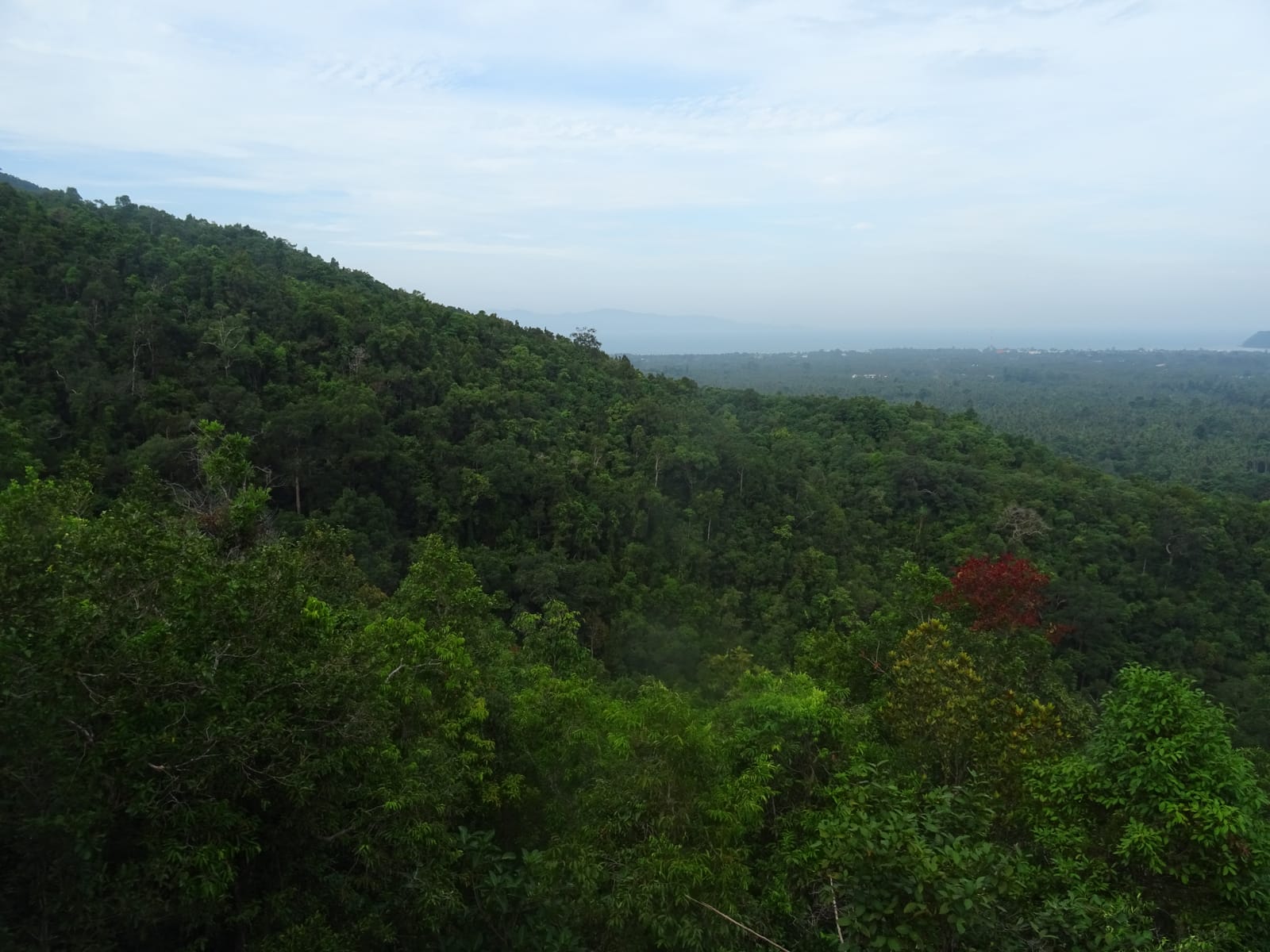
Koh Phangan isn't all beaches. The center of the island is a range of low hills covered in rainforest, and the rain that falls on the ridges collects into streams and waterfalls scattered all around. Most of them sit inside Than Sadet–Koh Phangan National Park, established in 2018, which covers roughly 43 square kilometers across the middle of the island. These waterfalls have been a local getaway for generations, and they're a good option on days when you want to swap the salt and sun for a cool freshwater dip.
One thing to flag up front: the waterfalls on Koh Phangan depend heavily on rain. From May to November the water is full and looks great, but in the hot season (roughly February to April) some streams shrink so much that only a small pool is left. If your main plan is to swim, it's worth checking whether there's been recent rain.
Than Sadet Waterfall — the biggest, with a royal history
Than Sadet is the island's largest waterfall, on the east coast. The stream runs about 2.5–3 km down the valley before reaching the sea at Than Sadet Bay. The name "Than Sadet" (meaning "royal stream") comes from the fact that King Rama V first visited here in 1888 and returned several times, carving his royal monogram into a boulder by the stream — still visible today, along with the monograms of Rama VI, Rama VII, and Rama IX. That makes this more than just an ordinary waterfall.
- Access — on the east side of the island. The final stretch of road into Than Sadet is steep and winding, so take extra care if you're not confident on a motorbike, or use a songthaew/hired car.
- Park fee — Thai adults 20 THB, children 10 THB; foreign adults 100 THB, children 50 THB (standard national park rates).
- Opening hours — roughly 8:30 AM to 4:00 PM.
- Walk to the falls — very short, just a few minutes from the parking area along steps and tree roots. There are several tiers with pools to swim in.
- Bonus — you can continue down to Than Sadet Beach, a quiet bay that's perfect for resting after the waterfall.
Tip
Than Sadet draws bigger crowds than the other falls because it's easy to reach and well known. If you want quieter photos, come early before the tour vans arrive, and if there's been recent rain, the water runs much stronger and fills the tiers far better.
Want more out of Koh Phangan? Book tours & activities
Booking online ahead on Klook or GetYourGuide is usually cheaper than the gate and skips the queue. Pick only the experiences you actually want — prices and availability are shown live on each site.
Phaeng Waterfall — a jungle hike to the island's viewpoint
Phaeng sits in the center of the island, about 9 km from Thong Sala pier, making it the easiest of the park's waterfalls to reach. It splits into Phaeng Noi (the lower tier, a quick walk) and Phaeng Yai, higher up. The falls themselves run fairly thin in the dry season, but the real reason people come is to hike up to the Domsila Viewpoint, which looks out over the island's interior rainforest and the sea in the distance.
- Access/fee — free entry (there's a donation box for trail upkeep); on some routes, if you enter via the park checkpoint, you may be charged 100 THB.
- Walk to Phaeng Noi — close to the parking area, a short walk, good if you don't want to push too hard.
- Hike up to Domsila Viewpoint — about 45 minutes to 1 hour, steep and rough with some sections where you scramble over rock. Wear shoes with good grip.
- Swimming — there's a small pool at the base of the falls for a cooling dip after the walk; the water is clear after rain.
Safety
The climb up to Domsila gets very slippery after rain, and the rocks are mossy. Walk slowly and hold onto roots and handrails. Bring your own drinking water since there are no shops in the jungle, and don't start too late — leave yourself enough time to get back down before dark.
Paradise Waterfall — a pool with a rope swing in the north
Paradise Waterfall is in the north of the island, near Chaloklum village. Its draw is the multiple tiers feeding a wide pool under the trees, with a rope hanging from a branch so you can swing out into the water — like a jungle playground. It suits groups of friends or families who want a fun swim rather than a hard hike.
- Access — head toward Chaloklum village; the entrance is past a restaurant and then opens straight onto the big pool.
- Final stretch of road — steep and in poor condition. If you're not confident on a motorbike, park below and walk up — it's safer.
- Fee — around 30 THB per person (usually stated as a road-repair fee).
- Hike to the upper tier — you can continue up to the main tier; it takes about 40 minutes.
Using the rope swing safely
The rope swing is fun, but the bottom of the pool is rocky and slippery, and the depth varies. Check the depth before you jump, don't swing when it's crowded, and avoid it during strong flows after heavy rain.
Other small waterfalls worth a stop
Wang Sai Waterfall
Over by Mae Haad in the northwest, accessed through the zipline area. A very short walk, with a sandy area around the pool that suits families, though it's fairly open and exposed to the sun. Entry around 50 THB.
Phu Dang Waterfall
A small roadside waterfall on the east coast, with a sign and about 35 concrete steps, then another hundred meters of jungle walking. Free entry; some rocks are slippery.
Phaeng Yai Waterfall
The upper tier of the Phaeng group, higher and quieter than Phaeng Noi. It takes an extra climb to reach, and the water looks much nicer in the rainy season.
How to do the Koh Phangan waterfalls in one day
The main waterfalls are spread across different corners of the island — Than Sadet in the east, Phaeng in the center, Paradise in the north. Renting a motorbike is the most flexible way to get around (about 200–300 THB/day), but several of the access roads are steep and winding, so if you're not used to the terrain, ride slowly and avoid driving when the road is wet. If you'd rather not drive yourself, you can hire a songthaew or private car by the round.
Hiking + viewpoint (island interior)
Swimming + quiet beach (east/north)
What to bring
Sneakers or walking shoes with good grip (don't hike the hills in flip-flops), drinking water, mosquito repellent, a waterproof phone pouch, and a spare shirt because you'll definitely get wet. Keep valuables on you — don't leave them by the pool while you swim.
When the water runs full and when it runs low
Koh Phangan's waterfalls rely mainly on rain. From May to November, when there's plenty of rain, the falls are full and run strong — at their best, especially right after a fresh downpour. From February to April it's the dry season, and some falls drop to little more than a pool. Than Sadet and Paradise hold some water year-round, but Phaeng and the smaller falls are at their best after rain. Check whether there's been recent rain before you go so you're not disappointed.
Plan a full Koh Phangan trip — beaches, waterfalls, and where to eat
See the Koh Phangan guide →