🔄 Updated 21 Jun 2026
The charm of Koh Phayam is in how slow and quiet it is. The island covers around 35 square kilometres, with a little over a hundred local households who make a living from cashew orchards, rubber, and small-scale fishing. There are no cars on the island at all, because the roads are narrow concrete lanes built for motorbikes. There are no big-brand convenience stores, and in some spots the electricity still runs only at certain hours. Most people who come here are set on lazing by the beach, reading, and riding around the island — not on nightlife or a packed schedule of activities. Get that from the start and you'll have a good time.
Straight talk before you go. Koh Phayam suits people who really want to switch off, who like the quiet, and who are fine with small-island facilities. If you want a lively sea with lots of restaurants, packed bars, and shopping all night, this island might feel a bit too quiet. The other thing to know: the island is more about walking the beach and clear water than about reef snorkelling right off Koh Phayam itself. For the pretty coral you have to take a boat out to nearby Koh Khang Khao or Koh Kam.
Ao Yai vs Ao Khao Kwai — what's the difference
Koh Phayam has four main bays — Ao Mae Mai (near the pier), Ao Yai, Ao Khao Kwai, and Ao Kwang Peep — but the two beaches where people stay and swim the most are Ao Yai and Ao Khao Kwai. They sit on opposite sides of the island. From the pier it's about a 15–20 minute motorbike ride to Ao Yai, and Ao Khao Kwai is a touch closer. Which beach you stay at comes down to the kind of vibe you're after.
Ao Yai
The island's longest white-sand beach, running for several kilometres — you can walk it forever. Bungalows, resorts, and beach bars line the whole stretch, making this the liveliest part of the island, though it's still quiet compared with other islands. Good for anyone who wants a long beach with plenty of places to stay and eat, plus a fine sunset.
Ao Khao Kwai
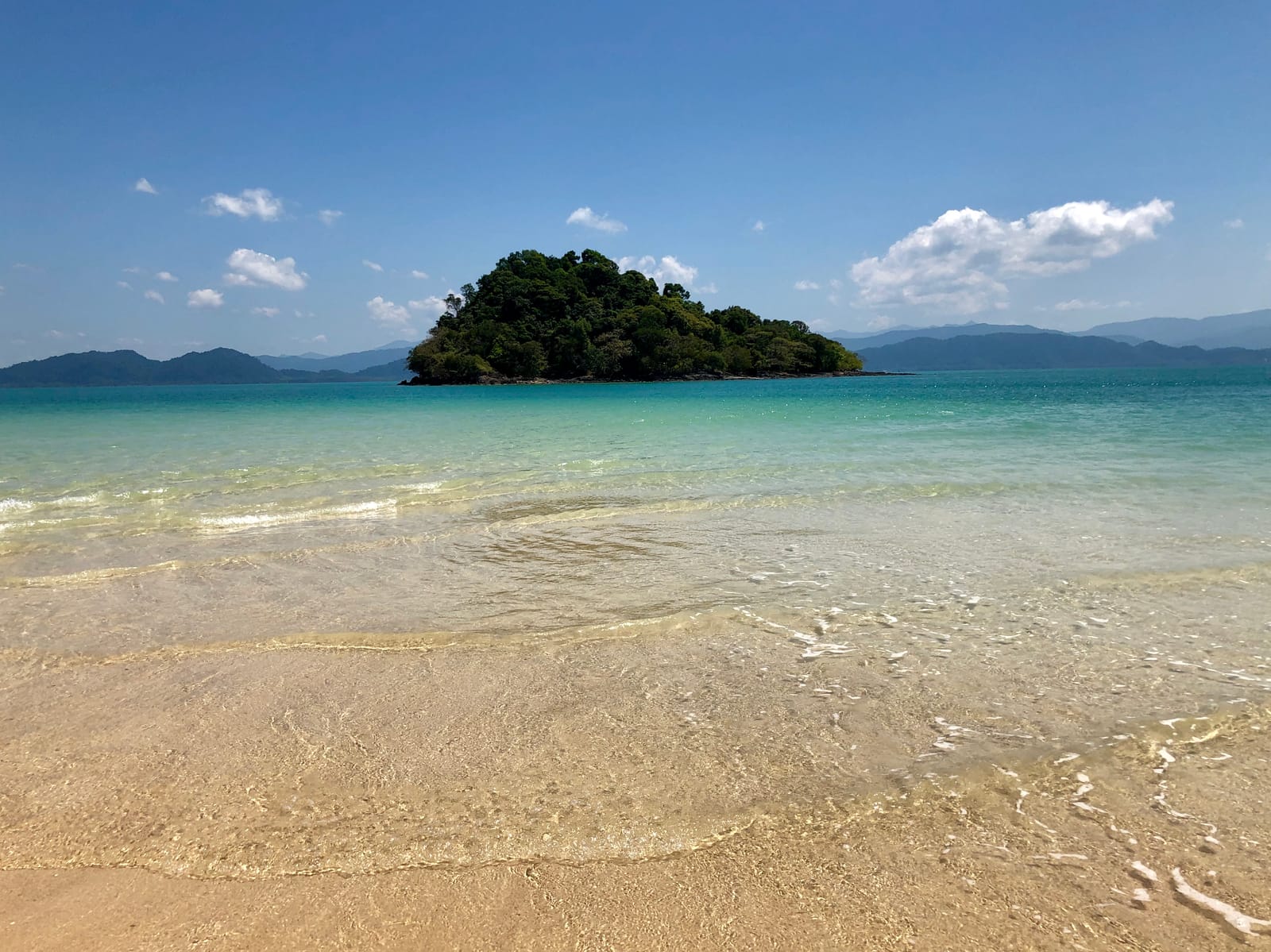
A bay that curves like a buffalo's horns, which is where the name comes from, with rocks and a little islet in the middle that make a great photo spot. The water is very clear, and at low tide you can walk far out toward the middle of the bay. It's quieter and more private than Ao Yai, with fewer, more spread-out places to stay. Good for anyone who wants real peace and a view that photographs well.
Pick the beach that fits you
If it's your first visit and you want lots of stays and restaurants to choose from plus a long beach to walk, go with Ao Yai. If you're here for real quiet — waking up to an empty, calm sea with no crowds — go with Ao Khao Kwai. If you'd rather be near the pier, shops, and bike-rental places, stay around Ao Mae Mai next to the village, though the beach there isn't as nice as the two main bays.
Want more out of Ranong? Book tours & activities
Booking online ahead on Klook or GetYourGuide is usually cheaper than the gate and skips the queue. Pick only the experiences you actually want — prices and availability are shown live on each site.
How to catch the boat to Koh Phayam
Everyone boards at Pak Nam Subdistrict Municipality pier (people just call it the Koh Phayam pier), in Pak Nam, about 10 km from Ranong town — roughly a 15–20 minute drive or ride. Coming from town, a motorbike taxi runs about 70 THB, or a songthaew about 20 THB. There's a parking lot at the pier if you drive yourself. There are two boat options to the island: speedboats, which are fast but pricier, and the passenger boat, which is slow but cheap and has more of an atmosphere.
- Speedboat — takes about 40–45 minutes, around 350 THB/person. In high season there are departures almost every half hour from morning to afternoon, with the last one around 16.30–17.30. This is what most people pick because it's quick.
- Passenger ferry (slow boat) — takes about 2 hours, around 200 THB/person, with far fewer departures — only a few a day. Good for anyone who isn't in a rush and likes a slow boat ride to take in the view.
- Monsoon season (roughly May–October) — departures drop off and depend on the weather; on some rough-sea days boats may be cancelled. Always check the schedule with the operator before you travel.
- Boat tickets — you can buy them right at the pier, or book ahead through a counter or boat-booking site. High season and long weekends get busy, so booking ahead is more reassuring.
Leave buffer time on travel days
If you fly into Ranong and continue to the island, leave plenty of time — you have to drive from the airport or town to Pak Nam pier first, then catch a boat. Try not to aim for the last evening boat, because if you miss it you'll have to spend a night in town. On the way back, leave enough margin to catch a boat in time for your return flight.
Getting around a car-free island
Once the boat lands at the pier, there are only a few ways to get around, since there are no cars at all. The main one is by motorbike — there are rental shops and motorbike taxis waiting at the pier. The island isn't big, so you can easily ride a full loop in a day. The roads are narrow concrete with some uphill stretches, so if you're not confident on a bike take it slow, especially at night when there's little street lighting.
- Motorbike taxi — waiting at the pier, roughly 70–100 THB to drop you at your stay around the various bays. Good if you don't ride or you're travelling solo.
- Rent a motorbike — around 250–300 THB/day, the most convenient way to explore on your own. You can fill up at a shop on the island and ride a full loop of every bay in a day.
- Bicycle — some stays rent them out, fine for short rides nearby, but the island has a few hills, so pedalling far across bays gets tiring.
- Walking — easy along the beach, but to cross to a far bay a motorbike is the better bet.
Things on Koh Phayam you shouldn't miss
Ao Yai
The island's longest white-sand beach, where people come to laze by the sand, read, and watch the sunset. Beach bars and bungalows line the whole stretch, and in the evening several places have mellow live music for a slow-life vibe. Good for settling in all day without going anywhere.
Ao Khao Kwai
A pretty curved beach with rocks and a little islet in the middle as its signature. The water is very clear, and at low tide you can walk far out to sea. It's one of the island's most popular photo spots, and quieter and more private than Ao Yai. The light is best in the morning or evening.
Wat Koh Phayam
A temple with a white ordination hall that juts out over the sea, ringed by lotus ponds, with a standing Buddha facing the water. It's an unusual, memorable image of the island. Drop in to pay respects and take photos — it's not far from the village and pier, and easy to swing by as you loop around.
Ao Kwang Peep + Red Sand Beach
A bay that's quieter and less visited than the two main ones, good for anyone after a genuinely peaceful corner. In places the sand takes on a reddish tint from minerals. It's a spot most tourists haven't fully reached — worth a quiet ride out to explore.
Snorkelling at Koh Khang Khao / Koh Kam
The pretty coral in this area is around the nearby islands, not off Koh Phayam itself. Koh Khang Khao has clear water with coral and a colony of bats, while Koh Kam is a popular snorkelling spot. You take a boat tour out from the Koh Phayam pier; you can book on the island, with prices depending on the package and how many islands you stop at.
Ao Mae Mai + the island village
The area near the pier that serves as the island's hub, with restaurants, cafes, shops, bike-rental places, and budget-friendly stays close to the pier. Good for day-trippers or anyone staying near the pier for convenience. The beach isn't as nice as Ao Yai, but it's easy to walk around and grab a bite.
Where to stay on Koh Phayam, by bay
Stays on the island run from wooden beach bungalows in the low hundreds of baht, to tents in a garden, all the way up to good-looking seaside design resorts in the thousands. Pick mainly by the bay you want to be in, since moving between bays means riding. Most can be booked ahead through a hotel app, but for some small bungalows, contacting the owner directly gets you a better rate. In high season and on long weekends, the nice beachfront stays fill up fast, so booking ahead is reassuring.
Staying at Ao Yai
The widest choice — from budget-friendly beach bungalows like the clusters of wooden huts by the sand, up to larger resorts such as JJ Beach Resort, which has both bungalows and tents plus a beachfront seafood spot. Good for anyone wanting a long beach with restaurants close by.
Staying at Ao Khao Kwai
Fewer, more spread-out stays, with a focus on quiet. There are beachfront resorts like Chom Chan Beach Resort right on the clear water. Good for anyone who wants to wake up to a calm, curved bay with no crowds.
Staying near the pier (Ao Mae Mai)
Budget-friendly stays next to the village, within walking distance of restaurants, bike rentals, and the pier. Good for a short one-night stop or a day visit when easy travel matters more than the beach view.
Worth knowing before you book a stay
Some beach bungalows are simple — electricity only at certain hours, no air-con, and weak internet. If you need to work or you can't sleep without air-con, check clearly with the stay before booking. In the rainy low season many places close or open only partially, with lower prices but fewer options. And don't forget to withdraw enough cash in town beforehand, because ATMs on the island are scarce and some places take cash only.
A 2-day, 1-night Koh Phayam plan
Boat over, check in, Ao Yai in the evening
Ao Khao Kwai, Wat Koh Phayam, back to the mainland
When to go, and when the sea turns rough
The best time is the dry season, roughly November to April — calm sea, clear water, good sun, plenty of boat departures, and stays and shops fully open. The rainy season, roughly May to October, is the Andaman monsoon: the sea turns rough in spells, the wind shifts quickly, boat departures drop and some days are cancelled, and many stays and shops close or open only partially. The upside is fewer people and lower prices, but you have to accept the chance of rain and murky water. If you're going in the rainy season, always check the forecast and boat schedule with your stay beforehand.
- November–April (high season) — calm sea, clear water, frequent boats, stays fully open. The best window, though long weekends get crowded, so book ahead.
- May–October (low season / rainy) — Andaman monsoon, rough sea in spells, fewer boats, some places closed, lower prices and fewer people. Good for the flexible who don't mind rain.
- Avoid long weekends if you want a quiet island. New Year and Songkran get crowded and stays cost more; pick weekdays for a calmer vibe.
Plan a Ranong trip and tie in Koh Phayam for the full experience
See the Ranong travel guide →